Delizioso The Eclipse Moisture Crème Cleanser
A face cleanser with 16 ingredients.
Face cleanser with 16 ingredients
We independently verify ingredients, backed by peer-reviewed research. Suggest an update.
What's inside
Ingredients List
Aloe Barbadensis Leaf Juice
Skin Conditioning


Jasminum Grandiflorum Flower Oil

Sodium Cocoate
Cleansing

Cetearyl Olivate

Sorbitan Olivate
Emulsifying
Sclerocarya Birrea Seed Oil
Humectant
Hamamelis Virginiana Water
Astringent

Xanthan Gum
EmulsifyingChamomilla Recutita Oil
Masking
Tanacetum Annuum Flower Oil
Masking
Salix Nigra Bark Extract
Skin ProtectingMineral Salts
Skin ConditioningVitis Vinifera Seed Extract
Antimicrobial
Populus Tremuloides Bark Extract
AntiseborrhoeicLeuconostoc/Radish Root Ferment Filtrate
Antimicrobial
Sambucus Nigra Fruit Extract
AstringentAloe Barbadensis Leaf Juice, Jasminum Grandiflorum Flower Oil, Sodium Cocoate, Cetearyl Olivate, Sorbitan Olivate, Sclerocarya Birrea Seed Oil, Hamamelis Virginiana Water, Xanthan Gum, Chamomilla Recutita Oil, Tanacetum Annuum Flower Oil, Salix Nigra Bark Extract, Mineral Salts, Vitis Vinifera Seed Extract, Populus Tremuloides Bark Extract, Leuconostoc/Radish Root Ferment Filtrate, Sambucus Nigra Fruit Extract
Key Ingredients
Benefits
Concerns
Ingredients Explained
Aloe Barbadensis Leaf Juice is the filtered, stabilized liquid pressed from the inner gel of the aloe vera leaf.
In cosmetics, it shows up as either soothing active or a water-replacement base. It is roughly 98-99% water and the last 1-2% is an interesting mix of polysaccharides, amino acids, vitamins, minerals, and enzymes.
The polysaccharides do most of the work: they bind water at the skin surface for a light, non-greasy hydration boost. And one of the polysaccharides, glycomannan, is linked to fibroblast stimulation + collagen synthesis. This is also why aloe has such a long track record in wound and burn healing.
This ingredient is also calming with anti-inflammatory and mild antimicrobial activity, making it a great pick for sensitive, irritated, or post-sun skin.
Realistic expectations matter though; the solid evidence is mostly limited to hydration, soothing, and wound support. Deeper claims about anti-aging or sun protection are not well backed, and science reviews note it does not prevent radiation-induced skin injury.
Because it plays well with almost everything, it's commonly used as a base alongside other actives like niacinamide or vitamin C.
Typical usage concentrations range from 0.5% (where hydration benefits already show up) all the way to 90%+ (where it replaces water as the main base).
The safety for this ingredient is well-establish as well. Overall, this is a great supporting ingredient for those who want a boost in hydration.
Learn more about Aloe Barbadensis Leaf JuiceJasminum Grandiflorum Flower Oil is an oil.
Sodium cocoate is a salt created by saponifying coconut oil. It has cleansing and emulsifying properties.
As a cleansing agent, this ingredient helps reduce the surface tension of dirt, sebum, and other residue in skin and hair. This makes them easier to be rinsed away with water.
Cetearyl Olivate is a plant-derived emulsifier and texture enhancer. It helps keep the oil and water phases from separating so your formulas stay stable.
You'll likely see it combined with Sorbitan Olivate (together sold as the trade name Olivem 1000). This combination generates a liquid crystal structure that closely resemble the lipid organization of the stratum corneum.
These "skin-like" liquid crystals improve skin barrier integrity and promote the delivery of actives into the skin.
This ingredient is well-tolerated and has no significant sensitization data.
Because it is derived from the fatty acids in olive oil, this ingredient may not be fungal acne safe.
Learn more about Cetearyl OlivateSorbitan Olivate is created from the fatty acids in olive oil and sorbitol.
This ingredient is an oil in water emulsifier. It helps stabilize a product by preventing oils and waters from separating. Sorbitan Olivate also helps hydrate the skin.
This ingredient is also known as part of Olivem 1000, with Cetearyl Olivate being the other part.
According to a manufacturer, this ingredient helps preserve the natural microbiome of skin. Having a healthy microbiome helps keep our skin healthy and protects against harmful bacteria.
Please note, having a healthy microbiome is different from fungal acne; a healthy microbiome includes small amounts of yeast that normally live on your skin without causing problems.
Fungal acne happens when one type of yeast (Malassezia) grows out of control. This is usually because it's feeding on certain oils or fatty acids. Due to the olive oil base, this ingredient may not be fungal acne safe.
Learn more about Sorbitan OlivateSclerocarya Birrea Seed Oil (aka marula oil) is a skin hydrating ingredient.
Its fatty acid profile is dominated by oleic acid (~69%), palmitic acid (~15%), linoleic acid (~9%), and palmitoleic acid (~4%).
These fatty acids are very similar to those naturally found in the epidermis, making this oil biomimetic; basically, your skin recognizes it.
Clinical testing found this ingredient to be moisturizing and non-irritating, with noteworthy effects on reducing transepidermal water loss (TEWL).
Besides fatty acids, marula oil is also rich in oxidative stabilizers like vitamin E, vitamin C precursors, and polyphenols. This gives it excellent shelf stability compared to most facial oils.
This is a great ingredient for dry, dull, or barrier-compromised skin.
Just know it may not be fungal acne safe due to the oleic and palmitic acid content. These fatty acids can as as a food source for the Malassezia yeast.
Learn more about Sclerocarya Birrea Seed OilHamamelis Virginiana Water is made by distilling parts of the witch hazel plant. You can also call this ingredient "witch hazel water".
The name 'Hamamelis Virginiana Water' refers to the distillation product used in cosmetics. On the other hand, 'Witch Hazel' refers to the active drug ingredient.
Unless it is specified to be non-alcohol, many types of witch hazel ingredients are distilled in denatured alcohol.
Witch Hazel water is an astringent, anti-inflammatory antioxidant, and antibacterial ingredient.
It contains tannins. Tannins have a drying effect when used on skin by constricting proteins. The constriction also minimizes the appearance of pores.
Both the tannins and fragrance found in witch hazel may be skin-sensitizing.
Witch hazel water gets anti-inflammatory and antibacterial properties from its catechin and gallic acid content.
Indigenous groups have used witch hazel to help treat inflammation in North America for centuries.
Learn more about Hamamelis Virginiana WaterXanthan gum is used as a stabilizer and thickener within cosmetic products. It helps give products a sticky, thick feeling - preventing them from being too runny.
On the technical side of things, xanthan gum is a polysaccharide - a combination consisting of multiple sugar molecules bonded together.
Xanthan gum is a pretty common and great ingredient. It is a natural, non-toxic, non-irritating ingredient that is also commonly used in food products.
Learn more about Xanthan GumChamomilla Recutita Oil comes from the Chamomile flower.
Essential oils from chamomile have been found to improve wound healing due to its antimicrobial properties.
Chamomile is rich in antioxidants and has anti-inflammatory properties. Several compounds found in chamomile help with soothing, such as bisbolol.
Learn more about Chamomilla Recutita OilBlue tansy is a blue flower native to the Mediterranean. It has antioxidant, skin cooling, and perfuming properties.
This ingredient is currently being studied for its antifungal properties. While it does have antioxidant benefits - it may not be the best for sensitive skin (despite being advertised as so).
The cooling effect from blue tansy comes from its camphor content. Camphor is known to induce irritation in concentrations higher than 11%. It also contains another skin irritant, beta-pinene.
Learn more about Tanacetum Annuum Flower OilWe don't have a description for Salix Nigra Bark Extract yet.
Mineral Salts are salt (like the kind we eat) that contains minerals such as calcium or magnesium. Depending on the product, salt in skincare can be an abrasive, thickener, or preservative.
This ingredient may dry out the skin.
Vitis Vinifera Seed Extract comes from the grape vine. Grape seeds are a byproduct of creating grape juice or wine.
The components of grape seeds have many skin benefits. Research has found it to be antimicrobial and anti-inflammatory. It also contains many potent antioxidants such as Vitamin E , Vitamin C, proanthocyanidins, polyphenols, flavonoids, and anthocyanins. Proanthocyanidin has been shown to help even out skin tone.
Antioxidants help fight free-radical molecules. Free-radical molecules are capable of damaging our cells and other genetic material. Antioxidants help stabilize free-radicals by donating extra electrons. Grape seed extract may help reduce the signs of aging.
The antimicrobial properties of grape seed may help treat acne. However, more research is needed to support this claim.
Grape seed has also been found to help absorb UV rays. Grape seed extract should not replace your sunscreen.
Learn more about Vitis Vinifera Seed ExtractWe don't have a description for Populus Tremuloides Bark Extract yet.
Leuconostoc/Radish Root Ferment Filtrate is a natural preservative. It comes from fermenting radish roots with a bacteria called leuconostoc. The trade name for this ingredient is Leucidal.
Leuconostoc comes from lactic acid.
This ingredient has antimicrobial properties and helps prevent the growth of bacteria in a product.
Leuconostoc is used to make the traditional Korean side-dish, kimchi. It is also used to make sourdough bread (both incredibly yummy foods).
Learn more about Leuconostoc/Radish Root Ferment FiltrateSambucus Nigra is known as the black elderberry.
Black Elderberry contains flavonoids, which are antioxidants. Antioxidants help fight free-radicals. Free-radicals are molecules that may damage your skin cells.
Reviews
No written reviews yet. Be the first to review this product.
Recent searches
Search reviews by skin type, ingredient, or keyword.
Where it's from
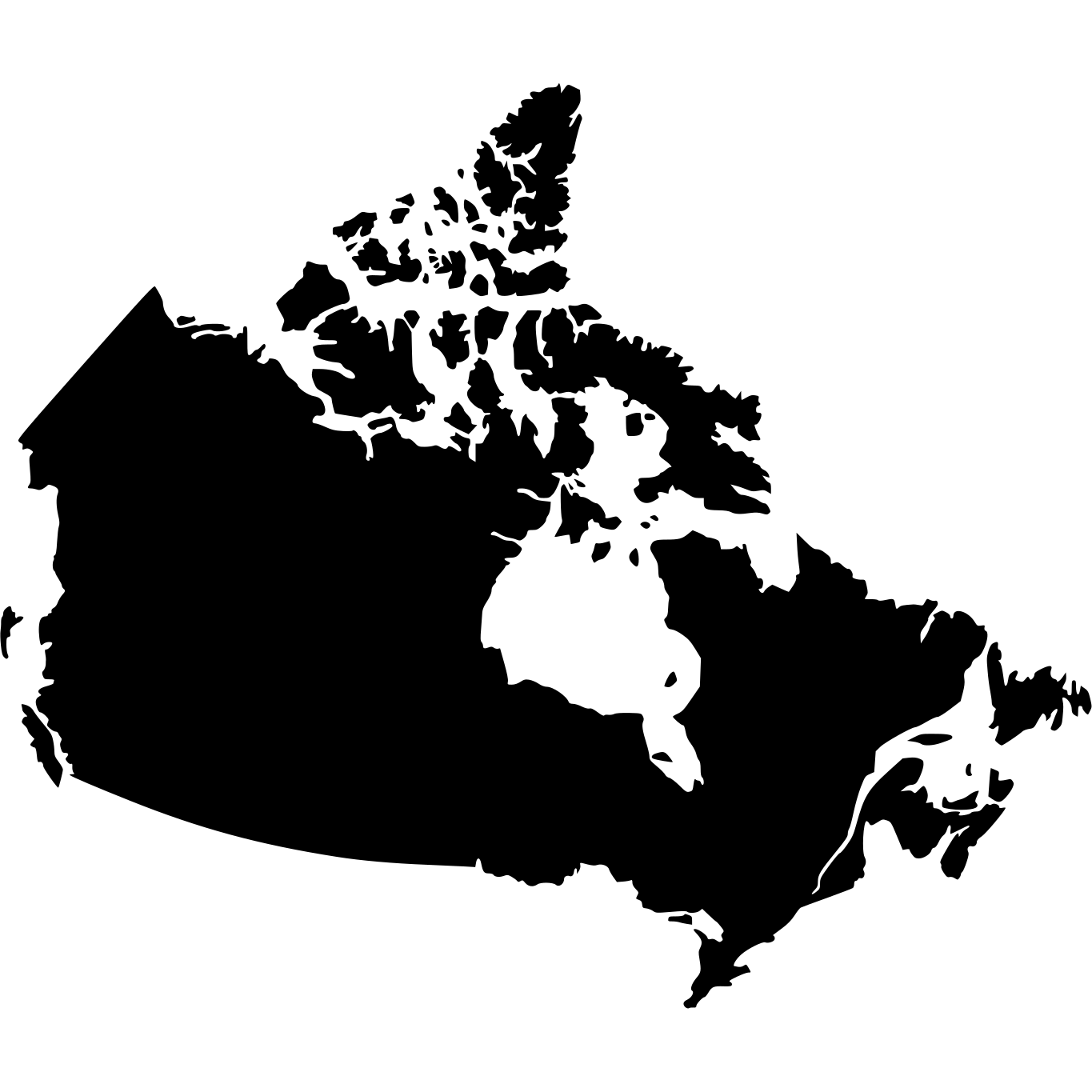
Delizioso is a Canadian brand

We're dedicated to providing you with the most up-to-date and science-backed ingredient info out there.
The data we've presented on this page has been verified by a member of the SkinSort Team.
Read more about us· Updated April 15, 2026 • Added by candrid


