Crawford Street Skin Care Restorative Facial Oil
A oil with 12 ingredients, including vitamin E.
This hydrating oil is formulated around Persea Gratissima Oil and Simmondsia Chinensis Seed Oil to hydrate skin and strengthen the skin barrier.
Worth noting
Contains EU-listed fragrance allergens, including Santalum Album Oil and Lavandula Angustifolia Oil.
We independently verify ingredients, backed by peer-reviewed research. Suggest an update.
What's inside
Ingredients List
Persea Gratissima Oil
Skin Conditioning





Simmondsia Chinensis Seed Oil
Emollient

Rosa Rubiginosa Seed Oil
Emollient
Argania Spinosa Kernel Oil
Emollient


Aniba Rosaeodora Wood Oil
Astringent








Persea Gratissima Oil, Simmondsia Chinensis Seed Oil, Rosa Rubiginosa Seed Oil, Argania Spinosa Kernel Oil, Aniba Rosaeodora Wood Oil, Pelargonium Graveolens Leaf Extract, Citrus Aurantium Dulcis Oil, Santalum Album Oil, Citrus Aurantium Bergamia Fruit Oil, Lavandula Angustifolia Oil, Cananga Odorata Flower Oil, Tocopherol
Key Ingredients
Benefits
Concerns
Ingredients Explained
This ingredient is also known as Avocado oil. It's the cold-pressed oil from the flesh of the avocado fruit packed with fatty acids (mostly oleic acid).
The rich fatty acid profile allows it to function as a skin conditioning agent and emollient; it helps soften and smooth skin while reducing water loss.
Preclinical research has found that topical avocado oil increased collagen synthesis and reduced inflammation during wound healing, giving it some skin-repairing credibility.
The unsaponifiable fraction of the oil is also interesting: studies on avocado unsaponifiables showed that it helped skin produce more collagen and other structural compounds that support healing.
The CIR Expert Panel has found this ingredient to be non-irritating in formulations.
This ingredient may not be fungal acne safe. This is because the oleic acid content falls within the range that Malassezia can use as a food source.
This ingredient does have a comedogenic rating of 0-3, but this doesn't mean a formula with this ingredient will clog pores. Human testing has proved that any finished product with a comedogenic ingredient won't automatically make you break out; it really comes down to concentration, formula, and your skin.
Learn more about Persea Gratissima OilJojoba oil is one of the most well-studied plant-derived ingredients in cosmetics. It is an emollient with a special structure.
Because it is made up of 97-98% wax esters, it closely mirrors the linear monoesters found in human sebum. This makes it skin compatible, non-greasy, and lightweight.
Unlike other plant oils, jojoba wax doesn't easily penetrate skin. It mostly works in the uppermost layers as an emollient. This just means it forms a light barrier on the skin to help retain moisture.
Formulations with jojoba esters up to 90% reduced transepidermal water loss (TEWL) and increased barrier recovery by 81% (outperforming bisabolol at 47%).
Besides barrier support, the science also suggests jojoba to have anti-inflammatory effects and potential applications for skin infections, aging, and wound healing.
Fun fact: Indigenous cultures have used jojoba as a moisturizer and to help treat burns for centuries.
Fungal acne: The Malassezia yeast is known to metabolize fatty acids in the C11-24 range and jojoba's dominant fatty acid components fall into this range. This ingredient may not be fungal acne safe.
Learn more about Simmondsia Chinensis Seed OilThis ingredient is also known as rosehip seed oil. It helps smooth skin, soften rough patches, and support a healthy moisture barrier as an emollient.
Rosehip seed oil is one of the more polyunsaturated plant oils in cosmetics; it's loaded with fatty acids like linoleic acid (~44%), alpha-linoleic acid (~34%), and oleic acid (~14).
Another interesting compound that makes it stand out from other oils is the trace amount of all-trans retinoic acid (the same molecule as prescription tretinoin), along with some carotenoids and tocopherols.
The linoleic acid is a precursor to ceramide 1, one of the essential lipids in the stratum corneum. Topical linoleic acid application has been shown to improve barrier function and reduce comedone size in clinical studies.
One study found that linoleic acid and alpha-linoleic acid lighten UV-induced hyperpigmentation. A 2015 study found that participants who used rosehip twice daily for eight weeks saw improvements in crow's feet, skin moisture, and skin elasticity compared to the placebo.
If you're hoping to get tretinoin benefits from this ingredient, it's worth noting the trans-retinoid acid is trace-level and minimal compared to the amount of retinol or tretinoin found in formulas.
A 2024 review highlighted the fatty acid composition in rosehip-based dermatological products for:
Typical usage rates range from 1-100% with 5-10% being the most common in moisturizers.
Since the oil is high in polyunsaturated fatty acids, it's prone to oxidation. Look for formulations stabilized with ingredients like vitamin E and be sure to store away from light/heat.
Fungal acne: This oil is not considered fungal acne safe because dominant fatty acids fall into the C11-24 range that Malassezia can metabolize.
Learn more about Rosa Rubiginosa Seed OilYou may know this ingredient as argan oil. It has emollient and skin conditioning properties that help soften skin and reinforce the lipid barrier.
The fatty acid profile of argan oil is roughly 45-55% oleic acid, 28-36% linoleic acid, 10-15% palmitic acid, and 5-7% stearic acid. It also contains vitamin E, sterols, squalene, and polyphenols like ferulic acid.
Two clinical studies in postmenopausal women found that applying argan oil for 60 days significantly improved skin elasticity and moisturization (reduced transepidermal water loss and increased epidermal water content).
Since it is high in oleic and linoleic acid, this ingredient may not be fungal acne safe. Both of these fall in the C11-C24 range that Malassezia yeast can metabolize.
Learn more about Argania Spinosa Kernel OilAniba Rosaeodora Wood Oil is a fragrance essential oil from the wood of the rosewood tree. It's made up almost entirely of one compound called linalool (~80-94%).
In skincare, it acts as a natural fragrance ingredient and has a woody-floral scent.
Concentration usage for this ingredient is usually tiny (well under 1%).
Allergy-wise, linalool is one of the most common fragrance allergens dermatologists tests for. This is why the EU requires labels to list it separately once it's present above tiny thresholds (0.001% in leave-on products and 0.01% in rinse-off products).
Learn more about Aniba Rosaeodora Wood OilPelargonium Graveolens Leaf Extract is a fragrance.
Citrus Aurantium Dulcis Oil comes from the bitter orange, an orange native to Southeast Asia.
This orange is commonly used in cosmetics and food. It is a common ingredient for marmalade.
Citrus peels are often made up of mainly limonene, a fragrance with a citrus scent. They also contain flavonoids, which have anti-inflammatory properties.
Learn more about Citrus Aurantium Dulcis OilSantalum Album Oil is created from the Santalum album, or the East Indian sandalwood tree. This oil has fragrance and masking properties due to its unique scent.
Sandalwood may sensitize the skin for those sensitive to fragrances.
It has been used in traditional Indian Ayurvedic medicine for centuries.
Learn more about Santalum Album OilCitrus Aurantium Bergamia Fruit Oil is the oil from the bergamot orange and is primarily used as a fragrance. It has a "fresh" and "bright orange" scent.
The main aroma compounds found in this ingredient are limonene (~27-52%), linalool (~2-22%), and linalyl acetate (~27-40%). These are known EU fragrance allergens.
The term 'fragrance' is not regulated in many countries. In many cases, it is up to the brand to define this term. For instance, many brands choose to label themselves as "fragrance-free" because they are not using synthetic fragrances. However, their products may still contain ingredients such as essential oils that are considered a fragrance.
When used topically, Citrus Aurantium Bergamia Fruit Oil is a photosensitizer due to the furanocoumarin content. Furanocoumarins absorb UV-A and cause phytophotodermatitis; this can look like redness, blistering, and lasting brown pigmentation on sun-exposed skin.
Due to this, this ingredient is capped at 0.4% in leave-on products applied to sun exposed skin.
Many modern formulas used a "furanocoumarin-free" version that sidesteps the phototoxicity issue, but still contains the fragrance allergens.
Learn more about Citrus Aurantium Bergamia Fruit OilLavandula Angustifolia Oil is more commonly known as lavender essential oil. It is considered a fragrancing ingredient.
Lavender imparts a famous scent. While the smell is lovely, this ingredient and may sensitize skin in topical products. This is because about 85% of the oil is made up of linalool and linalyl acetate.
When exposed to air, these two compounds become strong allergens. This ingredient exhibits cytotoxicity at low concentrations; amounts of 0.25% have been shown to damage skin cells.
A study from Japan found this ingredient caused lavender sensitivity after widespread exposure.
Lavender essential oil has some antimicrobial, antibacterial, and anti-inflammatory properties. However, the cons of this ingredient may outweight the pros.
More research is needed to confirm lavender essential oil's effects when used in aromatherapy.
Lavandula Angustifolia is known as the English Lavender and famous for creating purple fields in Provence, France.
Learn more about Lavandula Angustifolia OilThis ingredient is also known as Ylang Ylang essential oil.
There are several grades of this oil according to when the flowers are obtained so the exact makeup varies by origin, grade, and extraction.
In cosmetics, its job is mostly sensory: it has a sweet, floral scent often used in perfume.
Chemically, it's complex mix of fragrant molecules: geraniol, limonene, linalool and benzyl benzoate.
Several of these components are on the EU's list of recognized fragrance allergens; this means they have to be labeled when present above 0.001% in leave-on products and 0.01% in rinse-off products.
This ingredient is a known contact sensitizer for a small amount of people so it's definitely worth patch-testing if your skin is reactive.
Lab studies have found the oils does have real antioxidant and antibacterial activity, but keep in mind these are in-vitro findings rather than proven skincare benefits.
Learn more about Cananga Odorata Flower OilTocopherol is a fat-soluble antioxidant known as Vitamin E.
You'll find this ingredient in the vast majority of skincare (for good reason). It works to neutralize free radicals, or unstable molecules generated by UV exposure, pollution, and other environmental stressors, before they can cause oxidative damage to your skin cells.
Topically applied tocopherol has been shown to protect against UV damage by ramping up the skin's own natural defense enzymes.
It also acts as a skin conditioning agent; some studies show that regular topical use can improve the skin's water-binding capacity over 2-4 weeks.
This ingredient is especially loved for being a team player. When combined with Vitamin C, the photoprotective effect of both ingredients roughly doubles and the combo also helps reduce UV-induced DNA damage.
This ingredient has some brightening potential but it's more of a prevention ingredient than spot-fader. Cell studies show it can slow down melanin production but it's worth noting that it's not the most powerful brightener out there.
In formulations, it also serves as a stabilizer that helps protect other oxidation-prone ingredients from degrading.
Concentrations usually range from 0.1-1% in most leave-on products.
Learn more about TocopherolReviews
No written reviews yet. Be the first to review this product.
Recent searches
Search reviews by skin type, ingredient, or keyword.
Where it's from
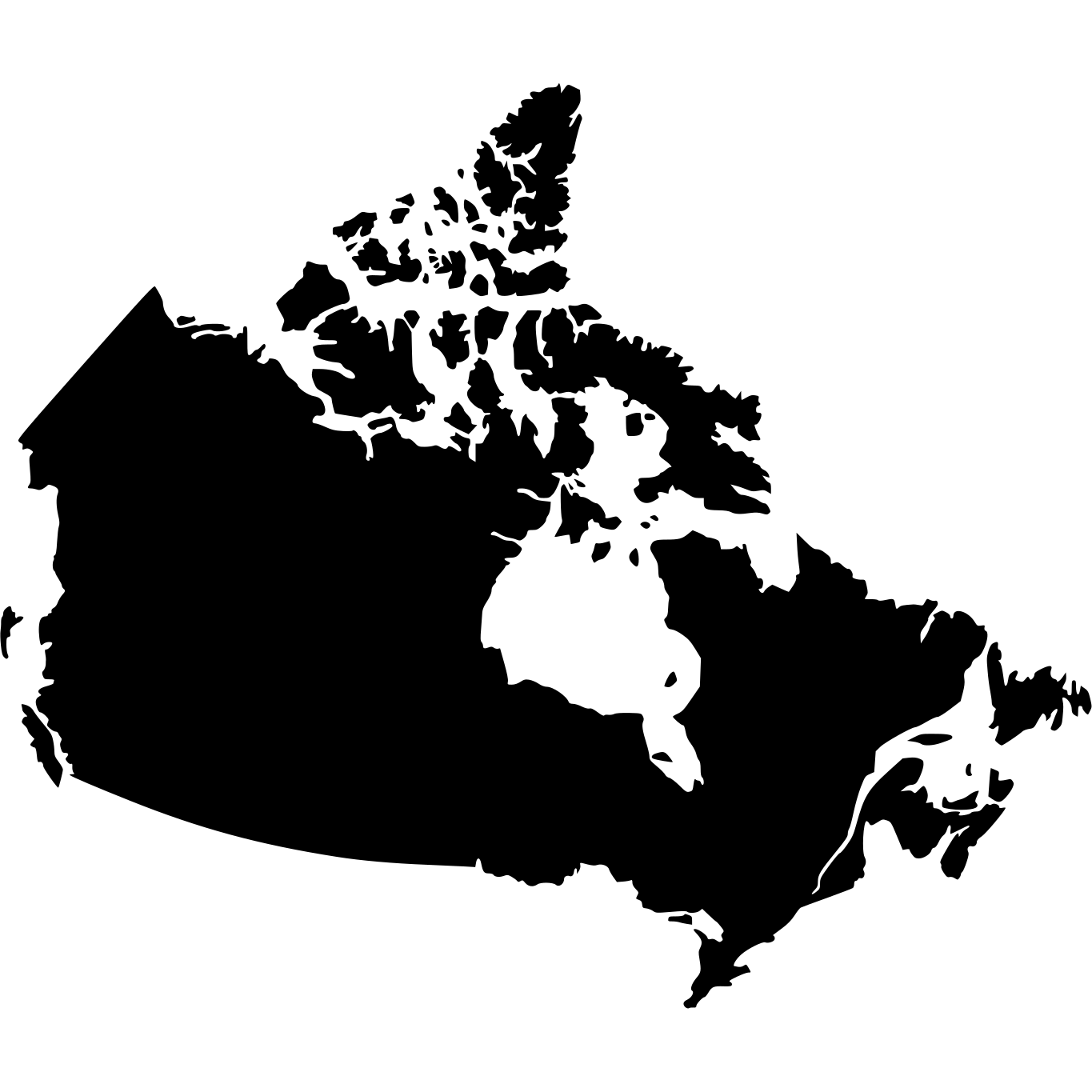
Crawford Street Skin Care is a Canadian brand
Often compared with

We're dedicated to providing you with the most up-to-date and science-backed ingredient info out there.
The data we've presented on this page has been verified by a member of the SkinSort Team.
Read more about us· Updated June 16, 2025 • Added by katelexington


