Biophora Bioactive Solution
A toner with 12 ingredients, including vitamin C, AHA, and BHA.
This smoothing toner is formulated around Glycolic Acid and Salicylic Acid to refine skin texture and fade the look of dark spots.
Worth noting
Contains Eucalyptus Globulus Leaf Oil, an EU-listed fragrance allergen.
We independently verify ingredients, backed by peer-reviewed research. Suggest an update.
What's inside


























Key Ingredients
Benefits
Concerns
Ingredients Explained
Water. It's the most common cosmetic ingredient of all. You'll usually see it at the top of ingredient lists, meaning that it makes up the largest part of the product.
So why is it so popular? Water most often acts as a solvent - this means that it helps dissolve other ingredients into the formulation.
You'll also recognize water as that liquid we all need to stay alive. If you see this, drink a glass of water. Remember to stay hydrated!
Learn more about WaterAlcohol Denat. is an alcohol with a denaturant property. It is created by mixing ethanol with other additives.
The "denat" part just means "denatured"; common denaturants include Denatonium Benzoate, t-butyl alcohol, and Diethyl Phthalate. This step makes the alcohol undrinkable (and lets brand skip taxes related to beverage alcohol).
This ingredient gets a bad rep because it is irritating and drying due to its astringent property. Astringents draw out natural oils in tissue to constrict pores and dry out your skin.
However, alcohol denat. is not all that bad.
Due to its low molecular weight, alcohol denat. tends to evaporate quickly. One study on pig skin found half of applied alcohol evaporated in 10 seconds and less than 3% stayed on skin.
This also helps other ingredients become better absorbed upon application.
Studies are conflicted about whether this ingredient causes skin dehydration. One study from 2005 found adding emollients to propanol-based sanitizer decreased skin dryness and irritation. Another study found irritation only occurs if your skin is already damaged.
Small amounts of alcohol are generally tolerated by oily skin or people who live in humid environments.
The rule of thumb is this ingredient will probably not affect your skin much if it is near the end of an ingredients list.
One thing to note:
People with ALDH2 (aldehyde dehydrogenase 2) deficiency may experience skin irritation from continued alcohol use. About 8% of the world's population have this deficiency.
The Cosmetic Ingredient Review Expert Panel has determined denatured alcohols to be safe for use in concentrations between 0.05% and 12% (depending on which denaturant is used).
Also...
This ingredient has antimicrobial and solvent properties.
The antimicrobial property helps preserve products and increase their shelf life. As a solvent, it helps dissolve other ingredients.
Look for formulas that contain glycerin, hyaluronic acid, or panthenol if you want to offset any drying effect.
This ingredient will trip away your skin's natural oils/lipids that help it lock in moisture. This can worsen dryness, trigger eczema flare-ups, and aggravate rosacea.
Be sure to patch test any product with this ingredient if you have dry or sensitive skin, eczema, or rosacea.
Learn more about Alcohol Denat.Ethoxydiglycol (aka Diethylene Glycol Monoethyl Ether) is one of the cosmetic world's quiet problem solvers.
In a formula, it is a solvent that dissolves tricky ingredients that don't want to mix in and helps spread ingredients evenly across your skin without leaving a greasy or sticky feeling
This makes it great for hard-to-dissolve actives like vitamin C, benzoyl peroxide, and self-tanner DHA.
It also has mild humectant and penetration enhancer abilities so it can help some actives absorb a little deeper.
The penetration boost is backed by lab research: studies using human skin samples found it improved how well an active dissolves into the upper layer of skin rather than tearing down your skin barrier. Reviews of its mechanism also describe it interacting gently with the lipids and water in your outermost layer of skin.
Just know this penetration-enhancing effect is not universal. It helps a lot in some formulas and did very little in others (so the benefit really depends on the specific product).
Safety-wise, the evidence is reassuring. The Cosmetic Ingredient Review Expert Panel reviewed it and concluded it's safe for use in cosmetics and recognized it as non-irritating, non-sensitizing, and non-comedogenic in skincare.
Typical leave-on skincare usage lands around 1-10%. The EU has sets caps of 2.6% in non-spray products, 10% in rinse-offs, 7% in oxidative hair dye, and 5% in non-oxidative hair dye.
Learn more about EthoxydiglycolGlycolic Acid is arguably the most famous alpha hydroxy acid (AHA) with tons of research backing its benefits.
It is found naturally in sugar cane but the form used in skincare is usually synthetic for purity and stability.
Glycolic acid removes the top layer of dead skin cells to allow newer and fresher ones to emerge.
AHAs work by breaking down the structural “glue” that holds old skin cells in place. When that buildup is gone, your skin can renew itself more efficiently.
Research also shows glycolic acid stimulates collagen production, helping to firm and thicken the skin over time. This is one of its biggest advantages over other AHAs.
Overall, glycolic acid helps with:
Fun fact: Glycolic acid boosts skin hydration by helping it produce molecules that increase hyaluronic acid naturally.
To work best, glycolic acid products should have a pH between 3-4 (that’s where exfoliation is most effective but still gentle on skin).
The pH and concentration of a product are key to its effectiveness:
It is normal to feel a slight stinging sensation when using glycolic acid. This usually fades as your skin adjusts.
Because glycolic acid has the smallest molecular size in the AHA family, it can penetrate deeper, which enhances its effectiveness but also makes it more likely to irritate sensitive skin.
If your skin is very sensitive or prone to rosacea, glycolic acid may be too strong; in that case, try milder options like lactic acid or a PHA instead.
Recent studies suggest glycolic acid might even help protect against UV damage. But don’t skip sunscreen! Freshly exfoliated skin is more sensitive to the sun.
Glycolic acid is a skincare superstar. It smooths, brightens, hydrates, and firms the skin. Unless you’re highly sensitive, it’s well worth adding to your routine.
Read more about some other popular AHA's here:
Learn more about Glycolic AcidPolysorbate 20 is a gentle, water-soluble emulsifier and mild surfactant. It stops oil and water from separating to keep your formulas blended and stable.
It also acts as a mild penetration enhancer by helping active ingredients absorb slightly better.
The common safety discussion around this ingredient involves a manufacturing byproduct called 1,4-dioxane.
Trace amounts can form during production but the EU's Scientific Committee on Consumer Safety has concluded that levels at/below 10 ppm in finished products are safe (commercial products consistently fall within acceptable margins).
True allergic reactions are uncommon and the CIR Expert Panel has confirmed this ingredient to be safe as used in cosmetics.
Because it is derived from lauric acid, it may not be fungal acne safe.
Learn more about Polysorbate 20Salicylic Acid (also known as beta hydroxy acid or BHA) is a well-known ingredient for treating skin that struggles with acne and clogged pores. It exfoliates both the skin's surface and deep within the pores to help clear out buildup, control oil, and reduce inflammation.
Unlike AHAs (alpha hydroxy acids), salicylic acid is oil-soluble. This allows it to penetrate into pores which makes it especially effective for treating blackheads and preventing future breakouts.
Salicylic acid is also known for its soothing properties. It has a similar structure to aspirin and can calm inflamed or irritated skin, making it a good option for acne-prone skin that is also sensitive.
Concentrations of 0.5-2% are recognized by the U.S. FDA as an over-the-counter topical acne product.
It can cause irritation and/or dryness if one's skin already has a compromised moisture barrier, so it's best to focus on repairing that before introducing this ingredient into your routine.
While salicylic acid does not increase sun sensitivity, it’s still important to wear sunscreen daily to protect your skin.
If you are looking for the ingredient called BHA or Butylated Hydroxyanisole, click here.
Learn more about Salicylic AcidKojic Acid is a naturally occurring organic acid that is produced during the fermentation of certain fungi. It is one of the most well-studied brightening ingredients (tyrosinase inhibitors) out there.
That's why you'll see Kojic Acid in products that target dark spots, hyperpigmentation, and general uneven skin tone. It also pairs well with other brightening actives like Alpha Arbutin, Glycolic Acid, and Vitamin C derivatives.
By latching onto the copper that the enzyme tyrosinase needs to function, Kojic Acid prevents less pigment from being made. It's so well-established that researchers regularly use it as the go-to benchmark when testing new brightening ingredients.
Some other perks include documented antioxidant and antimicrobial properties. The The CIR (Cosmetic Ingredient Review) Expert Panel concluded Kojic Acid is safe for use in cosmetic products at concentrations up to 1% and the EU's SCCS (Scientific Committee on Consumer Safety) considers it safe as a skin lightening agent at concentrations up to 0.7%.
One thing to know about Kojic Acid is that stability is its weak spot; it is sensitive to light, heat, and air exposure and will oxidize/turn brown in formulations. Its derivative, Kojic Dipalmitate, was developed as a stable alternative.
Some individuals have reported contact sensitization so be sure to patch test if you have reactive or sensitive skin.
Fun fact: It was first discovered in 1907 and naturally occurs in the production of sake, soy sauce, and miso.
Learn more about Kojic AcidSodium Ascorbyl Phosphate (SAP) is a water-soluble form of Vitamin C. It is the salt of ascorbic acid.
This ingredient is commonly used in skincare because it's more formulation-stable while still offering the same benefits as pure ascorbic acid. Ascorbic acid is notorious for breaking down when exposed to sunlight and oxygen whereas SAP has been shown to be more stable.
Studies show SAP has anti-acne and antioxidant benefits. One study found 5% of SAP lotion to be an effective ingredient for treating acne vulgaris. This is because research shows that SAP may help control acne by reducing acne-causing bacteria and slowing the oxidation of skin oils caused by UV exposure.
In addition to acne, vitamin C is important for skin structure. Lab studies suggest SAP may support collagen production in skin cells, making it a great ingredient in anti-aging routines.
Vitamin C has many benefits: it helps reduce redness, improve skin texture, fade the appearance of dark spots, and brighten the skin.
Read more about other types of Vitamin C:
Learn more about Sodium Ascorbyl PhosphateThis oil is derived from the leaves of Eucalyptus Globulus, a type of Eucalyptus tree native to Australia.
Though this oil shows antibacterial and antioxidant activity, it is also a known skin-irritant due to its fragrance components.
Sodium metabisulfite is also known as Sodium Pyrosulfite. It is a preservative, antioxidant, and disinfectant.
As a preservative, it helps stabilize cosmetic formulas without affecting their color or scent.
Disodium EDTA is a chelating agent. It grabs onto and deactivates metal ions that sneak into your products from water, packaging, or air.
This ingredient mainly works behind the scenes and helps with:
On top of that, this ingredient can counteract the effects of hard water by binding to the minerals in it.
One thing worth knowing is that Disodium EDTA has been shown to be a mild penetration enhancer. It can help other ingredients absorb into skin more effectively which can be a double-edged sword (great for actives, but can also make the active too strong if you have sensitive skin).
Clinical patch testing showed no significant skin irritation at typical use concentrations and minimal dermal absorption.
You'll most likely see this ingredient near the end of an ingredient list. It's typically found in concentrations less than 1%.
Learn more about Disodium EDTASodium Hydroxide is also known as lye or caustic soda. It is used to adjust the pH of products; many ingredients require a specific pH to be effective.
In small amounts, sodium hydroxide is considered safe to use. However, large amounts may cause chemical burns due to its high alkaline.
Your skin has a natural pH and acid mantle. This acid mantle helps prevent harmful bacteria from breaking through. The acid mantle also helps keep your skin hydrated.
"Alkaline" refers to a high pH level. A low pH level would be considered acidic.
Learn more about Sodium HydroxideReviews
No written reviews yet. Be the first to review this product.
Recent searches
Search reviews by skin type, ingredient, or keyword.
Where it's from
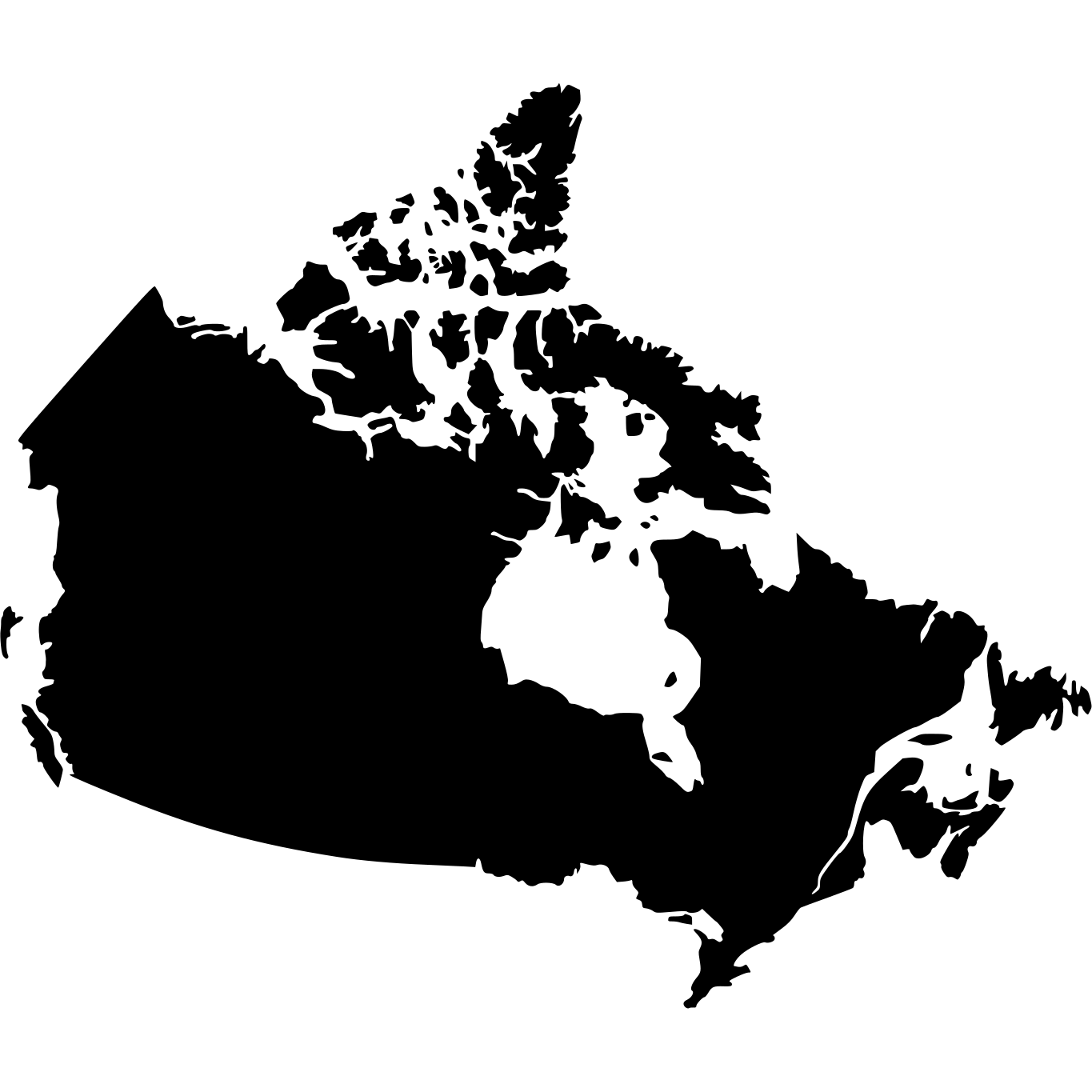
Biophora is a Canadian brand
Often compared with

We're dedicated to providing you with the most up-to-date and science-backed ingredient info out there.
The data we've presented on this page has been verified by a member of the SkinSort Team.
Read more about us· Updated May 9, 2025 • Added by katelexington


