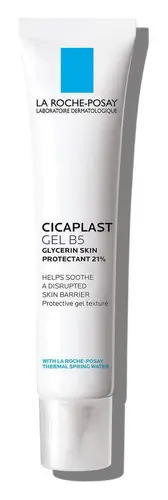
What's inside
What's inside
 Benefits

Concerns
Ingredients Side-by-side
Water
Skin ConditioningGlycerin
Humectant


Stearic Acid
Cleansing

Isopropyl Myristate
Emollient
Paraffinum Liquidum
Emollient
Glyceryl Stearate
Emollient
Glycol Stearate
Emollient
Dimethicone
Emollient
PEG-100 Stearate
Surfactant
Petrolatum
Emollient
Cetyl Alcohol
Emollient

Tapioca Starch
Phenoxyethanol
Preservative
Magnesium Aluminum Silicate
Absorbent
Methylparaben
Preservative


Acrylates/C10-30 Alkyl Acrylate Crosspolymer
Emulsion StabilisingParfum
Masking


Propylparaben
Preservative
Disodium EDTA
Xanthan Gum
EmulsifyingStearamide Amp
Aloe Barbadensis Leaf Juice Powder
Skin Conditioning

CI 77891
Cosmetic ColorantWater, Glycerin, Stearic Acid, Isopropyl Myristate, Paraffinum Liquidum, Glyceryl Stearate, Glycol Stearate, Dimethicone, PEG-100 Stearate, Petrolatum, Cetyl Alcohol, Tapioca Starch, Phenoxyethanol, Magnesium Aluminum Silicate, Methylparaben, Acrylates/C10-30 Alkyl Acrylate Crosspolymer, Parfum, Propylparaben, Disodium EDTA, Xanthan Gum, Stearamide Amp, Aloe Barbadensis Leaf Juice Powder, CI 77891

Reviews
Ingredients Explained
These ingredients are found in both products.
Ingredients higher up in an ingredient list are typically present in a larger amount.
Cetyl Alcohol is a fatty alcohol. Fatty Alcohols are most often used as an emollient or to thicken a product.
Its main roles are:
Though it has "alcohol" in the name, it is not related to denatured alcohol or ethyl alcohol.
The FDA allows products labeled "alcohol-free" to have fatty alcohols.
This ingredient may not be fungal acne safe. It is a primary fatty alcohol with a chain length above 12 carbons. A study from 2019 show Malassezia can feed on fatty alcohols in this range, so it may trigger fungal acne in those prone to it.
Learn more about Cetyl AlcoholParaffinum Liquidum is a highly-refined cosmetic-grade mineral oil. It is also known as liquid paraffin.
Despite its controversial reputation, the science is pretty clear: it's one of the most well-studied and effective moisturizing ingredients out there.
As an occlusive, it forms a protective layer on the skin that locks in moisture and prevents transepidermal water loss (TEWL). This makes it especially great for compromised skin barriers.
The "it clogs your pores" myth has been around for decades; a study found that industrial-grade mineral oil may be comedogenic but cosmetic-grade mineral oil is not (these two are very, very different).
A 2017 review concluded that cosmetic use of mineral oils and waxes does not present a risk to consumers due to absorption.
Mineral oil got a bad rap from the old rabbit ear studies. When tested on actual human skin, cosmetic-grade mineral oil showed no comedogenic activity. The rating of 0 is a correction of outdated science.
Mineral oil is an inert substance with no fatty acids so there's nothing to feed Malassezia. This ingredient is fungal acne safe.
Learn more about Paraffinum Liquidum