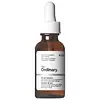
This anti-aging serum is formulated around Nicotiana Benthamiana Hexapeptide-40 Sh-Oligopeptide-1 and Nicotiana Benthamiana Hexapeptide-40 Sh-Polypeptide-76 to soften the look of wrinkles and fade the look of dark spots.
This anti-aging serum is formulated around Nicotiana Benthamiana Hexapeptide-40 Sh-Oligopeptide-1 and Nicotiana Benthamiana Hexapeptide-40 Sh-Polypeptide-76 to soften the look of wrinkles.


What's inside
What's inside
 Key Ingredients
Benefits
Ingredients Side-by-side
Water
Skin ConditioningButylene Glycol
Humectant

Nicotiana Benthamiana Hexapeptide-40 Sh-Oligopeptide-1
Skin Conditioning


Nicotiana Benthamiana Hexapeptide-40 Sh-Polypeptide-76
Skin Conditioning
Nicotiana Benthamiana Octapeptide-30 Sh-Oligopeptide-2
Skin Conditioning
Water, Butylene Glycol, Nicotiana Benthamiana Hexapeptide-40 Sh-Oligopeptide-1, Nicotiana Benthamiana Hexapeptide-40 Sh-Polypeptide-76, Nicotiana Benthamiana Octapeptide-30 Sh-Oligopeptide-2, Sclerotium Gum, Glycerin, Trisodium Ethylenediamine Disuccinate, Citric Acid, Sodium Citrate, Phenoxyethanol, Chlorphenesin
Water
Skin ConditioningButylene Glycol
Humectant
Glycerin
Humectant
Squalane
Emollient
Nicotiana Benthamiana Hexapeptide-40 Sh-Polypeptide-2
Skin Conditioning
Nicotiana Benthamiana Sh-Polypeptide-15 Hexapeptide-40
Skin Conditioning
Nicotiana Benthamiana Hexapeptide-40 Sh-Oligopeptide-1
Skin Conditioning
Nicotiana Benthamiana Hexapeptide-40 Sh-Polypeptide-76
Skin Conditioning
Nicotiana Benthamiana Octapeptide-30 Sh-Oligopeptide-2
Skin Conditioning
Nicotiana Benthamiana Hexapeptide-40 Sh-Polypeptide-47
Zingiber Officinale Root Extract
Masking
Bisabolol
Antioxidant

Glycine Soja Extract
Skin ConditioningPullulan
Xanthan Gum
EmulsifyingLecithin
Emollient
Sclerotium Gum
Emulsion StabilisingSilica
Abrasive


Pentylene Glycol
Skin Conditioning
Trisodium Ethylenediamine Disuccinate
ChelatingEthylhexylglycerin
Skin Conditioning1,2-Hexanediol
Skin Conditioning
Citric Acid
Buffering


Potassium Sorbate
Preservative
Phenoxyethanol
Preservative
Water, Butylene Glycol, Glycerin, Squalane, Nicotiana Benthamiana Hexapeptide-40 Sh-Polypeptide-2, Nicotiana Benthamiana Sh-Polypeptide-15 Hexapeptide-40, Nicotiana Benthamiana Hexapeptide-40 Sh-Oligopeptide-1, Nicotiana Benthamiana Hexapeptide-40 Sh-Polypeptide-76, Nicotiana Benthamiana Octapeptide-30 Sh-Oligopeptide-2, Nicotiana Benthamiana Hexapeptide-40 Sh-Polypeptide-47, Zingiber Officinale Root Extract, Bisabolol, Glycine Soja Extract, Pullulan, Xanthan Gum, Lecithin, Sclerotium Gum, Silica, Pentylene Glycol, Trisodium Ethylenediamine Disuccinate, Ethylhexylglycerin, 1,2-Hexanediol, Citric Acid, Potassium Sorbate, Phenoxyethanol
Reviews
Ingredients Explained
These ingredients are found in both products.
Ingredients higher up in an ingredient list are typically present in a larger amount.
Butylene Glycol (or BG) is used within cosmetic products for a few different reasons:
Overall, Butylene Glycol is a safe and well-rounded ingredient that works well with other ingredients.
Though this ingredient works well with most skin types, some people with sensitive skin may experience a reaction such as allergic rashes, closed comedones, or itchiness.
Learn more about Butylene GlycolCitric Acid is an alpha hydroxy acid (AHA) naturally found in citrus fruits like oranges, lemons, and limes.
Like other AHAs, citric acid can exfoliate skin by breaking down the bonds that hold dead skin cells together. This helps reveal smoother and brighter skin underneath.
However, this exfoliating effect only happens at high concentrations (20%) which can be hard to find in cosmetic products.
Due to this, citric acid is usually included in small amounts as a pH adjuster. This helps keep products slightly more acidic and compatible with skin's natural pH.
In skincare formulas, citric acid can:
While it can provide some skin benefits, research shows lactic acid and glycolic acid are generally more effective and less irritating exfoliants.
Most citric acid used in skincare today is made by fermenting sugars (usually from molasses). This synthetic version is identical to the natural citrus form but easier to stabilize and use in formulations.
Rosacea skin has a lower threshold for acids generally, with 62.5% of rosacea subjects in one study reacting to lactic acid in a sting test. This is why we mark citric acid as a potential rosacea trigger.
However, this ingredient shows up as a pH adjuster or chelator at roughly 0.1-1% in many products. These low levels are unlikely to be an issue for rosacea skin and becomes a potential trigger at exfoliating concentrations (20%). Because everybody's skin is unique, we recommend a patch test if you are unsure.
Learn more about Citric AcidGlycerin (or glycerol) is a compound naturally found in your skin. It's a powerhouse humectant that pulls water into the stratum corneum.
Topically, glycerin does several things at once:
Your skin makes glycerin on its own (mostly from sebaceous oil breakdown) and shuttles it to your outermost layer of skin, or your epidermis, via aquaporin-3.
Aquaporin-3 is a transporter that is essential for normal skin hydration, elasticity, and repair. Interestingly, mice lacking in AQP3 have dry and less elastic skin that can be fully corrected with glycerin.
This ingredient is non-irritating, plays well with almost every ingredient, and works across all skin types. Typical use is anywhere between 3-10% but can go up to 79% in some leave-on products.
Just know very high concentrations (>40%) can feel tacky in low humidity.
Glycerin is the name for this ingredient in American English. British English uses Glycerol/Glycerine.
Learn more about GlycerinThis ingredient is a plant-grown version of a human epidermal growth factor (EGF). The "Sh-Oligopeptide-1" part is EGF; it is a small signaling protein your skin makes naturally.
The "Hexapeptide-40" is a little tag fused onto it and "Nicotiana Benthamiana" is the tobacco-relative plant used as a tiny factory to brew the protein (instead of yeast or bacteria, which are the other common methods).
In a formula, EGF acts like a messenger that tells skin cells to get busy: it encourages keratinocytes to divide/migrate, supports fibroblasts, and is best known for its role in wound healing.
EGF plays a pivotal role in wound healing and tissue maintenance by regulating cell survival, proliferation, migration, and differentiation; a lab-made recombinant human EGF has long been used to promote skin wound healing.
The current evidence is promising but modest at scale.
In one 3-month study of 29 women with photoaged skin, a topical EGF serum significantly improved brown pigmentation, skin texture, pore size, and wrinkles. A systematic review noted that recombinant EGF promotes migration of aged fibroblasts and increases hyaluronic acid + collagen synthesis.
The honest caveat is that EGF is a large, water-loving molecule so how well it penetrates intact skin is still debated and a lot of the strongest claims come from small or brand-run studies.
Typical use levels are very low and expressed in parts per million rather than percentages. Most cosmetic products land somewhere under 10 ppm (roughly 0.0001-0.001%).
Learn more about Nicotiana Benthamiana Hexapeptide-40 Sh-Oligopeptide-1This is a lab-designed fusion peptide that gets its name from how it's made.
It pairs a small carrier peptide with a single-chain recombinant human protein that engineered to be identical to the human gene coding for Transforming Growth Factor Beta-2 (TGF-β2).
Rather than being brewed in bacteria, it's grown inside Nicotiana benthamiana, a tobacco relative used as a tiny plant "factory" (a technique called molecular farming that's well documented in the scientific literature for producing functional human growth factors).
In a formula, this ingredient acts as an anti-aging and skin conditioning active.
TGF-β2 is a signaling molecule that switches on the pathway in your skin to stimulate the synthesis of collagen I and support the skin's own lipid production.
This is why manufacturer's pitch it as a retinol-like alternative. And unlike retinoids, this ingredient doesn't increase your skin's sensitivity to the sun in the first few weeks of use. This makes it suitable for daytime use.
The headline claims for this ingredient come from the manufacturer's own 28 day in vivo studies. They reported reductions in wrinkle count, volume and depth, pore size reduction, and increases in radiance, hydration, firmness, and elasticity.
Though these sound solid, just keep in mind these are company-run trials rather than independent peer-reviewed dermatology papers.
The broader peer-reviewed work mostly backs the production method and the general collagen-stimulating biology of plant made TGF-β2 proteins and not an exact finished product.
One honest caveat: the molecule is large (like collagen) so it likely sits more at the surface rather than penetrating deeply into skin.
Typical concentration use levels are quite low and the actual bioactive protein is only present in trace amounts since growth factors work at very low doses.
Learn more about Nicotiana Benthamiana Hexapeptide-40 Sh-Polypeptide-76Phenoxyethanol is one of the most widely used preservatives in skincare (and for good reason!).
It has a large spectrum of antimicrobial activity and especially effective bacteria, yeast, and mold while only having a weak effect on your skin's natural microbiome.
On a cellular level, it disrupts the cell membranes of microbes by poking holes that make the cell leak. This shuts down the chemical reactions the microbe needs to make energy so it can no longer survive.
Another perk of this ingredient is that it stays functional across a wide pH range (3-10).
You'll often see it paired with boosters like Ethylhexylglycerin; one study showed that a 1:9 ratio of Ethylhexylglycerin to Phenoxyethanol damages bacterial membranes as effectively as doubling the Phenoxyethanol concentration on its own.
Typical use concentrations range from 0.3-1% depending on the formula, and this ingredient is capped at 1% int the EU.
Safety-wise, the fear mongering does not hold up to the evidence. The EU's Scientific Committee on Consumer Safety and FDA consider it safe as a preservative at up to 1%, including for children of all ages.
Adverse systemic effects only showed up in animal studies at exposures roughly 200x higher than what people get from cosmetics. And despite its very widespread use, this ingredient is a rare sensitizer and allergic reactions are uncommon.
Learn more about PhenoxyethanolSclerotium Gum is a natural sugar-based fiber made by fermenting a fungus called Sclerotium rolfsii. It's often used as the plant-friendly alternative for synthetic thickeners like carbomer.
In skincare, it works as a thickener, gel former, and stabilizer that keeps heavy ingredients suspended so a product does not separate.
It is non-ionic and forms a triple helix in solution. This is just a fancy way of saying it builds a smooth, cushiony, and non-sticky gel that feels silkier than many other gums.
Another perk of this ingredient is that it is very sturdy and holds up across a wide pH range (~2-11). It's also good at resisting heat and hydrolysis.
Since it holds water at the skin surface, it can provide some light hydration as well.
Typical use levels are around 0.25-2%; formulators usually use 0.2-0.5% to thicken lotions and up to 2% for a firmer gel base.
This ingredient has been found safe in cosmetics with no meaningful evidence of skin sensitization.
Learn more about Sclerotium GumTrisodium Ethylenediamine Disuccinate is used to help stabilize a product.
It is a chelating agent, meaning it helps prevent metal ions from binding to other ingredients. This prevents unwanted reactions in products. Metal ions can come into a product via the water ingredient. They are found in trace amounts and are not known to be harmful.
Water. It's the most common cosmetic ingredient of all. You'll usually see it at the top of ingredient lists, meaning that it makes up the largest part of the product.
So why is it so popular? Water most often acts as a solvent - this means that it helps dissolve other ingredients into the formulation.
You'll also recognize water as that liquid we all need to stay alive. If you see this, drink a glass of water. Remember to stay hydrated!
Learn more about WaterThis peptide has hair and skin conditioning properties.
According to the manufacturer, this ingredient contains a plant protein called plant-IGF1 that is able to thicken the epidermis (or the outermost layer of skin).
An in-vivo study done by the manufacturer claims:
While this seems promising, more studies are needed. (Though there's no harm in testing out this ingredient!)
Learn more about Nicotiana Benthamiana Octapeptide-30 Sh-Oligopeptide-2

