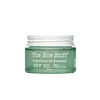
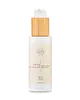
The Eco Shift Brightening UV Sunscreen & Skin Primer With SPF 50 Versus Lana Skin Protect Brightening Sunblock SPF 80
This chemical sunscreen covers burning UVB and near UVA but not the deep UVA that drives aging.
This hybrid sunscreen covers the full UV range and blocks ~99% of UVB at SPF 80.

What's inside
What's inside
 Key Ingredients
Benefits
Concerns
Ingredients Side-by-side


Water
Skin ConditioningCetearyl Alcohol
Emollient






Glycerin
Humectant


Caprylic/Capric Triglyceride
Masking
Propylene Glycol
Humectant
Niacinamide
Smoothing









Alpha-Arbutin
Antioxidant

Carica Papaya Fruit Extract
Skin ConditioningZinc Oxide
Cosmetic Colorant

Ethylhexyl Methoxycinnamate
UV Absorber
Titanium Dioxide
Cosmetic Colorant
Pachyrhizus Erosus Root Extract
Skin ConditioningButyl Methoxydibenzoylmethane
UV Absorber
Dimethicone Crosspolymer
Emulsion Stabilising
Hydrolyzed Lycopersicon Esculentum Fruit Extract
EmollientCarbomer
Emulsion StabilisingXanthan Gum
EmulsifyingDimethicone
Emollient
Tocopherol
Antioxidant
Citric Acid
Buffering
Parfum
Masking

Silica
Abrasive
Tetrasodium EDTA
ChelatingWater, Cetearyl Alcohol, Glycerin, Caprylic/Capric Triglyceride, Propylene Glycol, Niacinamide, Alpha-Arbutin, Carica Papaya Fruit Extract, Zinc Oxide, Ethylhexyl Methoxycinnamate, Titanium Dioxide, Pachyrhizus Erosus Root Extract, Butyl Methoxydibenzoylmethane, Dimethicone Crosspolymer, Hydrolyzed Lycopersicon Esculentum Fruit Extract, Carbomer, Xanthan Gum, Dimethicone, Tocopherol, Citric Acid, Parfum, Silica, Tetrasodium EDTA
Reviews
Alternatives
Ingredients Explained
These ingredients are found in both products.
Ingredients higher up in an ingredient list are typically present in a larger amount.
This ingredient is also known as Octinoxate and is one of the oldest and most widely used chemical UV filters in skincare.
It has a simple job: soap up UVB radiation (290-320 nm), the wavelengths responsible for sunburn and a big chunk of long-term sun damage.
In formulas, it's always paired with a separate UVA filter because octinoxate solely protects skin from UVB.
Because it's an oil-soluble liquid, it's easy to blend into the oil phase of lotions/creams and gives a cosmetically elegant feel.
The one quirk about formulating this ingredient is photostability; the molecule slowly changes shape into a less effective version when sunlight hits it. So the longer you're in the sun, the weaker its protection gets. The drop can be more than 30% in some formulas.
It also doesn't play nice with Avobenzone (the common UVA filter) since avobenzone destabilizes octinoxate and the two degrade each other. But don't worry: brands have solved this issue by adding photostabilizers like Tinosorb S to prevent degradation and keep SPF stable under heavy UV exposure.
The maximum allowed level is 10% in the EU and Australia, 7.5% in the US and Canada, and 20% in Japan.
The Cosmetic Ingredient Review Panel has concluded this ingredient to be safe in cosmetics up to 10%.
One last thing worth knowing for context:
Octinoxate has been the subject of ongoing review in Europe where the Scientific Committee on Consumer Safety's (SCCS) 2025 final opinion is that this ingredient is an endocrine-active substance.
Lab and animal studies suggest it can act a bit like a hormone in the body (mildly mimicking estrogen and slightly blocking male hormones). It's important to know this hasn't really been shown to happen in everyday human use.
This ingredient is also banned in Hawaii over coral reef concerns.
Learn more about Ethylhexyl MethoxycinnamateTocopherol is a fat-soluble antioxidant known as Vitamin E.
You'll find this ingredient in the vast majority of skincare (for good reason). It works to neutralize free radicals, or unstable molecules generated by UV exposure, pollution, and other environmental stressors, before they can cause oxidative damage to your skin cells.
Topically applied tocopherol has been shown to protect against UV damage by ramping up the skin's own natural defense enzymes.
It also acts as a skin conditioning agent; some studies show that regular topical use can improve the skin's water-binding capacity over 2-4 weeks.
This ingredient is especially loved for being a team player. When combined with Vitamin C, the photoprotective effect of both ingredients roughly doubles and the combo also helps reduce UV-induced DNA damage.
This ingredient has some brightening potential but it's more of a prevention ingredient than spot-fader. Cell studies show it can slow down melanin production but it's worth noting that it's not the most powerful brightener out there.
In formulations, it also serves as a stabilizer that helps protect other oxidation-prone ingredients from degrading.
Concentrations usually range from 0.1-1% in most leave-on products.
Learn more about Tocopherol

