
What's inside
What's inside
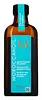 Key Ingredients
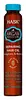
No key ingredients
Benefits
Concerns
Ingredients Side-by-side


Cyclopentasiloxane
Emollient
Dimethiconol
Emollient
Argania Spinosa Kernel Oil
Emollient







Keratin Amino Acids
Skin ConditioningGlycine Soja Oil
Emollient


Vitis Vinifera Seed Oil
Emollient
Citrus Aurantium Dulcis Oil
Masking
Tocopherol
Antioxidant



Water
Skin ConditioningButylene Glycol
Humectant
Phenoxyethanol
Preservative
Ethylhexylglycerin
Skin ConditioningCitral
Perfuming


Limonene
Perfuming
Linalool
Perfuming
CI 26100
Cosmetic ColorantCI 47000
Cosmetic Colorant
Reviews
Ingredients Explained
These ingredients are found in both products.
Ingredients higher up in an ingredient list are typically present in a larger amount.
You may know this ingredient as argan oil. It has emollient and skin conditioning properties that help soften skin and reinforce the lipid barrier.
The fatty acid profile of argan oil is roughly 45-55% oleic acid, 28-36% linoleic acid, 10-15% palmitic acid, and 5-7% stearic acid. It also contains vitamin E, sterols, squalene, and polyphenols like ferulic acid.
Two clinical studies in postmenopausal women found that applying argan oil for 60 days significantly improved skin elasticity and moisturization (reduced transepidermal water loss and increased epidermal water content).
Since it is high in oleic and linoleic acid, this ingredient may not be fungal acne safe. Both of these fall in the C11-C24 range that Malassezia yeast can metabolize.
Learn more about Argania Spinosa Kernel OilCI 26100 is a synthetic red dye that does exactly one job: it makes a product look red.
It is oil-soluble rather than water-soluble so you'll find it in oily formulas like nail products, hair oils, or oil-based cosmetics.
On concentrations, neither the EU nor the FDA sets a hard number. The EU allows it with purity limits on leftover manufacturing residues and the FDA allows it in externally applied cosmetics at levels consistent with batch-certified good manufacturing practice.
Industry reports around 0.5% concentration usage in leave-on products, but most products use far less because it's a pretty strong dye.
The one rule that both regions share is that it isn't allowed anywhere it would touch mucous membranes (so no lipstick or eye products).
That restriction comes from an unresolved 2005 EU data request on how much of the dye penetrates skin and breaks down there, and not from any reported consumer harm.
Allergy risk is low and a guinea pig study ranked it a much weaker sensitizer than common hair-dye chemicals. But the same study found animals sensitized to paraphenylenediamine sometimes cross-reacted to it, so it's worth flagging for a patch test if you have a known permanant-hair-dye allergy.
Learn more about CI 26100We don't have a description for CI 47000 yet.


