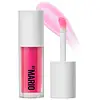
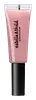
This barrier-repair lip moisturizer is formulated around Ricinus Communis Seed Oil and Simmondsia Chinensis Seed Oil to strengthen the lip barrier and hydrate lips.


What's inside
What's inside
 Key Ingredients
Benefits
Concerns
Ingredients Side-by-side
Polybutene
Octyldodecanol
Emollient
Pentaerythrityl Tetraisostearate
Emollient

Silica Silylate
Emollient
Ethylhexyl Palmitate
Emollient


Ricinus Communis Seed Oil
Masking


Simmondsia Chinensis Seed Oil
Emollient

Punica Granatum Flower Extract
Skin Conditioning
Polyglyceryl-3 Diisostearate
Emulsifying
Tribehenin
Emollient
Tocopheryl Acetate
Antioxidant


Sorbitan Isostearate
Emulsifying
Trihydroxystearin
Skin Conditioning
Lactic Acid
Buffering





Sodium Hyaluronate
Humectant

Palmitoyl Tripeptide-1
Skin Conditioning
Parfum
Masking
CI 77891
Cosmetic ColorantIron Oxides
CI 15850
Cosmetic ColorantCI 42090
Cosmetic ColorantCI 19140
Cosmetic ColorantPolybutene, Octyldodecanol, Pentaerythrityl Tetraisostearate, Silica Silylate, Ethylhexyl Palmitate, Ricinus Communis Seed Oil, Simmondsia Chinensis Seed Oil, Punica Granatum Flower Extract, Polyglyceryl-3 Diisostearate, Tribehenin, Tocopheryl Acetate, Sorbitan Isostearate, Trihydroxystearin, Lactic Acid, Sodium Hyaluronate, Palmitoyl Tripeptide-1, Parfum, CI 77891, Iron Oxides, CI 15850, CI 42090, CI 19140


Ingredients Explained
These ingredients are found in both products.
Ingredients higher up in an ingredient list are typically present in a larger amount.
Ci 77891 is a white pigment from Titanium dioxide. It is naturally found in minerals such as rutile and ilmenite.
It's main function is to add a white color to cosmetics. It can also be mixed with other colors to create different shades.
Ci 77891 is commonly found in sunscreens due to its ability to block UV rays.
Learn more about CI 77891This ingredient is also known as castor oil. It is a skin conditioning ingredient.
The star component of castor oil is ricinoleic acid, an unusual fatty acid that makes up ~80-92% of its composition.
In skincare, it is an emollient that dries down to a solid film with water-binding properties. This helps keep skin hydrated and helps reduce transepidermal water loss (TEWL).
A 2026 dermatology review pulls together its broader uses:
Human clinical testing found this ingredient to be non-irritating and non-sensitizing.
Because castor oil contains fatty acids in the C11-24 range, this ingredient may not be fungal acne safe.
At this time, the literature does not support castor oil in regrowing hair. A 2022 systematic review found no strong evidence that it supports hair growth and only weak evidence that it improves hair shine.
Castor oil itself carries "perfuming" and "masking" function tags according to the official CosIng database. This is because of its mild odor and odor-dampening properties.
Learn more about Ricinus Communis Seed OilJojoba oil is one of the most well-studied plant-derived ingredients in cosmetics. It is an emollient with a special structure.
Because it is made up of 97-98% wax esters, it closely mirrors the linear monoesters found in human sebum. This makes it skin compatible, non-greasy, and lightweight.
Unlike other plant oils, jojoba wax doesn't easily penetrate skin. It mostly works in the uppermost layers as an emollient. This just means it forms a light barrier on the skin to help retain moisture.
Formulations with jojoba esters up to 90% reduced transepidermal water loss (TEWL) and increased barrier recovery by 81% (outperforming bisabolol at 47%).
Besides barrier support, the science also suggests jojoba to have anti-inflammatory effects and potential applications for skin infections, aging, and wound healing.
Fun fact: Indigenous cultures have used jojoba as a moisturizer and to help treat burns for centuries.
Fungal acne: The Malassezia yeast is known to metabolize fatty acids in the C11-24 range and jojoba's dominant fatty acid components fall into this range. This ingredient may not be fungal acne safe.
Learn more about Simmondsia Chinensis Seed Oil

