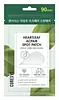
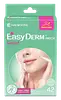
This blemish patch uses Hydrocolloid to cover open blemishes and absorb the fluid they release.
This acne treatment is formulated around Melaleuca Alternifolia Leaf Oil and Salicylic Acid to clear breakouts.

What's inside
What's inside
 Key Ingredients
Benefits
Concerns
Ingredients Side-by-side
Acrylates Copolymer
Vinyl Caprolactam/Vp/Dimethylaminoethyl Methacrylate Copolymer
Skin ConditioningEpilobium Angustifolium Flower/Leaf/Stem Extract
Skin ConditioningPvp
Emulsion StabilisingButylene Glycol
Humectant

Houttuynia Cordata Extract
Skin Conditioning

Salicylic Acid
Masking










Sorbic Acid
Preservative
Phenoxyethanol
Preservative
Centella Asiatica Extract
Cleansing

Sodium Hydroxide
BufferingSodium Metabisulfite
Antioxidant
1,2-Hexanediol
Skin Conditioning
Melaleuca Alternifolia Leaf Extract
Perfuming
Madecassoside
Antioxidant
Acrylates Copolymer, Vinyl Caprolactam/Vp/Dimethylaminoethyl Methacrylate Copolymer, Epilobium Angustifolium Flower/Leaf/Stem Extract, Pvp, Butylene Glycol, Houttuynia Cordata Extract, Salicylic Acid, Sorbic Acid, Phenoxyethanol, Centella Asiatica Extract, Sodium Hydroxide, Sodium Metabisulfite, 1,2-Hexanediol, Melaleuca Alternifolia Leaf Extract, Madecassoside
Acrylates Copolymer
Vinyl Caprolactam/Vp/Dimethylaminoethyl Methacrylate Copolymer
Skin ConditioningButylene Glycol
Humectant
Melaleuca Alternifolia Leaf Oil
Antioxidant

Pvp
Emulsion StabilisingSalicylic Acid
Masking
Phenoxyethanol
Preservative
Polysorbate 80
Emulsifying
Epilobium Angustifolium Flower/Leaf/Stem Extract
Skin ConditioningVitis Vinifera Seed Extract
Antimicrobial
Volcanic Ash
Abrasive
Sodium Metabisulfite
Antioxidant
Phytosphingosine
Skin Conditioning
Sodium Hyaluronate
Humectant
Limonene
Perfuming
Acrylates Copolymer, Vinyl Caprolactam/Vp/Dimethylaminoethyl Methacrylate Copolymer, Butylene Glycol, Melaleuca Alternifolia Leaf Oil, Pvp, Salicylic Acid, Phenoxyethanol, Polysorbate 80, Epilobium Angustifolium Flower/Leaf/Stem Extract, Vitis Vinifera Seed Extract, Volcanic Ash, Sodium Metabisulfite, Phytosphingosine, Sodium Hyaluronate, Limonene
Ingredients Explained
These ingredients are found in both products.
Ingredients higher up in an ingredient list are typically present in a larger amount.
Acrylates Copolymer is used as a film-forming agent and texture enhancer.
After applied, Acrylates Copolymer forms a thin film cover that helps skin feel more soft. It can help sunscreens become more water-resistant.
It is also used to make a product more thick.
Learn more about Acrylates CopolymerButylene Glycol (or BG) is used within cosmetic products for a few different reasons:
Overall, Butylene Glycol is a safe and well-rounded ingredient that works well with other ingredients.
Though this ingredient works well with most skin types, some people with sensitive skin may experience a reaction such as allergic rashes, closed comedones, or itchiness.
Learn more about Butylene GlycolWe don't have a description for Epilobium Angustifolium Flower/Leaf/Stem Extract yet.
Phenoxyethanol is one of the most widely used preservatives in skincare (and for good reason!).
It has a large spectrum of antimicrobial activity and especially effective bacteria, yeast, and mold while only having a weak effect on your skin's natural microbiome.
On a cellular level, it disrupts the cell membranes of microbes by poking holes that make the cell leak. This shuts down the chemical reactions the microbe needs to make energy so it can no longer survive.
Another perk of this ingredient is that it stays functional across a wide pH range (3-10).
You'll often see it paired with boosters like Ethylhexylglycerin; one study showed that a 1:9 ratio of Ethylhexylglycerin to Phenoxyethanol damages bacterial membranes as effectively as doubling the Phenoxyethanol concentration on its own.
Typical use concentrations range from 0.3-1% depending on the formula, and this ingredient is capped at 1% int the EU.
Safety-wise, the fear mongering does not hold up to the evidence. The EU's Scientific Committee on Consumer Safety and FDA consider it safe as a preservative at up to 1%, including for children of all ages.
Adverse systemic effects only showed up in animal studies at exposures roughly 200x higher than what people get from cosmetics. And despite its very widespread use, this ingredient is a rare sensitizer and allergic reactions are uncommon.
Learn more about PhenoxyethanolPvp is a water-soluble synthetic polymer and common hairstyling ingredient. It is a film-forming ingredient and used to "hold" specific shapes of hair.
In cosmetics, PVP helps products like sunscreens and color cosmetics last longer and wear more evenly.
It is less effective in high-humidity. It tends to draw moisture, but this moisture dismantles the structure and "hold".
PVP is generally well tolerated on skin and toxicity studies are negative for dermal irritation.
Learn more about PvpSalicylic Acid (also known as beta hydroxy acid or BHA) is a well-known ingredient for treating skin that struggles with acne and clogged pores. It exfoliates both the skin's surface and deep within the pores to help clear out buildup, control oil, and reduce inflammation.
Unlike AHAs (alpha hydroxy acids), salicylic acid is oil-soluble. This allows it to penetrate into pores which makes it especially effective for treating blackheads and preventing future breakouts.
Salicylic acid is also known for its soothing properties. It has a similar structure to aspirin and can calm inflamed or irritated skin, making it a good option for acne-prone skin that is also sensitive.
Concentrations of 0.5-2% are recognized by the U.S. FDA as an over-the-counter topical acne product.
It can cause irritation and/or dryness if one's skin already has a compromised moisture barrier, so it's best to focus on repairing that before introducing this ingredient into your routine.
While salicylic acid does not increase sun sensitivity, it’s still important to wear sunscreen daily to protect your skin.
If you are looking for the ingredient called BHA or Butylated Hydroxyanisole, click here.
Learn more about Salicylic AcidSodium metabisulfite is also known as Sodium Pyrosulfite. It is a preservative, antioxidant, and disinfectant.
As a preservative, it helps stabilize cosmetic formulas without affecting their color or scent.
We don't have a description for Vinyl Caprolactam/Vp/Dimethylaminoethyl Methacrylate Copolymer yet.


