This gel cleanser uses mild cleansing ingredients, but contains alcohol that may feel drying for some.
This gel cleanser uses mild cleansing ingredients, but contains alcohol that may feel drying for some.


What's inside
What's inside
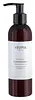 Key Ingredients
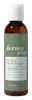
Benefits
Concerns
Ingredients Side-by-side





Water
Skin ConditioningGlycerin
Humectant


Cocamidopropyl Hydroxysultaine
Cleansing
Hamamelis Virginiana Water
Astringent



Cocamidopropyl Betaine
Cleansing
Squalane
Emollient
Xylitol
Humectant
Xanthan Gum
EmulsifyingBixa Orellana Leaf Extract
Antioxidant
Jacaranda Mimosifolia Flower Extract
Antioxidant
Kalanchoe Pinnata Leaf Extract
MaskingAlcohol
Antimicrobial
Aloe Barbadensis Leaf Powder
Skin Conditioning

Benzyl Alcohol
Perfuming



Salix Alba Bark Extract
Astringent

Lactobacillus/Papaya Fruit Ferment Extract
Abrasive
Sapindus Mukorossi Fruit Extract
Skin ConditioningSclerotium Gum
Emulsion StabilisingDeoxyribonuclease
Skin ConditioningCucumis Sativus Fruit Extract
Emollient
Glucose Oxidase
StabilisingLeuconostoc/Radish Root Ferment Filtrate
Antimicrobial
Water, Glycerin, Cocamidopropyl Hydroxysultaine, Hamamelis Virginiana Water, Cocamidopropyl Betaine, Squalane, Xylitol, Xanthan Gum, Bixa Orellana Leaf Extract, Jacaranda Mimosifolia Flower Extract, Kalanchoe Pinnata Leaf Extract, Alcohol, Aloe Barbadensis Leaf Powder, Benzyl Alcohol, Salix Alba Bark Extract, Lactobacillus/Papaya Fruit Ferment Extract, Sapindus Mukorossi Fruit Extract, Sclerotium Gum, Deoxyribonuclease, Cucumis Sativus Fruit Extract, Glucose Oxidase, Leuconostoc/Radish Root Ferment Filtrate
Reviews
Ingredients Explained
These ingredients are found in both products.
Ingredients higher up in an ingredient list are typically present in a larger amount.
Benzyl Alcohol is an aromatic alcohol with several roles: it's a preservative, solvent, and mild fragrance component with a floral scent.
This ingredient has been deemed safe for use in cosmetic formulations at concentrations up to 5%, and up to 10% in hair dyes. You'll typically see 0.5-2% in most rinse-off or leave-on products.
As a preservative, it works by disrupting the membrane of microbial proteins. This helps keep bacteria and fungi from growing in your products.
The sensitization picture is actually quite assuring as well:of nearly 71,000 patients patch tested with benzyl alcohol, only 0.21% showed a positive reaction with most of them being weakly positive.
This led researchers to conclude that benzyl alcohol cannot be regarded as a significant contact allergen.
It is worth noting this ingredient is classified as one of the EU's regulated fragrance allergens and restricted to 1% in finished products.
Labels must also declare it in concentrations above 0.001% in leave-on products and 0.01% in rinse-off products.
At concentrations around 5%, localized redness and itching can appear as a direct irritant response and not as a true allergic reaction.
Learn more about Benzyl AlcoholCocamidopropyl Betaine is a fatty acid created by mixing similar compounds in coconut oil and dimethylaminopropylamine, a compound with two amino groups.
This ingredient is a surfactant and cleanser. It helps gather the dirt, pollutants, and other impurities in your skin to be washed away. It also helps thicken a product and make the texture more creamy.
Being created from coconut oil means Cocamidopropyl Betaine is hydrating for the skin.
While Cocamidopropyl Betaine was believed to be an allergen, a study from 2012 disproved this. It found two compounds in unpure Cocamidopropyl Betaine to be the irritants: aminoamide and 3-dimethylaminopropylamine. High-grade and pure Cocamidopropyl Betaine did not induce allergic reactions during this study.
Learn more about Cocamidopropyl BetaineGlycerin (or glycerol) is a compound naturally found in your skin. It's a powerhouse humectant that pulls water into the stratum corneum.
Topically, glycerin does several things at once:
Your skin makes glycerin on its own (mostly from sebaceous oil breakdown) and shuttles it to your outermost layer of skin, or your epidermis, via aquaporin-3.
Aquaporin-3 is a transporter that is essential for normal skin hydration, elasticity, and repair. Interestingly, mice lacking in AQP3 have dry and less elastic skin that can be fully corrected with glycerin.
This ingredient is non-irritating, plays well with almost every ingredient, and works across all skin types. Typical use is anywhere between 3-10% but can go up to 79% in some leave-on products.
Just know very high concentrations (>40%) can feel tacky in low humidity.
Glycerin is the name for this ingredient in American English. British English uses Glycerol/Glycerine.
Learn more about GlycerinWater. It's the most common cosmetic ingredient of all. You'll usually see it at the top of ingredient lists, meaning that it makes up the largest part of the product.
So why is it so popular? Water most often acts as a solvent - this means that it helps dissolve other ingredients into the formulation.
You'll also recognize water as that liquid we all need to stay alive. If you see this, drink a glass of water. Remember to stay hydrated!
Learn more about WaterXanthan gum is used as a stabilizer and thickener within cosmetic products. It helps give products a sticky, thick feeling - preventing them from being too runny.
On the technical side of things, xanthan gum is a polysaccharide - a combination consisting of multiple sugar molecules bonded together.
Xanthan gum is a pretty common and great ingredient. It is a natural, non-toxic, non-irritating ingredient that is also commonly used in food products.
Learn more about Xanthan GumXylitol is a humectant and prebiotic. It can help with dry skin.
In studies, xylitol has been shown to improve dry skin. It decreased transepidermal water loss, or when water passes through the skin and evaporates. Xylitol also showed to help improve the biomechanical properties of the skin barrier.
The prebiotic property of xylitol may also help reinforce our skin's natural microbiome. Having a healthy microbiome prevents infection by bad bacteria and helps with hydration.
As a humectant, Xylitol helps draw moisture from both the air and from deeper skin layers. This helps keep skin hydrated.
Xylitol is a sugar alcohol and commonly used as a sugar substitute. It is naturally occurring in plants such as strawberries and pumpkin.
Learn more about Xylitol


