ESI Acknes Gel Tea Tree Oil Gel for Acne and Pimples
A facial treatment with 12 ingredients, including retinoid, vitamin E, and azelaic acid.
This acne treatment is formulated around Melaleuca Alternifolia Leaf Oil and Zinc to clear breakouts and balance excess oil.
Worth noting
Contains a retinoid, which is best introduced gradually.
We independently verify ingredients, backed by peer-reviewed research. Suggest an update.
What's inside


























Key Ingredients
Benefits
Concerns
Ingredients Explained
Alcohol Denat. is an alcohol with a denaturant property. It is created by mixing ethanol with other additives.
The "denat" part just means "denatured"; common denaturants include Denatonium Benzoate, t-butyl alcohol, and Diethyl Phthalate. This step makes the alcohol undrinkable (and lets brand skip taxes related to beverage alcohol).
This ingredient gets a bad rep because it is irritating and drying due to its astringent property. Astringents draw out natural oils in tissue to constrict pores and dry out your skin.
However, alcohol denat. is not all that bad.
Due to its low molecular weight, alcohol denat. tends to evaporate quickly. One study on pig skin found half of applied alcohol evaporated in 10 seconds and less than 3% stayed on skin.
This also helps other ingredients become better absorbed upon application.
Studies are conflicted about whether this ingredient causes skin dehydration. One study from 2005 found adding emollients to propanol-based sanitizer decreased skin dryness and irritation. Another study found irritation only occurs if your skin is already damaged.
Small amounts of alcohol are generally tolerated by oily skin or people who live in humid environments.
The rule of thumb is this ingredient will probably not affect your skin much if it is near the end of an ingredients list.
One thing to note:
People with ALDH2 (aldehyde dehydrogenase 2) deficiency may experience skin irritation from continued alcohol use. About 8% of the world's population have this deficiency.
The Cosmetic Ingredient Review Expert Panel has determined denatured alcohols to be safe for use in concentrations between 0.05% and 12% (depending on which denaturant is used).
Also...
This ingredient has antimicrobial and solvent properties.
The antimicrobial property helps preserve products and increase their shelf life. As a solvent, it helps dissolve other ingredients.
Look for formulas that contain glycerin, hyaluronic acid, or panthenol if you want to offset any drying effect.
This ingredient will trip away your skin's natural oils/lipids that help it lock in moisture. This can worsen dryness, trigger eczema flare-ups, and aggravate rosacea.
Be sure to patch test any product with this ingredient if you have dry or sensitive skin, eczema, or rosacea.
Learn more about Alcohol Denat.Aloe Barbadensis Leaf Juice is the filtered, stabilized liquid pressed from the inner gel of the aloe vera leaf.
In cosmetics, it shows up as either soothing active or a water-replacement base. It is roughly 98-99% water and the last 1-2% is an interesting mix of polysaccharides, amino acids, vitamins, minerals, and enzymes.
The polysaccharides do most of the work: they bind water at the skin surface for a light, non-greasy hydration boost. And one of the polysaccharides, glycomannan, is linked to fibroblast stimulation + collagen synthesis. This is also why aloe has such a long track record in wound and burn healing.
This ingredient is also calming with anti-inflammatory and mild antimicrobial activity, making it a great pick for sensitive, irritated, or post-sun skin.
Realistic expectations matter though; the solid evidence is mostly limited to hydration, soothing, and wound support. Deeper claims about anti-aging or sun protection are not well backed, and science reviews note it does not prevent radiation-induced skin injury.
Because it plays well with almost everything, it's commonly used as a base alongside other actives like niacinamide or vitamin C.
Typical usage concentrations range from 0.5% (where hydration benefits already show up) all the way to 90%+ (where it replaces water as the main base).
The safety for this ingredient is well-establish as well. Overall, this is a great supporting ingredient for those who want a boost in hydration.
Learn more about Aloe Barbadensis Leaf JuiceThis ingredient is also known as tea tree oil. It has antioxidant, anti-inflammatory, and antimicrobial properties.
Tea tree oil is a complex lipophilic (fat-loving) oil that contains around 100 compounds with terpinen-4-ol being the most abundant (~40%).
Terpinen-4-ol is responsible for tea tree oil's broad-spectrum antimicrobial activity and makes it a well-researched option for acne.
Clinical studies support 5% tea tree oil as an effective topical treatment for mild to moderate acne. A study with 124 patients compared 5% tea tree oil gel to 5% benzoyl peroxide and both reduced acne (though tea tree oil worked more slowly).
Besides acne, it is also seen in anti-dandruff shampoos and scalp treatments for it's antimicrobial and anti-seborrheic properties.
Safety-wise, the allergic potential of low concentrations on healthy skin is considered low. However, oxidized (old or improperly stored) tea tree oil is a stronger sensitizer.
Irritation can also occur if using the undiluted oil on skin; it's best to use this ingredient as part of a carefully crafted cosmetic formula. This is because regulations require tea tree oil in cosmetics to be stabilized to prevent degradation.
This ingredient has been deemed safe up to 2% in shampoo, 1% in cleansers, and 0.1% in face cream by the EU's Scientific Committee on Consumer Safety (SCCS).
There is some lab evidence that tea tree oil is antifungal against Malassezia, but it is a supportive option at best and not a replacement for proven antifungal treatments.
Learn more about Melaleuca Alternifolia Leaf OilRosa Moschata Seed Oil is an oil and isn't fungal acne safe.
Azelaic acid is a multitasker ingredient that helps treat acne, pigmentation, and irritation. It is a great option for sensitive skin.
What makes it special?
OTC Azelaic acid is usually available in concentrations from 10-15% and anything over requires a prescription.
Here's what each tier does best:
Unlike other acids, azelaic acid will not make your skin more photosensitive/sun sensitive.
Though this ingredient is naturally occurring in grains like wheat, rye, and barley, it is usually synthetically created for cosmetics to ensure stability and effectiveness.
Learn more about Azelaic AcidTocopheryl Acetate is a stable, shelf-friendly form of vitamin E.
Formulators love it because plain vitamin E oxidizes quickly once it hits air. This acetate version stays stable and resists going off, helping to extend a product's shelf life.
It's actually inactive on its own and works like a slow-release "storage" form; the enzymes in your skin called esterases gradually convert it into active vitamin E over time.
One in vivo study showed 5% of the acetate in the living layer of the epidermis converted to vitamin E after 5 days of application. This study also found the skin gained protection against UV damage even though the conversion was slow and small.
Once converted, vitamin E acts as a skin's main fat-soluble antioxidant that fights free radicals to protect skin from damage.
Topical vitamin E generally boosts the skin's photoprotection, and it reduced UV-damage in animal models.
This ingredient has some brightening potential but it's more of a prevention ingredient than spot-fader. Cell studies show it can slow down melanin production but it's worth noting that it's not the most powerful brightener out there.
Overall, it has a pretty solid safety profile and has been found to be non-irritating and non-comedogenic. Allergic reactions may happen but stay rare due to how widely the ingredient gets used.
The concentration will vary depending on the formula; industry data shows 0.1% in baby lotions, 3% in lipsticks, and 5% in foot powders. You can also find this ingredient at 100% in a pure vitamin E oil.
Most leave-on skincare keeps it at the lower end, often between 0.5-1%.
Learn more about Tocopheryl AcetateRetinyl Acetate is part of the retinoid family. It is made from retinol and acetic acid.
Though retinyl acetate is more stable than retinol, it is also less effective and less irritating. This is due to the conversion line all retinoids have to go through.
All retinoids must be converted to retinoic acid. The further away from this end result, the less effective the ingredient is.
Fun fact: Retinyl acetate is commonly used as a Vitamin C additive for foods.
Learn more about Retinyl AcetateYes, this ingredient is corn oil. In skincare, it acts as an emollient, skin conditioner, fragrance ingredient, and emusifier.
Like most plant oils, corn oil is basically a bundle of fatty acids: linoleic (34-62%), oleic (19-49%), palmitic (8-12%) and a bit of stearic.
The ranges of the fatty acids differ so much because it varies batch to batch depending on the cultivar and the growing conditions.
In skincare, it mostly does good plant oil stuff: it softens, sits on the surface to slow water evaporation, and makes formulas feel richer.
Now the honest part. Corn oil isn't studied much in dermatology but we do know it's the go-to vehicle in lab research. So there's decades of research where corn oil was the boring control; it never produced an effect of its own but we also don't have much research on it doing something exciting for your skin.
The one thing worth talking about is linoleic. Acne-prone follicles tend to be low in linoleate and a small study found topical linoleic acid shrank microcomedones by around 25% over a month. That was pure linoleic acid and not corn oil so it should be filed under "promising theory" rather than "proven benefit".
Concentration use can be anywhere from trace amounts to about 14% (the high end shows up in cleansers, moisturizers, body creams, and masks). Corn germ oil, which is basically the same ingredient under a different INCI name, has been reported as high as 25% but most of the time you're looking at low single digits.
Corn oil itself isn't a common allergen. Allergies to actual corn are triggered by corn proteins which is mostly refined out of the oil for cosmetic use. How much of the protein removed depends on the manufacturing process, so it's always better to patch test just in case.
This ingredient does have a comedogenic rating of 0-3, but this doesn't mean a formula with this ingredient will clog pores.
Human testing has proved that any finished product with this ingredient won't automatically make you break out; it really comes down to concentration, formula, and your skin.
The Malassezia yeast can't make its own fatty acids and breaks down oils around it to feed. Lab research shows the yeast grows when fatty acids in the C11-C24 range are available. Since corn oil is almost entirely C16-C18 fatty acids, this ingredient may not be fungal acne safe.
Learn more about Zea Mays OilPotassium Sorbate is a preservative used to prevent yeast and mold in products. It is commonly found in both cosmetic and food products.
This ingredient comes from potassium salt derived from sorbic acid. Sorbic acid is a natural antibiotic and effective against fungus.
Both potassium sorbate and sorbic acid can be found in baked goods, cheeses, dried meats, dried fruit, ice cream, pickles, wine, yogurt, and more.
You'll often find this ingredient used with other preservatives.
Learn more about Potassium SorbateThis is a botanical extract from the rosemary plant (the same one you cook with). In skincare, it mostly works as a skin conditioning agent.
Its activity comes from a handful of polyphenols, carnosic acid, carnosol, and rosmarinic acid. Almost 90% of the antioxidant activity of this ingredient can be attributed to canosol and carnosic acid.
These compounds protect your skin two ways:
1) They fight off free radicals, or the unstable molecules from things like sun and pollution that age and damage skin.
2) They help calm inflammation by switching off the chemical signals that tell skin to get red and irritated.
Lab studies also suggest that rosmarinic acid may help protect collagen and slow sugar-related damage to it.
The Cosmetic Ingredient Review has concluded rosemary-derived ingredients to be safe when formulated to be non-sensitizing.
Rosemary can occasionally cause allergic contact dermatitis (due to carnosol), so be sure to patch test if you have reactive or fragrance-sensitive skin.
Learn more about Rosmarinus Officinalis Leaf ExtractHelianthus Annuus Seed Oil is a plant oil derived from the seeds of a sunflower.
It is rich in fatty acids, primarily linoleic acid and oleic acid. This gives it emollient and skin conditioning properties.
The reason this ingredient is so effective is because it forms a thin film on the skin that reduces transepidermal water loss (TEWL) while supplying linoleic acid to the stratum corneum to improve barrier strength.
The high linoleic acid content is particularly noteworthy for acne-prone skin.
Research suggests that acne-prone skin tends to be deficient in linoleic acid in sebum. Topical application may help replenish this to support a healthier follicular environment and less comedone-promoting sebum.
One randomized study found sunflower seed oil preserved skin barrier integrity in adult volunteers with and without atopic dermatitis (outperforming olive oil).
This ingredient is well-studied, gentle, and an effective emollient suitable for most skin types.
On fungal acne: This ingredient may not be Fungal acne (Malassezia folliculitis) safe. This is because it contains fatty acids with carbon chain lengths in the C11-C24 range.
Learn more about Helianthus Annuus Seed OilReviews
No written reviews yet. Be the first to review this product.
Recent searches
Search reviews by skin type, ingredient, or keyword.
Where it's from
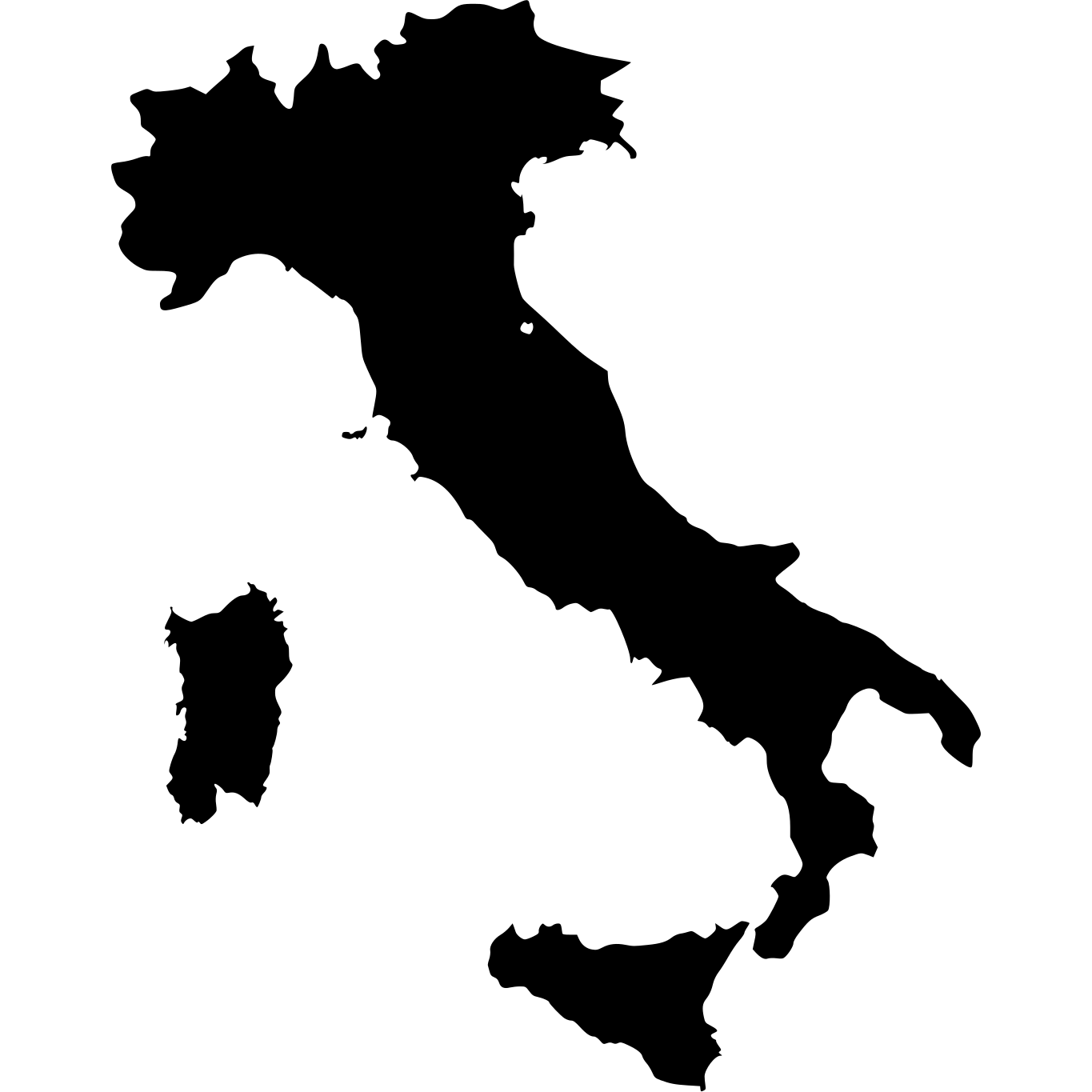
ESI is a Italian brand
Often compared with

We're dedicated to providing you with the most up-to-date and science-backed ingredient info out there.
The data we've presented on this page has been verified by a member of the SkinSort Team.
Read more about us· Updated August 13, 2024 • Added by pymar


