Celenes by Sweden Nordic Oil Purifying Face Cleansing Oil
A makeup remover with 10 ingredients, including vitamin E.
This oil-based makeup remover is made to dissolve makeup, sunscreen, and daily buildup.
We independently verify ingredients, backed by peer-reviewed research. Suggest an update.
What's inside















Key Ingredients
Benefits
Concerns
Ingredients Explained
Helianthus Annuus Seed Oil is a plant oil derived from the seeds of a sunflower.
It is rich in fatty acids, primarily linoleic acid and oleic acid. This gives it emollient and skin conditioning properties.
The reason this ingredient is so effective is because it forms a thin film on the skin that reduces transepidermal water loss (TEWL) while supplying linoleic acid to the stratum corneum to improve barrier strength.
The high linoleic acid content is particularly noteworthy for acne-prone skin.
Research suggests that acne-prone skin tends to be deficient in linoleic acid in sebum. Topical application may help replenish this to support a healthier follicular environment and less comedone-promoting sebum.
One randomized study found sunflower seed oil preserved skin barrier integrity in adult volunteers with and without atopic dermatitis (outperforming olive oil).
This ingredient is well-studied, gentle, and an effective emollient suitable for most skin types.
On fungal acne: This ingredient may not be Fungal acne (Malassezia folliculitis) safe. This is because it contains fatty acids with carbon chain lengths in the C11-C24 range.
Learn more about Helianthus Annuus Seed OilSesamum Indicum Seed Oil is the cold-pressed oil from sesame seeds.
It is an emollient and skin conditioning agent made up of roughly 82-85% unsaturated fatty acids, mostly linoleic (~41%) and oleic acid (~39%).
This pairing gives it barrier-supporting and moisturizing properties. Linoleic acid, an essential omega-6 fatty acid, can be incorporated into complex skin lipids. Topical application has shown barrier repair, anti-inflammatory, and wound-healing effects in cell and animal studies.
Beyond fatty acids, sesame oil brings something more distinctive to the table:
It contains natural antioxidants sesamol, sesamolin, and gamma-tocopherol. These also give the oil notably high oxidative stability.
One of the oil's key lignans, sesamin, has also demonstrated anti-inflammatory activity in preclinical models.
A 2023 clinical study found that a single application of sesame seed oil to the forearms of 35 healthy women improved stratum corneum hydration (though it didn't outperform raspberry seed oil).
The comedogenic rating of 1-3 depends on the type of sesame oil; unrefined carries a rating of 3 while refined sesame oil drops to a 1.
This ingredient may not be safe for fungal acne as it contains fatty acids that can feed Malassezia.
Learn more about Sesamum Indicum Seed OilWe don't have a description for Polyglyceryl-3 Caprate yet.
We don't have a description for C12-13 Alketh-9 yet.
Jojoba oil is one of the most well-studied plant-derived ingredients in cosmetics. It is an emollient with a special structure.
Because it is made up of 97-98% wax esters, it closely mirrors the linear monoesters found in human sebum. This makes it skin compatible, non-greasy, and lightweight.
Unlike other plant oils, jojoba wax doesn't easily penetrate skin. It mostly works in the uppermost layers as an emollient. This just means it forms a light barrier on the skin to help retain moisture.
Formulations with jojoba esters up to 90% reduced transepidermal water loss (TEWL) and increased barrier recovery by 81% (outperforming bisabolol at 47%).
Besides barrier support, the science also suggests jojoba to have anti-inflammatory effects and potential applications for skin infections, aging, and wound healing.
Fun fact: Indigenous cultures have used jojoba as a moisturizer and to help treat burns for centuries.
Fungal acne: The Malassezia yeast is known to metabolize fatty acids in the C11-24 range and jojoba's dominant fatty acid components fall into this range. This ingredient may not be fungal acne safe.
Learn more about Simmondsia Chinensis Seed OilThis ingredient is also known as Avocado oil. It's the cold-pressed oil from the flesh of the avocado fruit packed with fatty acids (mostly oleic acid).
The rich fatty acid profile allows it to function as a skin conditioning agent and emollient; it helps soften and smooth skin while reducing water loss.
Preclinical research has found that topical avocado oil increased collagen synthesis and reduced inflammation during wound healing, giving it some skin-repairing credibility.
The unsaponifiable fraction of the oil is also interesting: studies on avocado unsaponifiables showed that it helped skin produce more collagen and other structural compounds that support healing.
The CIR Expert Panel has found this ingredient to be non-irritating in formulations.
It's a great ingredient for dry or compromised skin. Just know it may not be fungal acne safe. This is because the oleic acid content falls within the range that Malassezia can use as a food source.
Learn more about Persea Gratissima OilYou may know this ingredient as argan oil. It has emollient and skin conditioning properties that help soften skin and reinforce the lipid barrier.
The fatty acid profile of argan oil is roughly 45-55% oleic acid, 28-36% linoleic acid, 10-15% palmitic acid, and 5-7% stearic acid. It also contains vitamin E, sterols, squalene, and polyphenols like ferulic acid.
Two clinical studies in postmenopausal women found that applying argan oil for 60 days significantly improved skin elasticity and moisturization (reduced transepidermal water loss and increased epidermal water content).
Since it is high in oleic and linoleic acid, this ingredient may not be fungal acne safe. Both of these fall in the C11-C24 range that Malassezia yeast can metabolize.
Learn more about Argania Spinosa Kernel OilVitis Vinifera Seed Oil comes from the grape vine. Grape seeds are a byproduct of creating grape juice or wine.
The components of grape seeds have many skin benefits. Research has found it to be antimicrobial and anti-inflammatory. It also contains many potent antioxidants such as Vitamin E , Vitamin C, proanthocyanidins, polyphenols, flavonoids, and anthocyanins. Proanthocyanidin has been shown to help even out skin tone.
Antioxidants help fight free-radical molecules. Free-radical molecules are capable of damaging our cells and other genetic material. Antioxidants help stabilize free-radicals by donating extra electrons. Grape seed extract may help reduce the signs of aging.
The antimicrobial properties of grape seed may help treat acne. However, more research is needed to support this claim.
Grape seed has also been found to help absorb UV rays. Grape seed extract should not replace your sunscreen.
The fatty acids of grape seed oil give it emollient properties. Emollients help soothe and soften your skin by creating a film. This film traps moisture within, keeping your skin hydrated.
Learn more about Vitis Vinifera Seed OilRosa Canina Fruit Oil is a non-fragrant plant oil that has earned its skincare reputation through chemistry.
It's dominated by fatty acids like linoleic acid (~35-55%), alpha-linolenic acid (~17-27%), and oleic acid (~14-22%). This is the exact profile that supports skin barrier, locks in hydration, and calms inflammation.
A 2024 review found evidence for the Rosa canina species supports its use for scarring, hyperpigmentation, wrinkles, and atopic dermatitis; this was mostly credited to its vitamin C content and fatty acid composition as the primary active mechanisms.
You might see this ingredient marketed as a "natural retinol". Some rosehip seed oils contains traces of all-trans-retinoic acid but these trace amounts are far below biologically active levels.
The Cosmetic Ingredient Review Panel has deemed this ingredient safe and it's well-tolerated.
Fungal acne: The fatty acids of this oil fall into the C11-24 range that Malassezia yeast can metabolize, so this ingredient may not be fungal acne safe.
Learn more about Rosa Canina Fruit OilTocopheryl Acetate is a stable, shelf-friendly form of vitamin E.
Formulators love it because plain vitamin E oxidizes quickly once it hits air. This acetate version stays stable and resists going off, helping to extend a product's shelf life.
It's actually inactive on its own and works like a slow-release "storage" form; the enzymes in your skin called esterases gradually convert it into active vitamin E over time.
One in vivo study showed 5% of the acetate in the living layer of the epidermis converted to vitamin E after 5 days of application. This study also found the skin gained protection against UV damage even though the conversion was slow and small.
Once converted, vitamin E acts as a skin's main fat-soluble antioxidant that fights free radicals to protect skin from damage.
Topical vitamin E generally boosts the skin's photoprotection, and it reduced UV-damage in animal models.
This ingredient has some brightening potential but it's more of a prevention ingredient than spot-fader. Cell studies show it can slow down melanin production but it's worth noting that it's not the most powerful brightener out there.
Overall, it has a pretty solid safety profile and has been found to be non-irritating and non-comedogenic. Allergic reactions may happen but stay rare due to how widely the ingredient gets used.
The concentration will vary depending on the formula; industry data shows 0.1% in baby lotions, 3% in lipsticks, and 5% in foot powders. You can also find this ingredient at 100% in a pure vitamin E oil.
Most leave-on skincare keeps it at the lower end, often between 0.5-1%.
Learn more about Tocopheryl AcetateReviews
No written reviews yet. Be the first to review this product.
Recent searches
Search reviews by skin type, ingredient, or keyword.
Where it's from
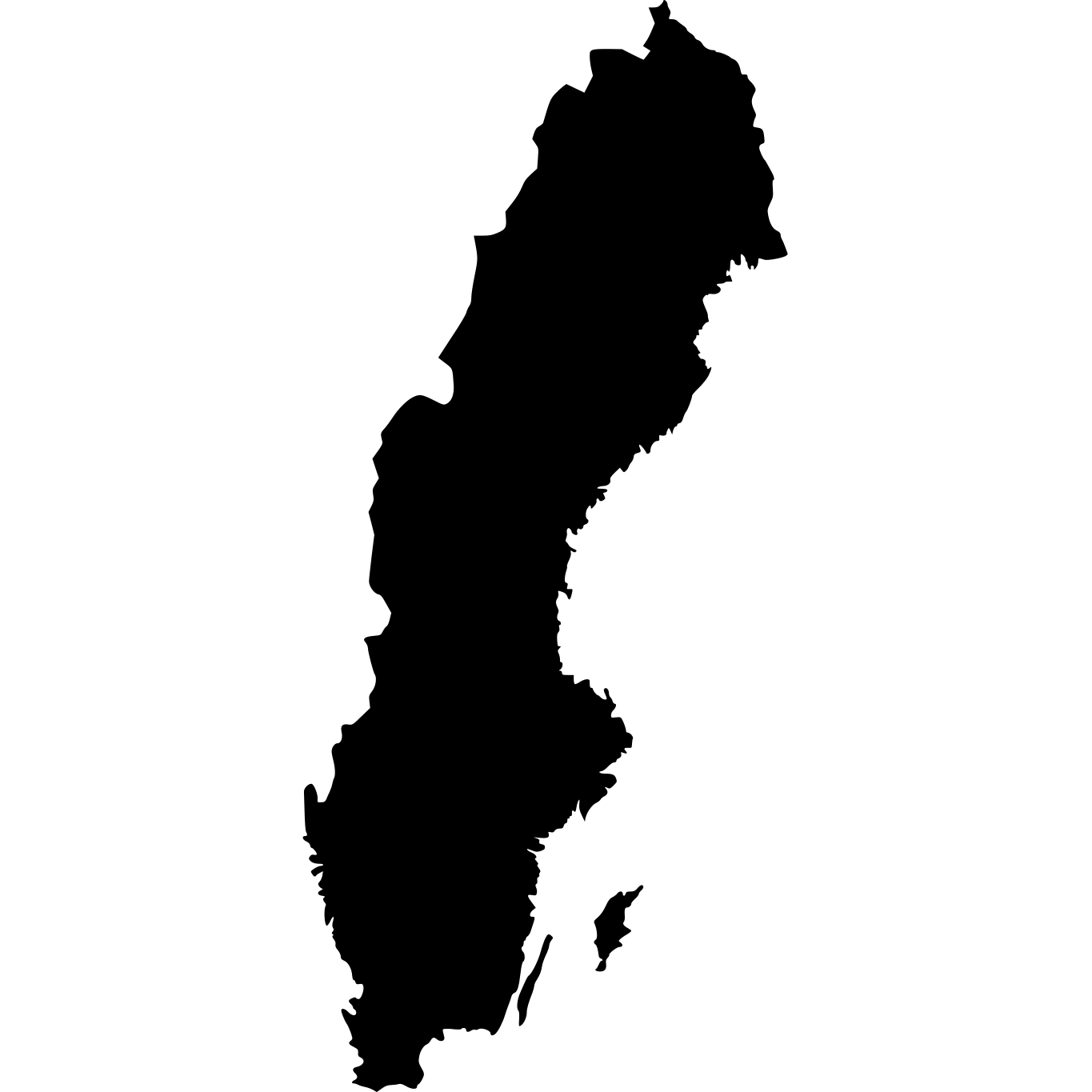
Celenes by Sweden is a Swedish brand
Often compared with

We're dedicated to providing you with the most up-to-date and science-backed ingredient info out there.
The data we've presented on this page has been verified by a member of the SkinSort Team.
Read more about us· Updated August 25, 2025 • Added by decembermoon


