Cake Beauty The Grace Full Blowout Balm
A styling creams & spray with 22 ingredients.
Styling creams & spray with 22 ingredients
We independently verify ingredients, backed by peer-reviewed research. Suggest an update.
What's inside
Ingredients List
Water
Skin ConditioningCetyl Alcohol
Emollient



Cetrimonium Chloride
Antimicrobial
Stearalkonium Chloride
Preservative
Glycerin
Humectant


Stearyl Alcohol
Emollient
Amodimethicone

Trideceth-12
EmulsifyingPhenoxyethanol
Preservative
Ethylhexylglycerin
Skin ConditioningHydroxyethylcellulose
Emulsion StabilisingSodium Acetate
BufferingIsopropyl Alcohol
Solvent



Cellulose
Absorbent
Parfum
Masking

Caprylic/Capric Triglyceride
Masking
Dimethicone
Emollient
Cocos Nucifera Oil
Masking


Disodium EDTA
ChelatingHydrolyzed Soy Protein
Humectant
Hydrolyzed Rice Protein
Skin ConditioningCitric Acid
Buffering

Water, Cetyl Alcohol, Cetrimonium Chloride, Stearalkonium Chloride, Glycerin, Stearyl Alcohol, Amodimethicone, Trideceth-12, Phenoxyethanol, Ethylhexylglycerin, Hydroxyethylcellulose, Sodium Acetate, Isopropyl Alcohol, Cellulose, Parfum, Caprylic/Capric Triglyceride, Dimethicone, Cocos Nucifera Oil, Disodium EDTA, Hydrolyzed Soy Protein, Hydrolyzed Rice Protein, Citric Acid
Benefits
Concerns
Ingredients Explained
Water. It's the most common cosmetic ingredient of all. You'll usually see it at the top of ingredient lists, meaning that it makes up the largest part of the product.
So why is it so popular? Water most often acts as a solvent - this means that it helps dissolve other ingredients into the formulation.
You'll also recognize water as that liquid we all need to stay alive. If you see this, drink a glass of water. Remember to stay hydrated!
Learn more about WaterCetyl Alcohol is a fatty alcohol. Fatty Alcohols are most often used as an emollient or to thicken a product.
Its main roles are:
Though it has "alcohol" in the name, it is not related to denatured alcohol or ethyl alcohol.
The FDA allows products labeled "alcohol-free" to have fatty alcohols.
This ingredient may not be fungal acne safe. It is a primary fatty alcohol with a chain length above 12 carbons. A study from 2019 show Malassezia can feed on fatty alcohols in this range, so it may trigger fungal acne in those prone to it.
Learn more about Cetyl AlcoholThis ingredient is a preservative, antimicrobial, and emulsifier. It is often used in cosmetics for its ability to cleanse, condition, and reduce static.
Cetrimonium chloride is a quaternary ammonium salt, meaning it has a water-soluble structure.
Stearalkonium Chloride is a preservative.
Glycerin (or glycerol) is a compound naturally found in your skin. It's a powerhouse humectant that pulls water into the stratum corneum.
Topically, glycerin does several things at once:
Your skin makes glycerin on its own (mostly from sebaceous oil breakdown) and shuttles it to your outermost layer of skin, or your epidermis, via aquaporin-3.
Aquaporin-3 is a transporter that is essential for normal skin hydration, elasticity, and repair. Interestingly, mice lacking in AQP3 have dry and less elastic skin that can be fully corrected with glycerin.
This ingredient is non-irritating, plays well with almost every ingredient, and works across all skin types. Typical use is anywhere between 3-10% but can go up to 79% in some leave-on products.
Just know very high concentrations (>40%) can feel tacky in low humidity.
Glycerin is the name for this ingredient in American English. British English uses Glycerol/Glycerine.
Learn more about GlycerinStearyl Alcohol is a type of fatty alcohol from stearic acid. It is a white, waxy compound used to emulsify ingredients used as an emollient or to thicken a product.
Emollients help soothe and hydrate the skin by trapping moisture.
Fatty alcohols are usually derived from natural fats and oils and therefore do not have the same drying or irritating effect as solvent (ethanol) alcohols.
The FDA allows products labeled "alcohol-free" to have fatty alcohols.
This ingredient may not be fungal acne safe. It is a primary fatty alcohol with a chain length above 12 carbons. A study from 2019 show Malassezia can feed on fatty alcohols in this range, so it may trigger fungal acne in those prone to it.
Learn more about Stearyl AlcoholThis water-soluble silicone is used for its hydrating and softening properties. It is used to add a silky feel to skincare products and has great benefits for haircare.
In haircare, this ingredient:
- Adds shine
- Protects color
- Offers thermal protection
- Boosts hair strength
- Does not build up as easily
We don't have a description for Trideceth-12 yet.
Phenoxyethanol is one of the most widely used preservatives in skincare (and for good reason!).
It has a large spectrum of antimicrobial activity and especially effective bacteria, yeast, and mold while only having a weak effect on your skin's natural microbiome.
On a cellular level, it disrupts the cell membranes of microbes by poking holes that make the cell leak. This shuts down the chemical reactions the microbe needs to make energy so it can no longer survive.
Another perk of this ingredient is that it stays functional across a wide pH range (3-10).
You'll often see it paired with boosters like Ethylhexylglycerin; one study showed that a 1:9 ratio of Ethylhexylglycerin to Phenoxyethanol damages bacterial membranes as effectively as doubling the Phenoxyethanol concentration on its own.
Typical use concentrations range from 0.3-1% depending on the formula, and this ingredient is capped at 1% int the EU.
Safety-wise, the fear mongering does not hold up to the evidence. The EU's Scientific Committee on Consumer Safety and FDA consider it safe as a preservative at up to 1%, including for children of all ages.
Adverse systemic effects only showed up in animal studies at exposures roughly 200x higher than what people get from cosmetics. And despite its very widespread use, this ingredient is a rare sensitizer and allergic reactions are uncommon.
Learn more about PhenoxyethanolEthylhexylglycerin is created from glycerin. It is a multitasker ingredient that:
The CIR Expert Panel found minimal skin absorption or sensitization of any kind in a safety assessment. Though this ingredient is considered well-tolerated, a small number of cases of allergic dermatitis have been published since 2002. Just be sure to patch test if you are unsure.
Industry-reported use ranges from 8% in rinse-off products and 2% in leave-on formulations.
Learn more about EthylhexylglycerinHydroxyethylcellulose is used to improve the texture of products. It is created from a chemical reaction involving ethylene oxide and alkali-cellulose. Cellulose is a sugar found in plant cell walls and help give plants structure.
This ingredient helps stabilize products by preventing ingredients from separating. It can also help thicken the texture of a product.
This ingredient can also be found in pill medicines to help our bodies digest other ingredients.
Learn more about HydroxyethylcelluloseWe don't have a description for Sodium Acetate yet.
Isopropyl Alcohol is a small, fast-evaporating alcohol.
Formulators use it as a solvent, a way to think out thick liquids, an antifoaming agent, and occasionally a fragrance ingredient.
Reported use concentrations run from 0.002%-100% and any number over 50% usually comes from a nail product.
Actual skincare numbers run much lower: cleansers (0.3-26%), toners (0.07-7%), face moisturizers (0.04-0.2%).
The Cosmetic Ingredient Review Expert Panel reviewed it and concluded it is safe in the present practices of use and the International Agency for Research on Cancer classifies it as a non-carcinogenic to humans.
True allergy to this ingredient is uncommon but real: 44 out of 1,450 patients patch tested between 1992-2011 reacted with most cases clustering in people with leg ulcers, occupational hand eczema, or repeated use of Isopropyl Alcohol on already-broken skin.
Irritation and dryness are far more likely than allergy; before you throw away your skincare, just know this is dose-dependent and the risk is modest.
The irritant potential of the alcohols used in hand antiseptics is very low and skin irritation is significantly lower after alcohol application than after detergents (though isopropanol is somewhat more irritating than ethanol).
A 70% solution was a severe eye irritant in rabbit eye tests so the industry keeps this ingredient at low percentages in eye-area products.
One genuine caution: a 70% solution was a severe eye irritant in rabbit eye tests, so it belongs at low percentages in eye-area products, which is where the industry already keeps it.
According to the National Rosacea Society based in the US, you should be mindful of products with these alcohols in the top half of ingredients.
Learn more about Isopropyl AlcoholCellulose is the main component of plant cell walls. It is used as an emulsifier, absorbent, and texture enhancer.
This ingredient has many functions:
Fun fact: Cellulose is the most abundant form of organic polymer on Earth.
Learn more about CelluloseParfum is a catch-all term for an ingredient or more that is used to give a scent to products.
Also called "fragrance", this ingredient can be a blend of hundreds of chemicals or plant oils. This means every product with "fragrance" or "parfum" in the ingredients list is a different mixture.
For instance, Habanolide is a proprietary trade name for a specific aroma chemical. When used as a fragrance ingredient in cosmetics, most aroma chemicals fall under the broad labeling category of “FRAGRANCE” or “PARFUM” according to EU and US regulations.
The term 'parfum' or 'fragrance' is not regulated in many countries. In many cases, it is up to the brand to define this term.
For instance, many brands choose to label themselves as "fragrance-free" because they are not using synthetic fragrances. However, their products may still contain ingredients such as essential oils that are considered a fragrance by INCI standards.
One example is Calendula flower extract. Calendula is an essential oil that still imparts a scent or 'fragrance'.
Depending on the blend, the ingredients in the mixture can cause allergies and sensitivities on the skin. Some ingredients that are known EU allergens include linalool and citronellol.
Parfum can also be used to mask or cover an unpleasant scent.
The bottom line is: not all fragrances/parfum/ingredients are created equally. If you are worried about fragrances, we recommend taking a closer look at an ingredient. And of course, we always recommend speaking with a professional.
Learn more about ParfumCaprylic/Capric Triglyceride (aka MCT Oil) is a lightweight emollient, solvent, and texture enhancer. It is considered a skin-softener by helping to prevent moisture loss.
Though it behaves like an oil, it is not technically one due to its chemical composition. One perk of this ingredient is that it is very stable, resistant to oxidation, and unlikely to go rancid.
In practice, that translates to a long shelf life and a consistently elegant skin feel.
While there is an assumption Caprylic Triglyceride can clog pores due to it being derived from coconut oil, there is no research supporting this. Just patch test if you have concerns.
Fractionated coconut oil and MCT Oil are both listed as Caprylic/Capric Triglyceride according to INCI. This is because INCI names are based on the ingredient’s final chemical composition and not its marketing name or source.
This ingredient is treated as the gold standard fungal acne safe oil. Even though it is coconut derived, the problematic lauric acid is stripped out.
This leaves just caprylic (C8) and capric (C10) acid. These chain lengths actually trend antifungal; a 2020 study found caprylic acid was enough to disrupt Malassezia furfur cell membrane, with a caprylic acid derivative damaging membrane structures at concentrations as low as 0.2%.
Learn more about Caprylic/Capric TriglycerideDimethicone is a type of synthetic silicone created from natural materials such as quartz. It is also known as polydimethylsiloxane.
What it does:
Dimethicone comes in different viscosities:
Depending on the viscosity, dimethicone has different properties.
Ingredients lists don't always show which type is used, so we recommend reaching out to the brand if you have questions about the viscosity.
This ingredient is unlikely to cause irritation because it does not get absorbed into skin. However, people with silicone allergies should be careful about using this ingredient.
Note: Dimethicone may contribute to pilling. This is because it is not oil or water soluble, so pilling may occur when layered with products. When mixed with heavy oils in a formula, the outcome is also quite greasy.
Learn more about DimethiconeThis ingredient is also known as coconut oil. It is a plant-derived ingredient with skin conditioning properties.
The fatty acid profile of coconut oil is mostly lauric acid (~54%), followed by capric, caprylic, palmitic, and myristic acids. This profile allows it to penetrate easily into skin, moisturize, and improve dry skin.
A double-blind study confirmed that extra virgin coconut oil is as effective as mineral oil for treating very dry skin. Another study found it outperformed mineral oil for mild to moderate atopic dermatitis in children.
Another study from 2018 found that virgin coconut oil can soothe inflammation and boost key skin barrier proteins. Just know this evidence is still only from lab settings and not human trials.
It has also been shown to reduce Staphylococcus aureus, a bacteria that commonly overgrows in people with eczema.
Clinical testing shows very minimal skin irritation and no evidence of sensitization or phototoxicity.
Coconut oil gets flagged as a "fragrance" because it has a natural mild scent (not because it's a synthetic perfume). The European Cosmetic ingredient database also lists "perfuming" as a function of this ingredient.
Just so you know, the term "fragrance" is completely unregulated. Some brands still use botanical extracts or essential oils in their "fragrance-free" formulas, but regulatory databases technically classify these under "fragrance".
Coconut oil has a tiny and useless bit of natural SPF. Early lab studies clocked it around SPF 7-8 but a more recent study found the real number closer to SPF 1.2. It also offers no meaningful UVA protection (SPF only overs UVB rays).
The comedogenic rating of 4/5 means it has a high potential to clog pores; but it's worth noting that comedogenicity is highly individual and ratings cannot predict how an overall formula will behave on skin.
Since lauric acid is the dominant fatty acid, this ingredient may not be fungal acne safe. The Malassezia yeast feeds on fatty acids with carbon chain lengths between 11-24, and lauric acid falls within these lengths (C12).
Learn more about Cocos Nucifera OilDisodium EDTA is a chelating agent. It grabs onto and deactivates metal ions that sneak into your products from water, packaging, or air.
This ingredient mainly works behind the scenes and helps with:
On top of that, this ingredient can counteract the effects of hard water by binding to the minerals in it.
One thing worth knowing is that Disodium EDTA has been shown to be a mild penetration enhancer. It can help other ingredients absorb into skin more effectively which can be a double-edged sword (great for actives, but can also make the active too strong if you have sensitive skin).
Clinical patch testing showed no significant skin irritation at typical use concentrations and minimal dermal absorption.
You'll most likely see this ingredient near the end of an ingredient list. It's typically found in concentrations less than 1%.
Learn more about Disodium EDTAHydrolyzed Soy Protein is a water-soluble blend of peptides and amino acids made by breaking down the protein from soybeans into smaller proteins.
It's the most widely used hydrolyzed vegetable protein in cosmetics and it acts mainly as a skin and hair conditioning agent.
The smaller fragments are water-loving so it forms a thin, moisture-retentive film on skin that helps reduce water loss and leaves things feeling softer and smoother.
You'll often see it credited with "firming" or "anti-aging" benefits as well; this claim traces back to lab research like Tokudome et al. (2012). This study added low-molecular-weight soybean peptides to cultured human skin fibroblasts and saw increased type I collagen gene expression + collagen content.
The caveat is that this is in-vitro and oral-peptide research so the only solid, well-established role for the topical ingredient is skin conditioning.
Typical use concentrations go up to 3.5% in mascara but this ingredient is typically used at low levels well under 1%.
It has a reassuring safety profile as well; it's not a skin irritant in testing up to 20% and has limited skin penetration due to its large size and water-loving nature.
Anyone with a known soy allergy should definitely patch test or skip this ingredient. There's also a single case of a soy-containing product aggravating rosacea via protein contact dermatitis, but this is very rare.
Learn more about Hydrolyzed Soy ProteinHydrolyzed Rice Protein is protein extracted from rice. This ingredient is rich in antioxidants and peptides.
Studies show this ingredient may help with blocking the melanin creation process when skin is exposed to UV.
Citric Acid is an alpha hydroxy acid (AHA) naturally found in citrus fruits like oranges, lemons, and limes.
Like other AHAs, citric acid can exfoliate skin by breaking down the bonds that hold dead skin cells together. This helps reveal smoother and brighter skin underneath.
However, this exfoliating effect only happens at high concentrations (20%) which can be hard to find in cosmetic products.
Due to this, citric acid is usually included in small amounts as a pH adjuster. This helps keep products slightly more acidic and compatible with skin's natural pH.
In skincare formulas, citric acid can:
While it can provide some skin benefits, research shows lactic acid and glycolic acid are generally more effective and less irritating exfoliants.
Most citric acid used in skincare today is made by fermenting sugars (usually from molasses). This synthetic version is identical to the natural citrus form but easier to stabilize and use in formulations.
Rosacea skin has a lower threshold for acids generally, with 62.5% of rosacea subjects in one study reacting to lactic acid in a sting test. This is why we mark citric acid as a potential rosacea trigger.
However, this ingredient shows up as a pH adjuster or chelator at roughly 0.1-1% in many products. These low levels are unlikely to be an issue for rosacea skin and becomes a potential trigger at exfoliating concentrations (20%). Because everybody's skin is unique, we recommend a patch test if you are unsure.
Learn more about Citric AcidReviews
No written reviews yet. Be the first to review this product.
Recent searches
Search reviews by skin type, ingredient, or keyword.
Where it's from
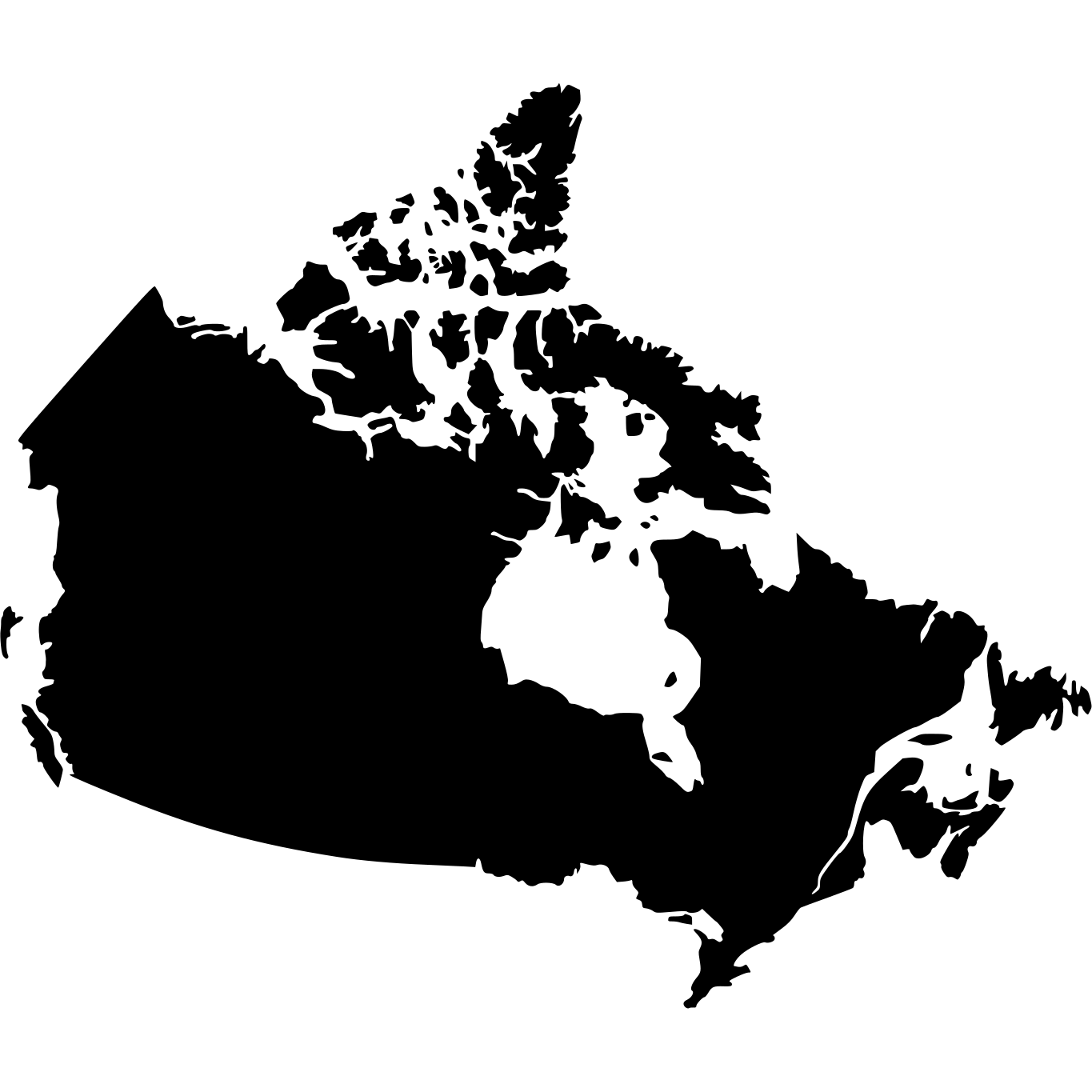
Cake Beauty is a Canadian brand
Often compared with

We're dedicated to providing you with the most up-to-date and science-backed ingredient info out there.
The data we've presented on this page has been verified by a member of the SkinSort Team.
Read more about us· Updated July 22, 2026 • Added by Frans


