Barwa Cosmetics Barwa Siarkowa sulfur liquid soap
A facial treatment with 16 ingredients, including niacinamide.
Overview
What it is
Facial treatment with 16 ingredients that contains niacinamide
Cool Features
It is reef safe
Suited For
It has ingredients that are good for fighting acne, anti aging, dry skin, brightening skin, sensitive skin, oily skin, reducing pores, scar healing, dark spots and better texture
Free From
It doesn't contain any harsh alcohols, common allergens, parabens or silicones
Fun facts
Barwa Cosmetics is from Poland.
We independently verify ingredients and our claims are backed by peer-reviewed research. Does this product need an update? Let us know.
What's inside
Ingredients List
Water
Skin ConditioningSodium Laureth Sulfate
Cleansing

Disodium Laureth Sulfosuccinate
CleansingCoco-Betaine
Cleansing
Ethyl Lauroyl Arginate Hcl
Skin ConditioningGlyceryl Oleate
Emollient

Niacinamide
Smoothing











Glycerin
Humectant
Sulfur
Antiseborrhoeic
Centella Asiatica Extract
Cleansing
Cocamidopropylamine Oxide
Cleansing
Sodium Cocoamphoacetate
CleansingPEG-150 Pentaerythrityl Tetrastearate
Emulsifying
PEG-6 Caprylic/Capric Glycerides
EmulsifyingPEG-30 Castor Oil
Emulsifying
Sodium
Water, Sodium Laureth Sulfate, Disodium Laureth Sulfosuccinate, Coco-Betaine, Ethyl Lauroyl Arginate Hcl, Glyceryl Oleate, Niacinamide, Glycerin, Sulfur, Centella Asiatica Extract, Cocamidopropylamine Oxide, Sodium Cocoamphoacetate, PEG-150 Pentaerythrityl Tetrastearate, PEG-6 Caprylic/Capric Glycerides, PEG-30 Castor Oil, Sodium
Key Ingredients
Benefits
Concerns
Ingredients Explained
Water. It's the most common cosmetic ingredient of all. You'll usually see it at the top of ingredient lists, meaning that it makes up the largest part of the product.
So why is it so popular? Water most often acts as a solvent - this means that it helps dissolve other ingredients into the formulation.
You'll also recognize water as that liquid we all need to stay alive. If you see this, drink a glass of water. Remember to stay hydrated!
Learn more about WaterSodium Laureth Sulfate (SLES) is a foaming, cleansing, and emulsifying ingredient. It is created from palm kernel oil or coconut oil. SLES is not the same as sodium lauryl sulfate. It is much milder and less likely to irritate.
SLES helps create foam in personal products. It also prevents ingredients from separating, helping to elongate the shelf life.
Sodium Laureth Sulfate is a type of sulfate. It can be drying. We recommend speaking with a professional about using this ingredient if you have concerns.
Learn more about Sodium Laureth SulfateThis ingredient is a cleansing agent, surfactant, and foam booster. It considered an alternative to traditional sulfates (Sulfosuccinate) and is allowed in "sulfate-free" products.
According to a manufacturer, this ingredient is mild and can be used in baby and bath options.
Coco-Betaine is the natural version of Cocamidopropyl Betaine. It is often derived from coconuts.
Coco-Betaine is a surfactant, meaning it helps remove dirt and oil from the skin.
We don't have a description for Ethyl Lauroyl Arginate Hcl yet.
Glyceryl Oleate is the ester of glycerin and oleic acid. This ingredient is mainly an emollient and emulsifier.
Emollients soften and hydrate the skin by creating a thin film on top to trap in moisture. As an emulsifier, glyceryl oleate helps stabilize formulations by preventing ingredients such as oil and water from separating. According to a manufacturer, this ingredient helps helps thicken water-in-oil formulations, shower gels, and hair shampoos.
In some products, this ingredient may be used as a fragrance / perfuming ingredient. The scent of this ingredient is described to be "waxy".
Glyceryl oleate is created from oils rich in oleic acid, such as peanut oil and olive oil.
This ingredient may not be malassezia folliculitis safe.
Learn more about Glyceryl OleateNiacinamide is a multitasking form of vitamin B3 that strengthens the skin barrier, reduces pores and dark spots, regulates oil, and improves signs of aging.
And the best part? It's gentle and well-tolerated by most skin types, including sensitive and reactive skin.
You might have heard of "niacin flush", or the reddening of skin that causes itchiness. Niacinamide has not been found to cause this.
In very rare cases, some individuals may not be able to tolerate niacinamide at all or experience an allergic reaction to it.
If you are experiencing flaking, irritation, and dryness with this ingredient, be sure to double check all your products as this ingredient can be found in all categories of skincare.
When incorporating niacinamide into your routine, look out for concentration amounts. Typically, 5% niacinamide provides benefits such as fading dark spots. However, if you have sensitive skin, it is better to begin with a smaller concentration.
When you apply niacinamide to your skin, your body converts it into nicotinamide adenine dinucleotide (NAD). NAD is an essential coenzyme that is already found in your cells as "fuel" and powers countless biological processes.
In your skin, NAD helps repair cell damage, produce new healthy cells, support collagen production, strengthen the skin barrier, and fight environmental stressors (like UV and pollution).
Our natural NAD levels start to decline with age, leading to slower skin repair, visible aging, and a weaker skin barrier. By providing your skin niacinamide, you're recharging your skin's NAD levels. This leads to stronger, healthier, and younger looking skin.
Another name for vitamin B3 is nicotinamide. This vitamin is water-soluble and our bodies don't store it. We obtain Vitamin B3 from either food or skincare. Meat, fish, wheat, yeast, and leafy greens contain vitamin B3.
The type of niacinamide used in skincare is synthetically created.
Learn more about NiacinamideGlycerin (or glycerol) is a compound naturally found in your skin. It's a powerhouse humectant that pulls water into the stratum corneum.
Topically, glycerin does several things at once:
Your skin makes glycerin on its own (mostly from sebaceous oil breakdown) and shuttles it to your outermost layer of skin, or your epidermis, via aquaporin-3.
Aquaporin-3 is a transporter that is essential for normal skin hydration, elasticity, and repair. Interestingly, mice lacking in AQP3 have dry and less elastic skin that can be fully corrected with glycerin.
This ingredient is non-irritating, plays well with almost every ingredient, and works across all skin types. Typical use is anywhere between 3-10% but can go up to 79% in some leave-on products.
Just know very high concentrations (>40%) can feel tacky in low humidity.
Glycerin is the name for this ingredient in American English. British English uses Glycerol/Glycerine.
Learn more about GlycerinSulfur is a commonly occurring element on Earth (and our universe!). In cosmetics, it helps kill bacteria, reduces sebum, and provides exfoliation. This makes it an effective ingredient to reduce breakouts and fight acne.
As a ketayolytic agent, it breaks down the top layer of skin. This is a form of exfoliation and may help decrease acne and hyperpigmentation.
Studies show sulfur has antibacterial and antifungal properties. Sulfur can be drying if used excessively or at higher concentrations. We recommend speaking with a medical professional if you have any concerns.
Ancient Greece, India, China, and Egypt have used sulfur in both traditional medicines and for household use.
Learn more about SulfurCentella Asiatica Extract (Centella) is derived from an herb native to Southeast Asia. It is famous for its anti-inflammatory and soothing properties.
Centella is rich in antioxidants and amino acids, such as Madecassic Acid and Asiaticoside.
Studies show the compounds in centella help with:
The combination of all these properties makes centella effective at soothing, hydrating, and protecting the skin.
Other great components of centella include Vitamin A, vitamin C, several B vitamins, and Asiatic Acid.
Fun fact: Centella has been used as a medicine and in food for many centuries. As a medicine, it is used to treat burns, scratches, and wounds.
Learn more about Centella Asiatica ExtractWe don't have a description for Cocamidopropylamine Oxide yet.
We don't have a description for Sodium Cocoamphoacetate yet.
PEG-150 Pentaerythrityl Tetrastearate is an emulsifier, thickener, and mild conditioner.
It's made by esterifying and pentaerythritol with stearic acid, and then attaching 150 units of ethylene oxide to make it water-friendly.
This structure lets it bridge oil and water to prevent ingredients from separating and keep formulas stable. It is also the reason it gives cosmetics a creamy feel without the greasiness.
The CIR Expert Panel has concluded this ingredient to be well-tolerated. Human repeated patch testing on the undiluted version has come back negative for irritation and sensitization. On top of that, its large molecule size makes skin penetration unlikely.
Usage concentration ranges from 5% in rinse-off to 1.8% in leave-on formulas.
Because this ingredient is derived from stearic acid, it may not be fungal acne safe.
Learn more about PEG-150 Pentaerythrityl TetrastearateThis ingredient is derived from caprylic and capric acids. It is an emulsifier with emollient properties.
According to the manufacturer, it is hydrophilic and soluble in aqueous solutions (water). They also state this ingredient is stable in a medium pH range (~5 - 8).
As an emulsifier, it helps make oils and oil-soluble ingredients more soluble in water.
Learn more about PEG-6 Caprylic/Capric GlyceridesPEG-30 Castor Oil is an oil and isn't fungal acne safe.
Sodium is not a valid INCI ingredient.
Reviews
No written reviews yet. Be the first to review this product.
Where it's from
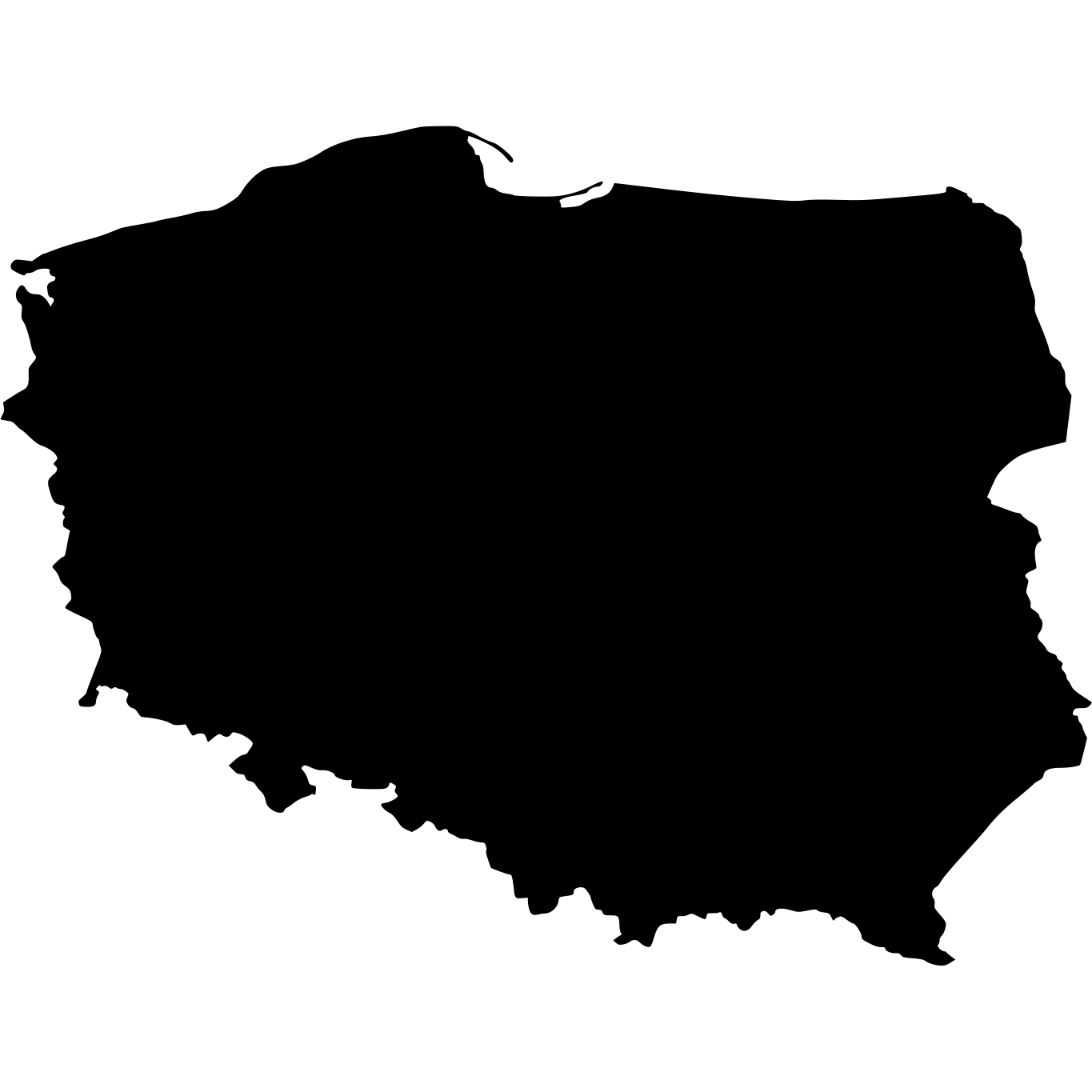
Barwa Cosmetics is a Polish brand

We're dedicated to providing you with the most up-to-date and science-backed ingredient info out there.
The data we've presented on this page has been verified by a member of the SkinSort Team.
Read more about us· Published May 30, 2026 • Added by vexdra

