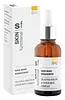
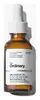
Skin Functional Dark Mark Management 2% Alpha Arbutin + Hyper-Brite Complex Versus The Ordinary Alpha Arbutin 2% + HA
This brightening serum is formulated around Tranexamic Acid and Alpha-Arbutin to fade the look of dark spots and brighten dull-looking skin.
This brightening serum is formulated around Alpha-Arbutin and Hydrolyzed Sodium Hyaluronate to fade the look of dark spots and brighten dull-looking skin.


What's inside
What's inside
 Key Ingredients
Benefits
Concerns
Ingredients Side-by-side
Water
Skin ConditioningNonapeptide-1
Skin Conditioning
Tranexamic Acid
Astringent




Ethoxydiglycol
HumectantAlpha-Arbutin
Antioxidant


Niacinamide
Smoothing






Propanediol
Solvent
Kojic Acid
Antioxidant
Sargassum Fusiforme Extract
Skin Protecting

Arisaema Amurense Extract
Skin ConditioningGanoderma Lucidum Stem Extract
Skin ConditioningLaminaria Japonica Extract
Skin Protecting
Rumex Occidentalis Extract
Skin ConditioningButylene Glycol
Humectant
Undaria Pinnatifida Extract
Skin ConditioningLentinus Edodes Mycelium Extract
Skin ConditioningSargassum Fulvellum Extract
Skin ConditioningPolyacrylate Crosspolymer-6
Emulsion StabilisingEnteromorpha Compressa Extract
Skin Protecting
1,2-Hexanediol
Skin Conditioning
Grifola Frondosa/Arctium Lappa Fruit Extract Ferment Filtrate
Skin ConditioningOctanediol
Tropolone
Skin ConditioningWater, Nonapeptide-1, Tranexamic Acid, Ethoxydiglycol, Alpha-Arbutin, Niacinamide, Propanediol, Kojic Acid, Sargassum Fusiforme Extract, Arisaema Amurense Extract, Ganoderma Lucidum Stem Extract, Laminaria Japonica Extract, Rumex Occidentalis Extract, Butylene Glycol, Undaria Pinnatifida Extract, Lentinus Edodes Mycelium Extract, Sargassum Fulvellum Extract, Polyacrylate Crosspolymer-6, Enteromorpha Compressa Extract, 1,2-Hexanediol, Grifola Frondosa/Arctium Lappa Fruit Extract Ferment Filtrate, Octanediol, Tropolone
Water
Skin ConditioningAlpha-Arbutin
Antioxidant
Propanediol
Solvent
Polyacrylate Crosspolymer-6
Emulsion StabilisingHydrolyzed Sodium Hyaluronate
Skin Conditioning
Ergothioneine
Antioxidant
Polysorbate 20
Emulsifying

Citric Acid
Buffering
Sodium Citrate
BufferingSodium Hydroxide
BufferingSodium Metabisulfite
Antioxidant
Trisodium Ethylenediamine Disuccinate
ChelatingEthoxydiglycol
HumectantPhenoxyethanol
Preservative
Chlorphenesin
Antimicrobial
Reviews
Ingredients Explained
These ingredients are found in both products.
Ingredients higher up in an ingredient list are typically present in a larger amount.
Alpha-Arbutin is a brightening active used to fade dark spots, melasma, and post-acne marks. Structurally, it is a hydroquinone with a sugar molecule attached (but is much gentler than raw hydroquinone).
It has a pretty elegant way of working; it slots into tyrosinase, or the key enzyme that your skin uses to make melanin), and competitively blocks it so your skin produces less pigment over time.
There are two forms of arbutin and alpha is the better one to reach for: it works at lower amounts, absorbs into skin more easily, and has a strong safety record.
The science backs this up too: lab and animal studies confirm it lowers melanin by blocking tyosinase and the more you use (up to a point), the more it works.
Human studies look good too.
A 2024 trial found a cream with 5% alpha-arbutin and 2% kojic acid worked about as well as a prescription melasma cream but with fewer side effects. Another study showed 2% alpha-arbutin paired with 10% Trihydroxybenzoic Acid Glucoside and sunscreen faded dark spots and melasma without causing irritation.
Concentration-wise, most serums land in the 1-2% range.
The EU's Scientific Committee on Consumer Safety concluded that alpha-arbutin is safe in face creams up to 2% and body lotions up to 0.5%.
Overall, this is a well-studied and low-irritation brightener that's a great pick for anyone dealing with uneven skin tone. It also pairs well with vitamin C, niacinamide, and sunscreen.
Learn more about Alpha-ArbutinEthoxydiglycol (aka Diethylene Glycol Monoethyl Ether) is one of the cosmetic world's quiet problem solvers.
In a formula, it is a solvent that dissolves tricky ingredients that don't want to mix in and helps spread ingredients evenly across your skin without leaving a greasy or sticky feeling
This makes it great for hard-to-dissolve actives like vitamin C, benzoyl peroxide, and self-tanner DHA.
It also has mild humectant and penetration enhancer abilities so it can help some actives absorb a little deeper.
The penetration boost is backed by lab research: studies using human skin samples found it improved how well an active dissolves into the upper layer of skin rather than tearing down your skin barrier. Reviews of its mechanism also describe it interacting gently with the lipids and water in your outermost layer of skin.
Just know this penetration-enhancing effect is not universal. It helps a lot in some formulas and did very little in others (so the benefit really depends on the specific product).
Safety-wise, the evidence is reassuring. The Cosmetic Ingredient Review Expert Panel reviewed it and concluded it's safe for use in cosmetics and recognized it as non-irritating, non-sensitizing, and non-comedogenic in skincare.
Typical leave-on skincare usage lands around 1-10%. The EU has sets caps of 2.6% in non-spray products, 10% in rinse-offs, 7% in oxidative hair dye, and 5% in non-oxidative hair dye.
Learn more about EthoxydiglycolPolyacrylate Crosspolymer-6 is a texture enhancer and pH adjuster.
It is be used to thicken water-based products and create a gel-texture with a velvet feel.
One manufacturer claims this ingredient to have a pH range of 2-8 and to be biodegradable.
This ingredient is also known as Sepimax Zen.
Learn more about Polyacrylate Crosspolymer-6Propanediol is an all-star ingredient. It softens, hydrates, and smooths the skin.
It’s often used to:
Propanediol is not likely to cause sensitivity and considered safe to use. It is derived from corn or petroleum with a clear color and no scent.
Learn more about PropanediolWater. It's the most common cosmetic ingredient of all. You'll usually see it at the top of ingredient lists, meaning that it makes up the largest part of the product.
So why is it so popular? Water most often acts as a solvent - this means that it helps dissolve other ingredients into the formulation.
You'll also recognize water as that liquid we all need to stay alive. If you see this, drink a glass of water. Remember to stay hydrated!
Learn more about Water

