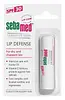
This barrier-repair lip moisturizer is formulated around Simmondsia Chinensis Seed Oil and Bisabolol to strengthen the lip barrier and hydrate lips.
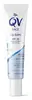
This barrier-repair lip moisturizer is formulated around Petrolatum and Caprylic/Capric Triglyceride to strengthen the lip barrier and hydrate lips.


What's inside
What's inside
 Key Ingredients
Benefits
Concerns
Ingredients Side-by-side
Caprylic/Capric/Succinic Triglyceride
EmollientCera Alba
Emollient





Isoamyl P-Methoxycinnamate
UV Absorber
Ricinus Communis Seed Oil
Masking

Caprylic/Capric Triglyceride
Masking

Ethylhexyl Salicylate
UV Absorber
Tocopheryl Acetate
Antioxidant


C12-15 Alkyl Benzoate
AntimicrobialOryza Sativa Bran Wax
Skin Conditioning
Simmondsia Chinensis Seed Oil
Emollient
Glyceryl Ricinoleate
Emollient
Butyl Methoxydibenzoylmethane
UV Absorber
Bisabolol
Antioxidant

Parfum
Masking

Caprylic/Capric/Succinic Triglyceride, Cera Alba, Isoamyl P-Methoxycinnamate, Ricinus Communis Seed Oil, Caprylic/Capric Triglyceride, Ethylhexyl Salicylate, Tocopheryl Acetate, C12-15 Alkyl Benzoate, Oryza Sativa Bran Wax, Simmondsia Chinensis Seed Oil, Glyceryl Ricinoleate, Butyl Methoxydibenzoylmethane, Bisabolol, Parfum







Reviews
Ingredients Explained
These ingredients are found in both products.
Ingredients higher up in an ingredient list are typically present in a larger amount.
Also known as Avobenzone, this ingredient is an oil-soluble used to absorb the full spectrum of UVA rays (peak 357 nm).
It's one of the most effective UVA filters available but has a major caveat of photostability: avobenzone is susceptible to photodegradation.
This means it can lose efficacy when exposed to sunlight without the help of a stabilizing agent.
Studies show antioxidants (like vitamin E or vitamin C) and some UV filters (like octocrylene and Tinosorb S) can meaningfully improve its stability in a formulation.
The maximum allowable concentration according to regulation is 3% in the US + Canada, and 5% in the EU, Australia, China, Korea, and ASEAN countries.
It has a well-support safety profile: a comprehensive 2025 review found minimal toxicity with no evidence of carcinogenicity.
Overall, avobenzone is a safe and regulated ingredient used in sunscreen for over 40 years.
Learn more about Butyl MethoxydibenzoylmethaneCaprylic/Capric Triglyceride (aka MCT Oil) is a lightweight emollient, solvent, and texture enhancer. It is considered a skin-softener by helping to prevent moisture loss.
Though it behaves like an oil, it is not technically one due to its chemical composition. One perk of this ingredient is that it is very stable, resistant to oxidation, and unlikely to go rancid.
In practice, that translates to a long shelf life and a consistently elegant skin feel.
While there is an assumption Caprylic Triglyceride can clog pores due to it being derived from coconut oil, there is no research supporting this. Just patch test if you have concerns.
Fractionated coconut oil and MCT Oil are both listed as Caprylic/Capric Triglyceride according to INCI. This is because INCI names are based on the ingredient’s final chemical composition and not its marketing name or source.
This ingredient is treated as the gold standard fungal acne safe oil. Even though it is coconut derived, the problematic lauric acid is stripped out.
This leaves just caprylic (C8) and capric (C10) acid. These chain lengths actually trend antifungal; a 2020 study found caprylic acid was enough to disrupt Malassezia furfur cell membrane, with a caprylic acid derivative damaging membrane structures at concentrations as low as 0.2%.
Learn more about Caprylic/Capric Triglyceride

