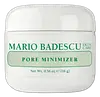
This pore-care treatment is formulated around Kaolin and Zinc Oxide to refine the look of pores and balance excess oil.


What's inside
What's inside
 Key Ingredients
Benefits
Concerns
No concerns
Ingredients Side-by-side


Water
Skin ConditioningKaolin 18%
Abrasive



Dipropylene Glycol
HumectantGlycerin
Humectant


CI 77891
Cosmetic ColorantButylene Glycol
Humectant
Sodium Stearate
Cleansing1,2-Hexanediol
Skin Conditioning
Aloe Barbadensis Leaf Extract
Emollient

Phaseolus Angularis Seed Powder
Cetearyl Olivate


Propanediol
Solvent
Sorbitan Olivate
Emulsifying
Dimethicone
Emollient
CI 77491
Cosmetic ColorantCentella Asiatica Extract 0.05%
Cleansing

Ethylhexylglycerin
Skin ConditioningSodium Phytate
ChelatingBentonite
Absorbent
Illite
Abrasive
Mineral Salts
Skin ConditioningMontmorillonite
AbsorbentCalamine
AbsorbentWater, Kaolin 18%, Dipropylene Glycol, Glycerin, CI 77891, Butylene Glycol, Sodium Stearate, 1,2-Hexanediol, Aloe Barbadensis Leaf Extract, Phaseolus Angularis Seed Powder, Cetearyl Olivate, Propanediol, Sorbitan Olivate, Dimethicone, CI 77491, Centella Asiatica Extract 0.05%, Ethylhexylglycerin, Sodium Phytate, Bentonite, Illite, Mineral Salts, Montmorillonite, Calamine
Reviews
Ingredients Explained
These ingredients are found in both products.
Ingredients higher up in an ingredient list are typically present in a larger amount.
Kaolin is a clay. It is used for oil control and to help minimize pores. Like other clays, kaolin has the ability to absorb excess sebum or oil. This can help clean out pores and mattify the skin.
Some types of kaolin may have exfoliating properties. When water is added to kaolin, it becomes a paste with small abrasive particles.
Most kaolin is a white color, but may be pink/orange/red depending on where it comes from.
The name 'kaolin' comes from a Chinese village named 'Gaoling'. Kaolin clay comes from rocks rich in kaolinite. Kaolinite, the mineral, has a silicate layered structure. Kaolinite is formed from chemical weathering of aluminum siilicate minerals.
Besides skincare, kaolin is commonly used to make glossy paper, in ceramics, toothpaste, and as medicine to soothe stomach issues.
Learn more about Kaolin

