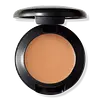
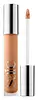
Mac Cosmetics Studio Finish Concealer Versus Saie Hydrabeam Brightening + Hydrating Under Eye Concealer

What's inside
What's inside
 Key Ingredients
Benefits
Concerns
No concerns
Ingredients Side-by-side
Octyldodecanol
Emollient
Synthetic Beeswax
Emulsion Stabilising
Copernicia Cerifera Wax
Silica
Abrasive


Hydrogenated Polyisobutene
EmollientSimmondsia Chinensis Seed Oil
Emollient



Tocopherol
Antioxidant





Ascorbyl Palmitate
Antioxidant
Polybutene
Vp/Hexadecene Copolymer
Alumina
Abrasive
Stearic Acid
Cleansing
CI 77891
Cosmetic ColorantCI 77491
Cosmetic ColorantCI 77492
Cosmetic ColorantCI 77499
Cosmetic ColorantCI 77288
Cosmetic ColorantIsocetyl Stearoyl Stearate
Emollient
Glycerin
Humectant
Glyceryl Stearate
Emollient
Tribehenin
Emollient
Sambucus Nigra Fruit Extract
AstringentSilica
Abrasive
Glycyrrhiza Glabra Root Extract
Bleaching
Simmondsia Chinensis Seed Oil
Emollient
Squalane
Emollient
Capryloyl Glycerin/Sebacic Acid Copolymer
Skin ConditioningMica
Cosmetic ColorantSolanum Lycopersicum Fruit Extract
Antioxidant
Cucumis Sativus Fruit Extract
Emollient
Xylitylglucoside
Humectant
Anhydroxylitol
Humectant
Xylitol
Humectant
Oryza Sativa Starch
AbsorbentCI 77891
Cosmetic ColorantIron Oxides
Isocetyl Stearoyl Stearate, Glycerin, Glyceryl Stearate, Tribehenin, Sambucus Nigra Fruit Extract, Silica, Glycyrrhiza Glabra Root Extract, Simmondsia Chinensis Seed Oil, Squalane, Capryloyl Glycerin/Sebacic Acid Copolymer, Mica, Solanum Lycopersicum Fruit Extract, Cucumis Sativus Fruit Extract, Xylitylglucoside, Anhydroxylitol, Xylitol, Oryza Sativa Starch, CI 77891, Iron Oxides
Reviews
Alternatives
Ingredients Explained
These ingredients are found in both products.
Ingredients higher up in an ingredient list are typically present in a larger amount.
Ci 77891 is a white pigment from Titanium dioxide. It is naturally found in minerals such as rutile and ilmenite.
It's main function is to add a white color to cosmetics. It can also be mixed with other colors to create different shades.
Ci 77891 is commonly found in sunscreens due to its ability to block UV rays.
Learn more about CI 77891Silica, also known as silicon dioxide, is a naturally occurring mineral. It is used as a fine, spherical, and porous powder in cosmetics.
Though it has exfoliant properties, the function of silica varies depending on the product.
The unique structure of silica enhances the spreadability and adds smoothness, making it a great texture enhancer.
It is also used as an active carrier, emulsifier, and mattifier due to its ability to absorb excess oil.
In some products, tiny microneedles called spicules are made from silica or hydrolyzed sponge. When you rub them in, they lightly polish away dead skin layers and enhance the penetration of active ingredients.
Learn more about SilicaJojoba oil is one of the most well-studied plant-derived ingredients in cosmetics. It is an emollient with a special structure.
Because it is made up of 97-98% wax esters, it closely mirrors the linear monoesters found in human sebum. This makes it skin compatible, non-greasy, and lightweight.
Unlike other plant oils, jojoba wax doesn't easily penetrate skin. It mostly works in the uppermost layers as an emollient. This just means it forms a light barrier on the skin to help retain moisture.
Formulations with jojoba esters up to 90% reduced transepidermal water loss (TEWL) and increased barrier recovery by 81% (outperforming bisabolol at 47%).
Besides barrier support, the science also suggests jojoba to have anti-inflammatory effects and potential applications for skin infections, aging, and wound healing.
Fun fact: Indigenous cultures have used jojoba as a moisturizer and to help treat burns for centuries.
Fungal acne: The Malassezia yeast is known to metabolize fatty acids in the C11-24 range and jojoba's dominant fatty acid components fall into this range. This ingredient may not be fungal acne safe.
Learn more about Simmondsia Chinensis Seed Oil
