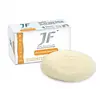
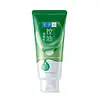
JF The Skin Specialist Sulfur 10% Face And Body Care Soap Versus Hada Labo Deep Clean & Pore Refining Face Wash
This salicylic acid foaming cleanser is formulated around Salicylic Acid to clear breakouts and unclog pores.


What's inside
What's inside
 Key Ingredients
Benefits
Concerns
Ingredients Side-by-side





Water
Skin ConditioningGlycerin
Humectant


Palmitic Acid
Emollient




Lauric Acid
Cleansing
Potassium Hydroxide
BufferingStearic Acid
Cleansing
Myristic Acid
Cleansing
Butylene Glycol
Humectant
Potassium Cocoyl Glycinate
Surfactant
Potassium Chloride
Polyquaternium-7
Disodium EDTA
ChelatingCitrus Paradisi Peel Oil
Masking




Citrus Aurantium Dulcis Peel Oil
Masking
Potassium Cocoate
Emulsifying
Coconut Acid
Cleansing
Methylparaben
Preservative


Sodium Hyaluronate
Humectant


Epilobium Fleischeri Extract
Skin ConditioningPropylparaben
Preservative
Disteardimonium Hectorite
StabilisingPotassium Sorbate
Preservative
Citric Acid
Buffering

Camellia Sinensis Leaf Extract
Antimicrobial



Water, Glycerin, Palmitic Acid, Lauric Acid, Potassium Hydroxide, Stearic Acid, Myristic Acid, Butylene Glycol, Potassium Cocoyl Glycinate, Potassium Chloride, Polyquaternium-7, Disodium EDTA, Citrus Paradisi Peel Oil, Citrus Aurantium Dulcis Peel Oil, Potassium Cocoate, Coconut Acid, Methylparaben, Sodium Hyaluronate, Epilobium Fleischeri Extract, Propylparaben, Disteardimonium Hectorite, Potassium Sorbate, Citric Acid, Camellia Sinensis Leaf Extract
Reviews
Ingredients Explained
These ingredients are found in both products.
Ingredients higher up in an ingredient list are typically present in a larger amount.
Coconut acid is a mixture of fatty acids obtains by hydrolyzing coconut oil and then distilling the fatty acid portion. It works as a cleansing surfactant, emollient, and emulsifier depending on the formulation.
This ingredient is not a single compound but reflects the fatty acid profile of coconut oil itself, which is about 90% saturated.
The dominant fatty acid is lauric acid (44-54%) and then myristic acid (13-19%). There are also small amounts of caprylic, capric, palmitic, oleic, and linoleic acids.
Human testing from CIR has shown no indication this ingredient to be a primary irritant, sensitizer, or phototoxic compound. It's COSMOS-approved for natural and organic products.
Due to the fatty acid content, this ingredient may not be fungal acne safe. Research has confirmed Malassezia can use lauric acid as a food source.
Learn more about Coconut AcidGlycerin (or glycerol) is a compound naturally found in your skin. It's a powerhouse humectant that pulls water into the stratum corneum.
Topically, glycerin does several things at once:
Your skin makes glycerin on its own (mostly from sebaceous oil breakdown) and shuttles it to your outermost layer of skin, or your epidermis, via aquaporin-3.
Aquaporin-3 is a transporter that is essential for normal skin hydration, elasticity, and repair. Interestingly, mice lacking in AQP3 have dry and less elastic skin that can be fully corrected with glycerin.
This ingredient is non-irritating, plays well with almost every ingredient, and works across all skin types. Typical use is anywhere between 3-10% but can go up to 79% in some leave-on products.
Just know very high concentrations (>40%) can feel tacky in low humidity.
Glycerin is the name for this ingredient in American English. British English uses Glycerol/Glycerine.
Learn more about Glycerin

