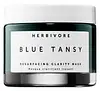
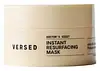
Herbivore Blue Tansy Invisible Pores Resurfacing Clarity Mask Versus Versed Doctor's Visit Instant Resurfacing Mask
This wash off mask is formulated around Salicylic Acid to clear breakouts and unclog pores.

What's inside
What's inside
 Key Ingredients
No key ingredients
Benefits
Concerns
Ingredients Side-by-side
Aloe Barbadensis Leaf Juice
Skin Conditioning


Hydroxyethyl Ethylcellulose
EmulsifyingGlycerin
Humectant

Glyceryl Caprylate
EmollientSalix Nigra Bark Extract
Skin Protecting
Aloe Barbadensis Leaf Juice, Hydroxyethyl Ethylcellulose, Glycerin, Glyceryl Caprylate, Salix Nigra Bark Extract, Tanacetum Annuum Flower Oil, Jasminum Sambac Flower Water, Ananas Sativus Fruit Extract, Carica Papaya Fruit Extract, Carica Papaya Leaf Extract, Leuconostoc/Radish Root Ferment Filtrate
Water
Skin ConditioningGlycerin
Humectant
Polyacrylate Crosspolymer-6
Emulsion StabilisingPropanediol
Solvent
Lactic Acid
Buffering









Glycolic Acid
Buffering

Salicylic Acid
Masking


Ananas Sativus Fruit Extract
Skin ConditioningLactobacillus/Papaya Fruit Ferment Extract
Abrasive
Ocimum Basilicum Flower/Leaf Extract
TonicCurcuma Longa Root Extract
Antioxidant

Evodia Rutaecarpa Fruit Extract
Skin ConditioningMelia Azadirachta Flower Extract
Skin ConditioningMelia Azadirachta Leaf Extract
Skin ConditioningOcimum Sanctum Leaf Extract
Skin ConditioningCorallina Officinalis Extract
Skin Conditioning
Lactobacillus Ferment
Skin Conditioning
1,2-Hexanediol
Skin Conditioning
Caprylhydroxamic Acid
Leuconostoc/Radish Root Ferment Filtrate
Antimicrobial
Potassium Hydroxide
BufferingWater, Glycerin, Polyacrylate Crosspolymer-6, Propanediol, Lactic Acid, Glycolic Acid, Salicylic Acid, Ananas Sativus Fruit Extract, Lactobacillus/Papaya Fruit Ferment Extract, Ocimum Basilicum Flower/Leaf Extract, Curcuma Longa Root Extract, Evodia Rutaecarpa Fruit Extract, Melia Azadirachta Flower Extract, Melia Azadirachta Leaf Extract, Ocimum Sanctum Leaf Extract, Corallina Officinalis Extract, Lactobacillus Ferment, 1,2-Hexanediol, Caprylhydroxamic Acid, Leuconostoc/Radish Root Ferment Filtrate, Potassium Hydroxide
Reviews
Alternatives
Ingredients Explained
These ingredients are found in both products.
Ingredients higher up in an ingredient list are typically present in a larger amount.
This extract comes from the pineapple fruit. Its main claim to fame is bromelain, a gentle exfoliator that helps remove dead skin cells from the outermost layer of skin.
Exfoliation from bromelain is considered a gentler alternative to physical or chemical exfoliants; this makes it suitable for sensitive skin types.
Beyond exfoliation, this extract also contains natural sugars with humectant properties and some vitamin C.
Overall, this is a well-tolerated and low-risk ingredient unless you have a pineapple allergy.
Learn more about Ananas Sativus Fruit ExtractGlycerin (or glycerol) is a compound naturally found in your skin. It's a powerhouse humectant that pulls water into the stratum corneum.
Topically, glycerin does several things at once:
Your skin makes glycerin on its own (mostly from sebaceous oil breakdown) and shuttles it to your outermost layer of skin, or your epidermis, via aquaporin-3.
Aquaporin-3 is a transporter that is essential for normal skin hydration, elasticity, and repair. Interestingly, mice lacking in AQP3 have dry and less elastic skin that can be fully corrected with glycerin.
This ingredient is non-irritating, plays well with almost every ingredient, and works across all skin types. Typical use is anywhere between 3-10% but can go up to 79% in some leave-on products.
Just know very high concentrations (>40%) can feel tacky in low humidity.
Glycerin is the name for this ingredient in American English. British English uses Glycerol/Glycerine.
Learn more about GlycerinLeuconostoc/Radish Root Ferment Filtrate is a natural preservative. It comes from fermenting radish roots with a bacteria called leuconostoc. The trade name for this ingredient is Leucidal.
Leuconostoc comes from lactic acid.
This ingredient has antimicrobial properties and helps prevent the growth of bacteria in a product.
Leuconostoc is used to make the traditional Korean side-dish, kimchi. It is also used to make sourdough bread (both incredibly yummy foods).
Learn more about Leuconostoc/Radish Root Ferment Filtrate

