

What's inside
What's inside
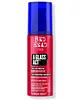 Key Ingredients
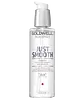
No key ingredients
Benefits
Concerns
Ingredients Side-by-side
Cyclopentasiloxane
Emollient
Isohexadecane
EmollientDimethiconol
Emollient
Elaeis Guineensis Oil
Emollient





Parfum
Masking


Amodimethicone
Phenyl Trimethicone
Skin Conditioning
Prunus Amygdalus Dulcis Oil
Skin Conditioning
Ethylhexyl Methoxycinnamate
UV Absorber

Cocos Nucifera Oil
Masking

BHT
Antioxidant
Amyl Cinnamal
Perfuming
Benzyl Salicylate
Perfuming
Citrus Aurantium Peel Oil
Dimethyl Phenylethyl Carbinyl Acetate
Perfuming
Hexyl Cinnamal
Perfuming
Limonene
Perfuming
Linalool
Perfuming
Terpineol
Masking
Cyclopentasiloxane, Isohexadecane, Dimethiconol, Elaeis Guineensis Oil, Parfum, Amodimethicone, Phenyl Trimethicone, Prunus Amygdalus Dulcis Oil, Ethylhexyl Methoxycinnamate, Cocos Nucifera Oil, BHT, Amyl Cinnamal, Benzyl Salicylate, Citrus Aurantium Peel Oil, Dimethyl Phenylethyl Carbinyl Acetate, Hexyl Cinnamal, Limonene, Linalool, Terpineol
Cyclopentasiloxane
Emollient
Dimethiconol
Emollient
Diethylhexyl Carbonate
EmollientPhenyl Trimethicone
Skin Conditioning
Isopropyl Myristate
Emollient
Amodimethicone
Aleurites Moluccanus Seed Oil
Skin Conditioning
Octyldodecyl PCA
EmollientEthylhexyl Methoxycinnamate
UV Absorber
Water
Skin ConditioningC11-15 Pareth-7
EmulsifyingLaureth-9
EmulsifyingGlycerin
Humectant

Trideceth-12
EmulsifyingAcetic Acid
BufferingParfum
Masking
Linalool
Perfuming
Hexyl Cinnamal
Perfuming
Geraniol
Perfuming
Limonene
Perfuming
Cyclopentasiloxane, Dimethiconol, Diethylhexyl Carbonate, Phenyl Trimethicone, Isopropyl Myristate, Amodimethicone, Aleurites Moluccanus Seed Oil, Octyldodecyl PCA, Ethylhexyl Methoxycinnamate, Water, C11-15 Pareth-7, Laureth-9, Glycerin, Trideceth-12, Acetic Acid, Parfum, Linalool, Hexyl Cinnamal, Geraniol, Limonene
Ingredients Explained
These ingredients are found in both products.
Ingredients higher up in an ingredient list are typically present in a larger amount.
This water-soluble silicone is used for its hydrating and softening properties. It is used to add a silky feel to skincare products and has great benefits for haircare.
In haircare, this ingredient:
- Adds shine
- Protects color
- Offers thermal protection
- Boosts hair strength
- Does not build up as easily
Cyclopentasiloxane (D5) is a lightweight silicone that mostly acts as an emollient and solvent in cosmetics. Its the reason your products feel silky, fast-spreading, and non-greasy.
Since D5 is volatile, it does its thing and then evaporates off the skin quickly.
The safety profile of this ingredient is reassuring; the US CIR Expert Panel concluded D5 is safe as used in cosmetics and Health Canada concluded that D5 is not harmful to human health or the environment as currently used in cosmetics
There's a study that people mention about D5 in a rat study showing tumors. This study is related to long-term inhalation of high D5 levels.
Regulatory bodies have judged this study to be not applicable in topical skincare since skin absorption of D5 is very low and we're not really inhaling huge amounts of D5.
The only restriction for this ingredient is environmental. The European Chemicals Agency (ECHA) restricted D5 in wash-off cosmetics at or above 0.1% due to their persistence in water.
Learn more about CyclopentasiloxaneDimethiconol is a silicone that resembles the popular dimethicone. Like other silicones, it is an emollient. Emollients create a thin film on skin to prevent moisture from escaping.
This ingredient helps to create a silky texture and improve spreadability. Due to its high molecular weight and thickness, it is often combined with cyclopentasiloxane.
This ingredient is also known as Octinoxate and is one of the oldest and most widely used chemical UV filters in skincare.
It has a simple job: soap up UVB radiation (290-320 nm), the wavelengths responsible for sunburn and a big chunk of long-term sun damage.
In formulas, it's always paired with a separate UVA filter because octinoxate solely protects skin from UVB.
Because it's an oil-soluble liquid, it's easy to blend into the oil phase of lotions/creams and gives a cosmetically elegant feel.
The one quirk about formulating this ingredient is photostability; the molecule slowly changes shape into a less effective version when sunlight hits it. So the longer you're in the sun, the weaker its protection gets. The drop can be more than 30% in some formulas.
It also doesn't play nice with Avobenzone (the common UVA filter) since avobenzone destabilizes octinoxate and the two degrade each other. But don't worry: brands have solved this issue by adding photostabilizers like Tinosorb S to prevent degradation and keep SPF stable under heavy UV exposure.
The maximum allowed level is 10% in the EU and Australia, 7.5% in the US and Canada, and 20% in Japan.
The Cosmetic Ingredient Review Panel has concluded this ingredient to be safe in cosmetics up to 10%.
One last thing worth knowing for context:
Octinoxate has been the subject of ongoing review in Europe where the Scientific Committee on Consumer Safety's (SCCS) 2025 final opinion is that this ingredient is an endocrine-active substance.
Lab and animal studies suggest it can act a bit like a hormone in the body (mildly mimicking estrogen and slightly blocking male hormones). It's important to know this hasn't really been shown to happen in everyday human use.
This ingredient is also banned in Hawaii over coral reef concerns.
Learn more about Ethylhexyl MethoxycinnamateHexyl Cinnamal is a fragrance ingredient with a similar scent to jasmine. It can be naturally found in chamomile essential oil.
This ingredient is a known EU allergen and may sensitize the skin. The EU requires this ingredient to be listed separately on an ingredients list.
Hexyl Cinnamal is not water soluble but is soluble in oils.
Learn more about Hexyl CinnamalLimonene is the compound that gives citrus peel its smell.
In skincare, it shows up as a standalone fragrance ingredient or as a natural compound of citrus and other essential oils.
You'll typically see this ingredient used in very small amounts; anything above 0.001% in a leave-on product or 0.01% in a rinse-off has to be named on the label in the EU. The citrus oils that carry it sit around 0.5-1% in a finished formula.
Fresh limonene is a weak allergen; the real issue is that it slowly reacts with air and then breaks down from oxidation to create hydroperoxides (which are strong sensitizers). This is why suppliers are required to keep the peroxide value below 20 mmol.
Positive reactions in people being investigated for eczema vary:
It's worth skipping if you have a known fragrance allergy or a compromised barrier, but the risk is low for most people.
Older or long-opened products are also more likely to bother you than fresh ones due to oxidation.
Learn more about LimoneneLinalool is a small, naturally occurring scent molecule found in plants like lavender, coriander, bergamot, and more.
It is one of the two most-used fragrance ingredients in cosmetics and added purely for smell. Since it's not used for a skin benefit, there's no "effective dose". Concentration depends on the fragrance load of the product.
The EU requires it to be named on the label above 0.001% in leave-on and 0.01% in rinse-off products.
Fresh linalool is a weak sensitizer but air exposure turns some of it into hydroperoxides, which are strong sensitizers. Those oxidation products are the actual allergy concern.
Patch-test clinics see positive reactions to linalool hydroperoxides in about 4% to 12% of dermatitis patients depending on country and test concentration.
Resassuringly, one analytical study found hydroperoxide levels in real fragranced products to be orders of magnitude below what induced sensitization in animal studies with no evidence of oxidation building up during normal storage.
The practical takeaway is that linalool is fine for most people but worth avoiding if you have a confirmed fragrance contact allergy or a badly compromised barrier.
Products stored a long time after opening are also the high-risk scenario since that is when oxidation happens.
The scent of linalool is described as floral, spicy tropical, and citrus-like.
Learn more about LinaloolParfum is a catch-all term for an ingredient or more that is used to give a scent to products.
Also called "fragrance", this ingredient can be a blend of hundreds of chemicals or plant oils. This means every product with "fragrance" or "parfum" in the ingredients list is a different mixture.
For instance, Habanolide is a proprietary trade name for a specific aroma chemical. When used as a fragrance ingredient in cosmetics, most aroma chemicals fall under the broad labeling category of “FRAGRANCE” or “PARFUM” according to EU and US regulations.
The term 'parfum' or 'fragrance' is not regulated in many countries. In many cases, it is up to the brand to define this term.
For instance, many brands choose to label themselves as "fragrance-free" because they are not using synthetic fragrances. However, their products may still contain ingredients such as essential oils that are considered a fragrance by INCI standards.
One example is Calendula flower extract. Calendula is an essential oil that still imparts a scent or 'fragrance'.
Depending on the blend, the ingredients in the mixture can cause allergies and sensitivities on the skin. Some ingredients that are known EU allergens include linalool and citronellol.
Parfum can also be used to mask or cover an unpleasant scent.
The bottom line is: not all fragrances/parfum/ingredients are created equally. If you are worried about fragrances, we recommend taking a closer look at an ingredient. And of course, we always recommend speaking with a professional.
Learn more about ParfumPhenyl Trimethicone is a silicon-based polymer. It is derived from silica.
Phenyl Trimethicone is used as an emollient and prevents products from foaming.
As an emollient, it helps trap moisture in the skin. It is considered an occlusive.
Learn more about Phenyl Trimethicone

