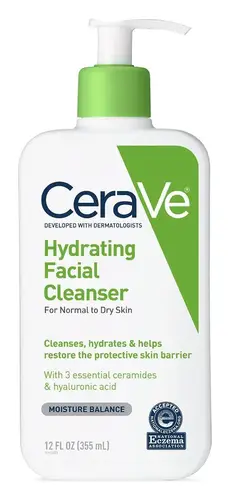
This oil-based cleanser is made to cleanse without leaving your skin tight or dry.

What's inside
What's inside
 Key Ingredients
No key ingredients
Benefits
Concerns
Ingredients Side-by-side


Water
Skin ConditioningSodium Coco-Sulfate
Cleansing

Coco-Glucoside
Cleansing
Glycerin
Humectant


Sodium Cocoyl Isethionate
Cleansing
Lauryl Hydroxysultaine
CleansingCitric Acid
Buffering


Sodium Chloride
MaskingInulin
Skin Conditioning
Glyceryl Oleate
Emollient


Sodium Benzoate
Masking
Potassium Sorbate
Preservative
Panthenol
Skin Conditioning

Vitis Vinifera Seed Oil
Emollient
Guar Hydroxypropyltrimonium Chloride
Skin ConditioningAvena Sativa Kernel Extract
Abrasive

Hydrolyzed Soy Protein
Humectant
Water, Sodium Coco-Sulfate, Coco-Glucoside, Glycerin, Sodium Cocoyl Isethionate, Lauryl Hydroxysultaine, Citric Acid, Sodium Chloride, Inulin, Glyceryl Oleate, Sodium Benzoate, Potassium Sorbate, Panthenol, Vitis Vinifera Seed Oil, Guar Hydroxypropyltrimonium Chloride, Avena Sativa Kernel Extract, Hydrolyzed Soy Protein
Reviews
Ingredients Explained
These ingredients are found in both products.
Ingredients higher up in an ingredient list are typically present in a larger amount.
Coco-Glucoside is a surfactant, or a cleansing ingredient. It is made from glucose and coconut oil.
Surfactants help gather dirt, oil, and other pollutants from your skin to be rinsed away.
This ingredient is considered gentle and non-comedogenic. However, it may still be irritating for some.
Learn more about Coco-GlucosideGlycerin (or glycerol) is a compound naturally found in your skin. It's a powerhouse humectant that pulls water into the stratum corneum.
Topically, glycerin does several things at once:
Your skin makes glycerin on its own (mostly from sebaceous oil breakdown) and shuttles it to your outermost layer of skin, or your epidermis, via aquaporin-3.
Aquaporin-3 is a transporter that is essential for normal skin hydration, elasticity, and repair. Interestingly, mice lacking in AQP3 have dry and less elastic skin that can be fully corrected with glycerin.
This ingredient is non-irritating, plays well with almost every ingredient, and works across all skin types. Typical use is anywhere between 3-10% but can go up to 79% in some leave-on products.
Just know very high concentrations (>40%) can feel tacky in low humidity.
Glycerin is the name for this ingredient in American English. British English uses Glycerol/Glycerine.
Learn more about GlycerinHydrolyzed Soy Protein is a water-soluble blend of peptides and amino acids made by breaking down the protein from soybeans into smaller proteins.
It's the most widely used hydrolyzed vegetable protein in cosmetics and it acts mainly as a skin and hair conditioning agent.
The smaller fragments are water-loving so it forms a thin, moisture-retentive film on skin that helps reduce water loss and leaves things feeling softer and smoother.
You'll often see it credited with "firming" or "anti-aging" benefits as well; this claim traces back to lab research like Tokudome et al. (2012). This study added low-molecular-weight soybean peptides to cultured human skin fibroblasts and saw increased type I collagen gene expression + collagen content.
The caveat is that this is in-vitro and oral-peptide research so the only solid, well-established role for the topical ingredient is skin conditioning.
Typical use concentrations go up to 3.5% in mascara but this ingredient is typically used at low levels well under 1%.
It has a reassuring safety profile as well; it's not a skin irritant in testing up to 20% and has limited skin penetration due to its large size and water-loving nature.
Anyone with a known soy allergy should definitely patch test or skip this ingredient. There's also a single case of a soy-containing product aggravating rosacea via protein contact dermatitis, but this is very rare.
Learn more about Hydrolyzed Soy ProteinSodium cocoyl isethionate is a natural ingredient from coconut oil. It is an ultra gentle cleanser that gives a nice foam without drying the skin or impacting the skin barrier.
The amount of foam created depends on the amount of sodium cocoyl isethionate used in the product.
This ingredient also helps improve the spreadability of a product.
This ingredient hasn’t been shown in studies to feed fungal acne yeast.
Learn more about Sodium Cocoyl IsethionateWater. It's the most common cosmetic ingredient of all. You'll usually see it at the top of ingredient lists, meaning that it makes up the largest part of the product.
So why is it so popular? Water most often acts as a solvent - this means that it helps dissolve other ingredients into the formulation.
You'll also recognize water as that liquid we all need to stay alive. If you see this, drink a glass of water. Remember to stay hydrated!
Learn more about Water