Verité Spa Papaya & Blue Tansy Pressed Serum
A serum with 24 ingredients, including exfoliants and vitamin E.
This hydrating serum is formulated around Butyrospermum Parkii Butter to hydrate skin.
Worth noting
Contains Lavandula Angustifolia Oil, an EU-listed fragrance allergen.
We independently verify ingredients, backed by peer-reviewed research. Suggest an update.
What's inside
Ingredients List
Sclerocarya Birrea Seedcake
Abrasive
Butyrospermum Parkii Butter
Skin Conditioning






Theobroma Cacao Seed Butter
Emollient
Prunus Armeniaca Juice
MoisturisingCarica Papaya Fruit Extract
Skin ConditioningCamellia Oleifera Seed Oil
Skin Conditioning
Terminalia Ferdinandiana Fruit Extract
Antioxidant
Cucurbita Pepo
Skin Conditioning
Rubus Idaeus Seed
Abrasive
Vaccinium Macrocarpon Seed
Abrasive
Tanacetum Annuum Flower Oil
Masking
Euterpe Oleracea Fruit Extract

Persea Gratissima Cera
EmollientTourmaline
Quartz
Abrasive
Moonstone Powder
Skin ConditioningChrysocolla
Skin ConditioningLapis Lazuli
Abrasive
Amethyst Powder
Abrasive
Euphorbia Cerifera Cera
Astringent
Tocopherol
Antioxidant




Boswellia Carterii Gum
Perfuming
Jasminum Grandiflorum Flower Oil
Lavandula Angustifolia Oil
Masking


Sclerocarya Birrea Seedcake, Butyrospermum Parkii Butter, Theobroma Cacao Seed Butter, Prunus Armeniaca Juice, Carica Papaya Fruit Extract, Camellia Oleifera Seed Oil, Terminalia Ferdinandiana Fruit Extract, Cucurbita Pepo, Rubus Idaeus Seed, Vaccinium Macrocarpon Seed, Tanacetum Annuum Flower Oil, Euterpe Oleracea Fruit Extract, Persea Gratissima Cera, Tourmaline, Quartz, Moonstone Powder, Chrysocolla, Lapis Lazuli, Amethyst Powder, Euphorbia Cerifera Cera, Tocopherol, Boswellia Carterii Gum, Jasminum Grandiflorum Flower Oil, Lavandula Angustifolia Oil
Key Ingredients
Benefits
Concerns
Ingredients Explained
Sclerocarya Birrea Seedcake is an exfoliant.
This ingredient is also known as shea butter. It is a plant-derived extract from the nuts of the Africa shea tree and one of the most well-studied emollients.
Because it has a high concentration of fatty acids (primarily oleic, stearic, and linoleic) it is able to form a protective barrier on the skin's surface. This helps seal in moisture and prevents transepidermal water loss (TEWL).
In vitro research found an increase in skin hydration by 58% and a decrease in TEWL by 37.8% after 24 hours of applying this ingredient (pretty impressive for a single ingredient!).
Besides hydration, shea butter also contains triterpenes that have anti-inflammatory potential. In particule, lupeol cinnamate has shown the highest anti-inflammatory activity in vivo.
Shea butter also contains vitamins A and E which may contribute to antioxidant activity.
While Shea Butter has an SPF rating of about 3-4, it is not a sunscreen replacement.
This ingredient may not be fungal acne safe because its fatty acids fall within the C11-C24 range that the Malassezia yeast can metabolize.
This ingredient shows up on a lot of "pore-clogging" lists but there's no real evidence behind that. It doesn't even have a comedogenic rating from an actual study; the numbers you'll find online come from blogs citing other blogs.
Ratings for other ingredients mostly come from a 1980s rabbit ear test. This test doesn't translate well to human skin or to real products because the ingredient sits at a much lower percentage.
Some people still find it breaks them out. So if that's you, definitely trust your skin. Just know this one's based on experience and not evidence.
Learn more about Butyrospermum Parkii ButterThis ingredient is also known as Cocoa butter; it's the fat pressed out of roasted cocoa beans.
Cocoa butter is solid at room temperature and melts right around body temperature, which is why it feels waxy in the jar and slippery on skin.
It has a very saturated profile (stearic acid ~34 to 36%, oleic acid ~30 to 40%, and palmitic acid ~24 to 29%) that makes it a strong occlusive: it sits on top and slows water escaping from skin.
Concentration data shows that it can show up anywhere from a few percent in lotions up to 100% in balms, and the FDA lists cocoa butter as an OTC skin protectant active at 50-100%.
The CIR has reviewed it and concluded it to be safe as used in cosmetics.
This is one of the ingredients with a comedogenic score of 4/5 from the rabbit ear test. Just know that a later human study did find that finished products containing high-comedogenic ingredients like cocoa butter did not increase microcomedone formation.
The fair call here is that this ingredient is most likely fine on body or low-percentage formulas, but can potentially be riskier as a heavy leave-on facial product if you break out easily.
Cocoa butter may not be fungal acne safe; it is a triglyceride of C16-18 fatty acids that the Malassezia yeast can metabolize.
Allergies to cocoa butter are rare and uncommon, but a few cases have been documented (mostly in cases where the person ate chocolate). So if you have a tree nut allergy, be sure to patch test or avoid.
Learn more about Theobroma Cacao Seed ButterWe don't have a description for Prunus Armeniaca Juice yet.
Carica Papaya Fruit Extract comes from the flesh of the papaya. It's a skin conditioning agent that carries a mix of bioactives like papain, beta-carotene, and vitamin C.
These bioactive compounds give it two main talking points:
1. Papain is a proteolytic enzyme that provides mild exfoliation, helping skin look smoother and more even.
2. The carotenoids and vitamin C provide some antioxidant activity.
It's pretty compatible with most ingredients, but just sure to space out enzyme products with strong acids/retinoids to avoid over-doing it.
Maximum reported concentration is around 0.1% and most leave-on products use just 0.05%. If you see higher figures like 5-10%, this is usually the pre-diluted material from raw extract suppliers.
This ingredient has an assuring safety record and there's a lack of clinical case reports of dermatitis from using it.
The only caveat is allergy: patch test if you have a papaya or latex-fruit allergy.
Learn more about Carica Papaya Fruit ExtractCamellia Oleifera Seed Oil comes from a green tea plant native to China. It is closely related to Camellia sinensis. Both plants have very similar properties. This plant also has similar properties to olive oil.
This ingredient is rich in oleic acid. This makes it an effective moisturizer. By creating a thin film on the skin, Camellia Oleifera Seed Oil traps moisture within. This helps keep your skin smooth and hydrated.
The antioxidant and soothing properties of this ingredient come from Vitamin E and polyphenols.
The seed oil comes from the dried kernels of the plant.
Learn more about Camellia Oleifera Seed OilTerminalia Ferdinandiana Fruit Extract is from the Kakadu plum. The Kakadu plum is native to northern Australia. The Kakadu plum holds the record for having the highest amount of natural vitamin C.
This ingredient is an antioxidant. Antioxidants help fight free-radical molecules. Free-radical molecules are capable of damaging our cells and other genetic material. Antioxidants help stabilize free-radicals and thus may reduce the signs of aging.
The high vitamin C content of Kakadu plum also helps lighten skin. Vitamin C has been shown to block the process of skin darkening that leads to hyperpigmentation.
Kakadu plums have been used by indigenous cultures as medicine to help treat colds and as an antiseptic.
Learn more about Terminalia Ferdinandiana Fruit ExtractCucurbita Pepo is a species that includes the classic orange pumpkin, zucchini/courgettes, and various edible squashes.
These pumpkins and squashes are rich in vitamins, minerals, antioxidants, and alpha-hydroxy acids (AHAs).
Vaccinium Macrocarpon Seed is also known as cranberry seed.
As an exfoliant, it helps remove the top layer of skin.
We recommend wearing SPF after exfoliating.
Learn more about Vaccinium Macrocarpon SeedBlue tansy is a blue flower native to the Mediterranean. It has antioxidant, skin cooling, and perfuming properties.
This ingredient is currently being studied for its antifungal properties. While it does have antioxidant benefits - it may not be the best for sensitive skin (despite being advertised as so).
The cooling effect from blue tansy comes from its camphor content. Camphor is known to induce irritation in concentrations higher than 11%. It also contains another skin irritant, beta-pinene.
Learn more about Tanacetum Annuum Flower OilThis extract comes from the Cabbage Palm, AKA the Açaí berry! It has skin soothing and antioxidant properties.
Acai berries are rich in antioxidants, including ferulic acid (The famous vitamin C stabilizer). Antioxidants protect your skin against damaging free-radical molecules.
You can also find carbohydrates, lipids, proteins, minerals, vitamin A, and Vitamin C in these berries.
Learn more about Euterpe Oleracea Fruit ExtractWe don't have a description for Persea Gratissima Cera yet.
We don't have a description for Tourmaline yet.
We don't have a description for Moonstone Powder yet.
We don't have a description for Chrysocolla yet.
Lapis Lazuli is an exfoliant.
Amethyst Powder is an exfoliant.
Euphorbia Cerifera Cera (aka candelilla wax) is a vegan stand-in for beeswax. It is a plant-derived wax that functions as an astringent, emulsion stabilizer, film-former, and skin conditioner.
On skin, it forms a protective barrier that helps lock in moisture while it enhances product stability, prevents separation, and helps color last longer in makeup.
This ingredient is generally safe for use in cosmetics with one nuance: some grades of candelilla wax can naturally contain benzyl alcohol at concentrations high enough to require declaration under EU labeling rules. This isn't a concern for most people but relevant for those with fragrance sensitivities.
Candelilla wax contains fatty acids (mainly C31) and wax esters that can be used by the Malassezia yeast, so this ingredient may not be fungal acne safe.
You might see Euphorbia Cerifera "Wax" instead of "cera". This is because some brands, databases, or labels use it interchangeably; they're the same ingredient.
Learn more about Euphorbia Cerifera CeraTocopherol is a fat-soluble antioxidant known as Vitamin E.
You'll find this ingredient in the vast majority of skincare (for good reason). It works to neutralize free radicals, or unstable molecules generated by UV exposure, pollution, and other environmental stressors, before they can cause oxidative damage to your skin cells.
Topically applied tocopherol has been shown to protect against UV damage by ramping up the skin's own natural defense enzymes.
It also acts as a skin conditioning agent; some studies show that regular topical use can improve the skin's water-binding capacity over 2-4 weeks.
This ingredient is especially loved for being a team player. When combined with Vitamin C, the photoprotective effect of both ingredients roughly doubles and the combo also helps reduce UV-induced DNA damage.
This ingredient has some brightening potential but it's more of a prevention ingredient than spot-fader. Cell studies show it can slow down melanin production but it's worth noting that it's not the most powerful brightener out there.
In formulations, it also serves as a stabilizer that helps protect other oxidation-prone ingredients from degrading.
Concentrations usually range from 0.1-1% in most leave-on products.
Learn more about TocopherolBoswellia Carterii Gum is a fragrance.
Jasminum Grandiflorum Flower Oil is an oil.
Lavandula Angustifolia Oil is more commonly known as lavender essential oil. It is considered a fragrancing ingredient.
Lavender imparts a famous scent. While the smell is lovely, this ingredient and may sensitize skin in topical products. This is because about 85% of the oil is made up of linalool and linalyl acetate.
When exposed to air, these two compounds become strong allergens. This ingredient exhibits cytotoxicity at low concentrations; amounts of 0.25% have been shown to damage skin cells.
A study from Japan found this ingredient caused lavender sensitivity after widespread exposure.
Lavender essential oil has some antimicrobial, antibacterial, and anti-inflammatory properties. However, the cons of this ingredient may outweight the pros.
More research is needed to confirm lavender essential oil's effects when used in aromatherapy.
Lavandula Angustifolia is known as the English Lavender and famous for creating purple fields in Provence, France.
Learn more about Lavandula Angustifolia OilReviews
No written reviews yet. Be the first to review this product.
Recent searches
Search reviews by skin type, ingredient, or keyword.
Where it's from
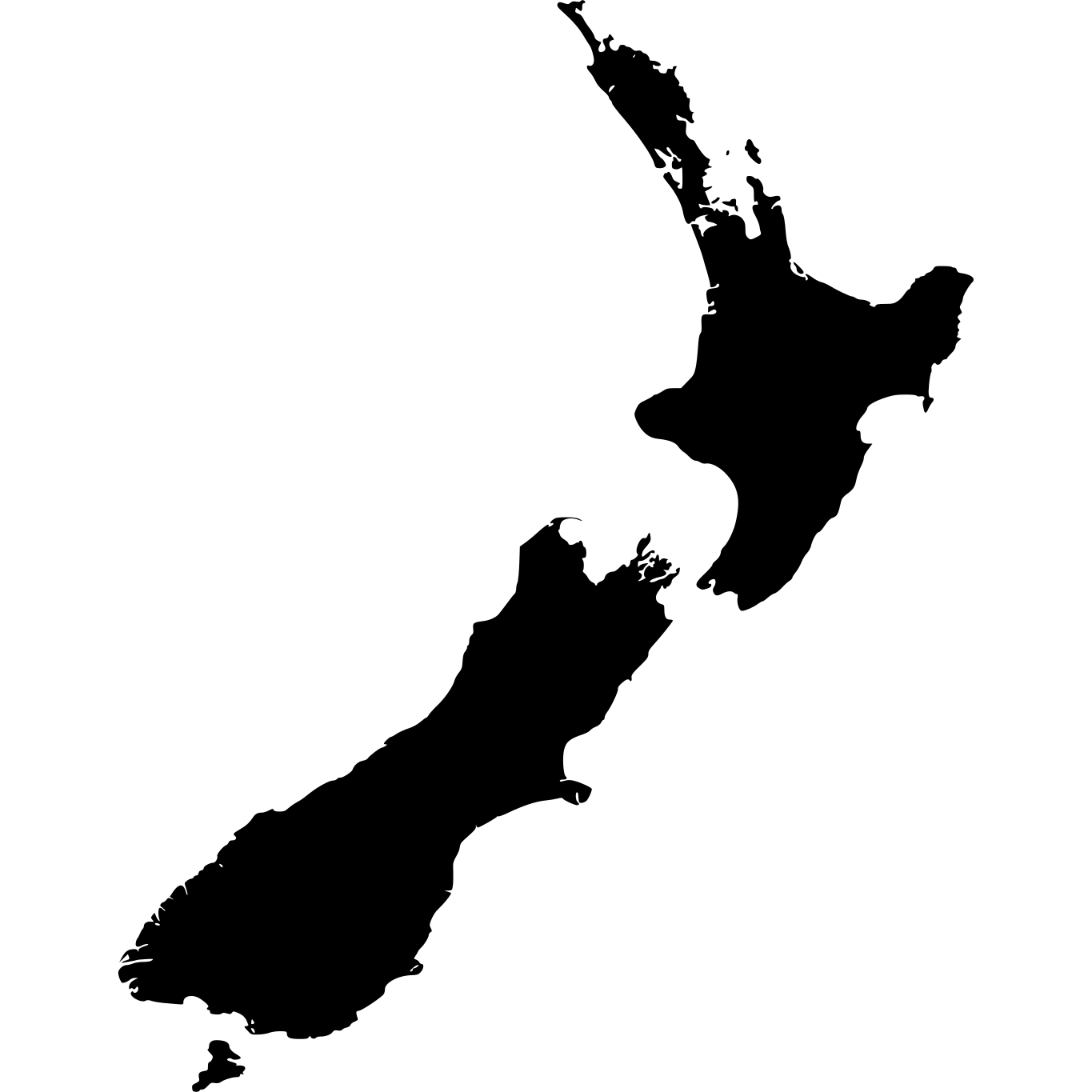
Verité Spa is a New Zealander brand

We're dedicated to providing you with the most up-to-date and science-backed ingredient info out there.
The data we've presented on this page has been verified by a member of the SkinSort Team.
Read more about us· Updated January 29, 2025 • Added by danielleklein


