Saje True Dew Face Oil
A oil with 14 ingredients, including exfoliants.
This hydrating oil is formulated around Persea Gratissima Oil and Rosa Rubiginosa Seed Oil to hydrate skin and calm redness.
Worth noting
Contains EU-listed fragrance allergens, including Pelargonium Graveolens Oil and Rosa Damascena Flower Oil.
We independently verify ingredients, backed by peer-reviewed research. Suggest an update.
What's inside
Ingredients List
Persea Gratissima Oil
Skin Conditioning





Rubus Idaeus Seed Oil
Emollient
Punica Granatum Seed Oil
Emollient
Opuntia Ficus-Indica Extract
Skin Conditioning
Rosa Rubiginosa Seed Oil
Emollient
Banksia Serrata Seed Oil
Antioxidant
Hippophae Rhamnoides Fruit Extract
Skin Conditioning
Rosmarinus Officinalis Leaf Extract
AntimicrobialAvena Sativa Kernel Extract
Abrasive
Boswellia Carterii Oil
Masking
Pelargonium Graveolens Oil
Masking



Citrus Aurantium Dulcis Oil
Masking
Rosa Damascena Flower Oil
Masking
Helichrysum Italicum Flower Oil
Masking
Persea Gratissima Oil, Rubus Idaeus Seed Oil, Punica Granatum Seed Oil, Opuntia Ficus-Indica Extract, Rosa Rubiginosa Seed Oil, Banksia Serrata Seed Oil, Hippophae Rhamnoides Fruit Extract, Rosmarinus Officinalis Leaf Extract, Avena Sativa Kernel Extract, Boswellia Carterii Oil, Pelargonium Graveolens Oil, Citrus Aurantium Dulcis Oil, Rosa Damascena Flower Oil, Helichrysum Italicum Flower Oil
Key Ingredients
Benefits
Concerns
Ingredients Explained
This ingredient is also known as Avocado oil. It's the cold-pressed oil from the flesh of the avocado fruit packed with fatty acids (mostly oleic acid).
The rich fatty acid profile allows it to function as a skin conditioning agent and emollient; it helps soften and smooth skin while reducing water loss.
Preclinical research has found that topical avocado oil increased collagen synthesis and reduced inflammation during wound healing, giving it some skin-repairing credibility.
The unsaponifiable fraction of the oil is also interesting: studies on avocado unsaponifiables showed that it helped skin produce more collagen and other structural compounds that support healing.
The CIR Expert Panel has found this ingredient to be non-irritating in formulations.
This ingredient may not be fungal acne safe. This is because the oleic acid content falls within the range that Malassezia can use as a food source.
This ingredient does have a comedogenic rating of 0-3, but this doesn't mean a formula with this ingredient will clog pores. Human testing has proved that any finished product with a comedogenic ingredient won't automatically make you break out; it really comes down to concentration, formula, and your skin.
Learn more about Persea Gratissima OilRubus Idaeus Seed Oil is created from the seeds of the raspberry fruit. Raspberries are native to northern Europe and Asia.
Raspberry seed oil is an emollient with antioxidant and anti-inflammatory properties. It is rich in fatty acids, tocopherols, flavonoids, Vitamin C, and Vitamin E.
As an emollient, raspberry seed oil helps hydrate your skin. Emollients prevent moisture from evaporating by creating a film on top.
Learn more about Rubus Idaeus Seed OilPunica Granatum Seed Oil is created from the seeds of the pomegranate. Pomegranate seed oil helps hydrate the skin, is anti-inflammatory, and contains antioxidants.
Pomegranates are rich in fatty acids, including an unsaturated fatty acid by the name of Punicic acid. Other components of pomegranates include Vitamin E, Vitamin C, and bioactive lipids such as phytosterols, phospholipids, and triterpenes. Punicic acid helps soothe inflammation.
As an emollient, pomegranate oil creates a thin film on the skin. This film helps prevent moisture loss, keeping your skin hydrated.
Learn more about Punica Granatum Seed OilOpuntia Ficus-Indica Extract comes from the cactus known as Prickly Pear. Prickly Pear extract has soothing and antioxidant properties.
The flavonoids in prickly pear help reduce inflammation. Prickly pear is also rich in polyphenols, a potent antioxidant.
This ingredient is also known as rosehip seed oil. It helps smooth skin, soften rough patches, and support a healthy moisture barrier as an emollient.
Rosehip seed oil is one of the more polyunsaturated plant oils in cosmetics; it's loaded with fatty acids like linoleic acid (~44%), alpha-linoleic acid (~34%), and oleic acid (~14).
Another interesting compound that makes it stand out from other oils is the trace amount of all-trans retinoic acid (the same molecule as prescription tretinoin), along with some carotenoids and tocopherols.
The linoleic acid is a precursor to ceramide 1, one of the essential lipids in the stratum corneum. Topical linoleic acid application has been shown to improve barrier function and reduce comedone size in clinical studies.
One study found that linoleic acid and alpha-linoleic acid lighten UV-induced hyperpigmentation. A 2015 study found that participants who used rosehip twice daily for eight weeks saw improvements in crow's feet, skin moisture, and skin elasticity compared to the placebo.
If you're hoping to get tretinoin benefits from this ingredient, it's worth noting the trans-retinoid acid is trace-level and minimal compared to the amount of retinol or tretinoin found in formulas.
A 2024 review highlighted the fatty acid composition in rosehip-based dermatological products for:
Typical usage rates range from 1-100% with 5-10% being the most common in moisturizers.
Since the oil is high in polyunsaturated fatty acids, it's prone to oxidation. Look for formulations stabilized with ingredients like vitamin E and be sure to store away from light/heat.
Fungal acne: This oil is not considered fungal acne safe because dominant fatty acids fall into the C11-24 range that Malassezia can metabolize.
Learn more about Rosa Rubiginosa Seed OilBanksia Serrata Seed Oil is an antioxidant and is an oil.
Hippophae Rhamnoides Fruit Extract comes from the seabuckthorn berry. This berry is native to Asia and has been used in traditional medicine for centuries.
The seabuckthorn fruit contains carotenoids, palmitic acid, palmitoleic acid, Vitamin C, linoleic acid, and vitamin E.
The nutritious content of seabuckthorn fruit helps hydrate and nourish the skin. A study from 2018 found seabuckthorn may help with alleviating UV damage due to its anti-inflammatory property. However, it should not replace your sunscreen.
Due to its antioxidant properties, seabuckthorn fruit may help reduce the signs of aging. Antioxidants help fight unstable free-radical molecules, or molecules that may damage your skin cells.
Learn more about Hippophae Rhamnoides Fruit ExtractThis is a botanical extract from the rosemary plant (the same one you cook with). In skincare, it mostly works as a skin conditioning agent.
Its activity comes from a handful of polyphenols, carnosic acid, carnosol, and rosmarinic acid. Almost 90% of the antioxidant activity of this ingredient can be attributed to canosol and carnosic acid.
These compounds protect your skin two ways:
1) They fight off free radicals, or the unstable molecules from things like sun and pollution that age and damage skin.
2) They help calm inflammation by switching off the chemical signals that tell skin to get red and irritated.
Lab studies also suggest that rosmarinic acid may help protect collagen and slow sugar-related damage to it.
The Cosmetic Ingredient Review has concluded rosemary-derived ingredients to be safe when formulated to be non-sensitizing.
Rosemary can occasionally cause allergic contact dermatitis (due to carnosol), so be sure to patch test if you have reactive or fragrance-sensitive skin.
Learn more about Rosmarinus Officinalis Leaf ExtractAvena Sativa Kernel Extract is is derived from colloidal oatmeal. Besides being a healthy breakfast, oats have many benefits in skincare too.
This ingredient helps sooth, hydrate, and protect the skin. The starches in colloidal oatmeal are able to bind water, keeping the skin hydrated.
The cellulose and fiber in colloidal oatmeal help reduce inflammation. This can also help the skin feel softer.
Colloidal Oatmeal is also an antioxidant. Antioxidants protect our skin from free-radical damage.
Oatmeal also contains beneficial compounds:
This ingredient is created by mixing grounded oatmeal and a liquid base.
Learn more about Avena Sativa Kernel ExtractBoswellia Carterii Oil is also known as Frankincense oil. It has a warm, spicy, smokey, and woody aroma.
Pelargonium Graveolens Oil is the pressed oil of the Rose Geranium plant. It has perfuming and masking properties.
This ingredient contains citronellol and geraniol. These compounds may cause allergies and skin-sensitivity.
The scent of Rose Geranium closely resembles. you guessed it: roses.
Learn more about Pelargonium Graveolens OilCitrus Aurantium Dulcis Oil comes from the bitter orange, an orange native to Southeast Asia.
This orange is commonly used in cosmetics and food. It is a common ingredient for marmalade.
Citrus peels are often made up of mainly limonene, a fragrance with a citrus scent. They also contain flavonoids, which have anti-inflammatory properties.
Learn more about Citrus Aurantium Dulcis OilRosa Damascena Flower Oil is an essential oil made from the Damask Rose. It is often used as a fragrance in cosmetics.
Rose Oil has antibacterial and antioxidant properties due to its terpene, glycoside, flavonoid, anthocyanin, and Vitamin C content.
Other major parts of Rose Oil include citronellol and geraniol. Both of these are known EU allergens and cause contact-allergies.
The downsides of this ingredient outweight the positives.
Learn more about Rosa Damascena Flower OilHelichrysum Italicum Flower Oil is a fragrance and is an oil.
Reviews
No written reviews yet. Be the first to review this product.
Recent searches
Search reviews by skin type, ingredient, or keyword.
Where it's from
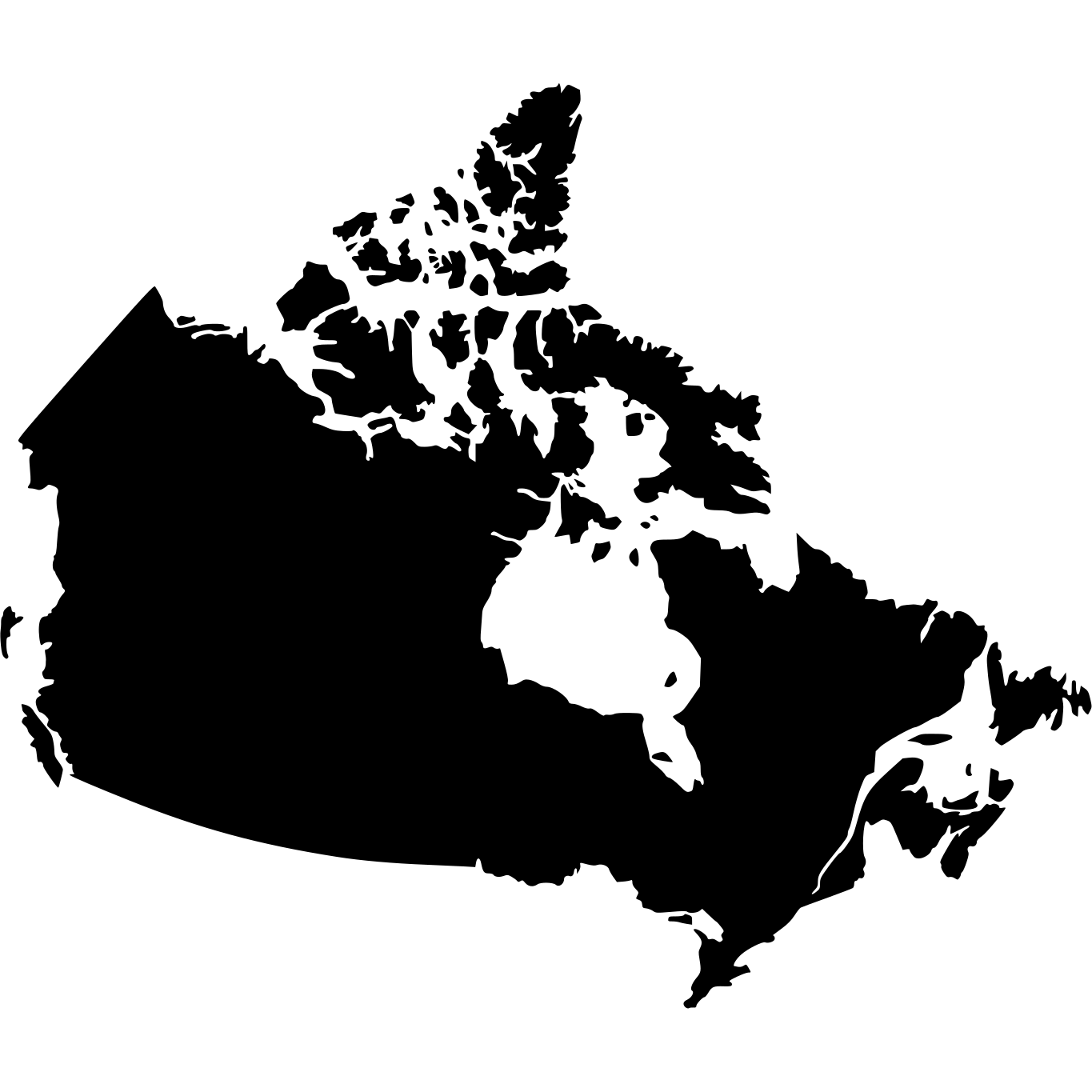
Saje is a Canadian brand
Often compared with

We're dedicated to providing you with the most up-to-date and science-backed ingredient info out there.
The data we've presented on this page has been verified by a member of the SkinSort Team.
Read more about us· Published February 4, 2026 • Added by Frans


