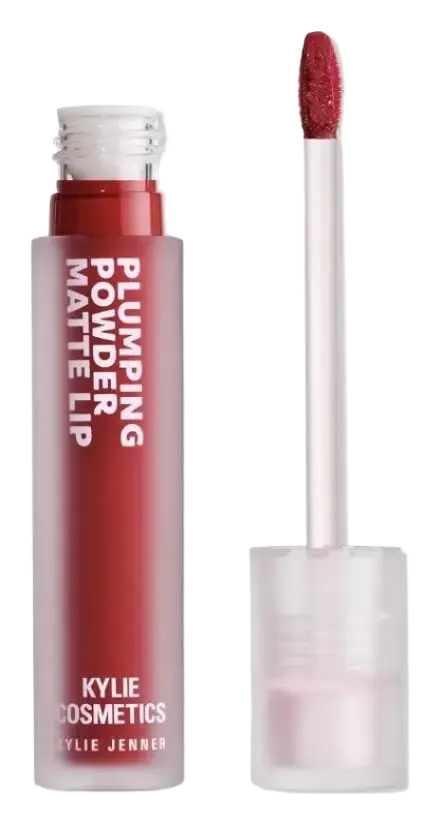
Kylie Cosmetics Plumping Powder Matte Lip
Lipstick with 28 ingredients that contains exfoliants
We independently verify ingredients, backed by peer-reviewed research. Suggest an update.
What's inside
Ingredients List
Isododecane
EmollientC13-15 Alkane
SolventSilica
Abrasive


Kaolin
Abrasive
Dimethicone/Vinyl Dimethicone Crosspolymer
Skin Conditioning
Trimethylsiloxysilicate
Emollient
Hydrogenated Styrene/Isoprene Copolymer
Hydrogenated Polycyclopentadiene
Bis-Diglyceryl Polyacyladipate-2
Emollient


Disteardimonium Hectorite
StabilisingSimmondsia Chinensis Seed Oil
Emollient


Dicalcium Phosphate
Abrasive
Punica Granatum Flower Extract
Skin Conditioning
Aroma


Polyglyceryl-3 Diisostearate
Emulsifying


Propylene Carbonate
SolventPentaerythrityl Tetra-Di-T-Butyl Hydroxyhydrocinnamate
Antioxidant
Vanillyl Butyl Ether
MaskingLaureth-4
Emulsifying
CI 77891
Cosmetic ColorantCI 77491
Cosmetic ColorantCI 77492
Cosmetic ColorantCI 77499
Cosmetic ColorantCI 15850
Cosmetic ColorantCI 15985
Cosmetic ColorantCI 19140
Cosmetic ColorantCI 42090
Cosmetic ColorantCI 45410
Cosmetic Colorant
Isododecane, C13-15 Alkane, Silica, Kaolin, Dimethicone/Vinyl Dimethicone Crosspolymer, Trimethylsiloxysilicate, Hydrogenated Styrene/Isoprene Copolymer, Hydrogenated Polycyclopentadiene, Bis-Diglyceryl Polyacyladipate-2, Disteardimonium Hectorite, Simmondsia Chinensis Seed Oil, Dicalcium Phosphate, Punica Granatum Flower Extract, Aroma, Polyglyceryl-3 Diisostearate, Propylene Carbonate, Pentaerythrityl Tetra-Di-T-Butyl Hydroxyhydrocinnamate, Vanillyl Butyl Ether, Laureth-4
May Contain:
CI 77891, CI 77491, CI 77492, CI 77499, CI 15850, CI 15985, CI 19140, CI 42090, CI 45410
Key Ingredients
Benefits
Concerns
Ingredients Explained
Isododecane is a fragrance, emollient, and solvent.
As an emollient, it helps your skin stay soft and hydrated. Emollients help trap moisture into your skin.
Isododecane's role as a solvent makes it a great texture enhancer. It spreads smoothly on skin and does not leave a sticky feeling behind. Isododecane also helps prevent color transfer in makeup products.
Isododecane is not absorbed into skin.
The chemical name for this ingredient is 2,2,4,6,6-PENTAMETHYLHEPTANE.
Learn more about IsododecaneC13-15 Alkane is a group of alkanes with 13 to 15 carbon atoms in the alkyl chain.
It is a solvent and texture enhancer. Solvents are used to keep ingredients together in a product. They can help dissolve ingredients to stable bases or help evenly distribute ingredients throughout the product.
Silica, also known as silicon dioxide, is a naturally occurring mineral. It is used as a fine, spherical, and porous powder in cosmetics.
Though it has exfoliant properties, the function of silica varies depending on the product.
The unique structure of silica enhances the spreadability and adds smoothness, making it a great texture enhancer.
It is also used as an active carrier, emulsifier, and mattifier due to its ability to absorb excess oil.
In some products, tiny microneedles called spicules are made from silica or hydrolyzed sponge. When you rub them in, they lightly polish away dead skin layers and enhance the penetration of active ingredients.
Learn more about SilicaKaolin is a clay. It is used for oil control and to help minimize pores. Like other clays, kaolin has the ability to absorb excess sebum or oil. This can help clean out pores and mattify the skin.
Some types of kaolin may have exfoliating properties. When water is added to kaolin, it becomes a paste with small abrasive particles.
Most kaolin is a white color, but may be pink/orange/red depending on where it comes from.
The name 'kaolin' comes from a Chinese village named 'Gaoling'. Kaolin clay comes from rocks rich in kaolinite. Kaolinite, the mineral, has a silicate layered structure. Kaolinite is formed from chemical weathering of aluminum siilicate minerals.
Besides skincare, kaolin is commonly used to make glossy paper, in ceramics, toothpaste, and as medicine to soothe stomach issues.
Learn more about KaolinThis ingredient is a silicone elastomer that works as a texture enhancer, adds a silky slip, and also helps absorb excess oil.
Because it's a large macromolecule that's insoluble in water and chemically inert, it's not expected to penetrate or be absorbed into skin.
Human patch tests with a facial lotion containing 1% of this ingredient found no sensitization.
Learn more about Dimethicone/Vinyl Dimethicone CrosspolymerThis silicone is an emollient. Emollients create a thin film on the skin to prevent moisture from escaping.
It is not soluble in water and helps increase water-resistance in products.
According to a manufacturer, it can blend seamlessly with silicone oils, such as Cyclopentasiloxane.
Learn more about TrimethylsiloxysilicateWe don't have a description for Hydrogenated Styrene/Isoprene Copolymer yet.
We don't have a description for Hydrogenated Polycyclopentadiene yet.
Bis-Diglyceryl Polyacyladipate-2 is a synthetic emollient that works as a lanolin substitute.
This ingredient is a great vegan option for those avoiding animal-derived ingredients.
It mostly stays on the surface of skin where it helps hydrate due to its large molecular size and low water solubility.
Due to it being derived from fatty acids, this ingredient may not be Malassezia or fungal acne safe.
Learn more about Bis-Diglyceryl Polyacyladipate-2Disteardimonium Hectorite comes from the clay mineral named hectorite. It is used to add thickness to a product.
It can also help stabilize a product by helping to disperse other ingredients.
Hectorite is a rare, white clay mineral.
Learn more about Disteardimonium HectoriteJojoba oil is one of the most well-studied plant-derived ingredients in cosmetics. It is an emollient with a special structure.
Because it is made up of 97-98% wax esters, it closely mirrors the linear monoesters found in human sebum. This makes it skin compatible, non-greasy, and lightweight.
Unlike other plant oils, jojoba wax doesn't easily penetrate skin. It mostly works in the uppermost layers as an emollient. This just means it forms a light barrier on the skin to help retain moisture.
Formulations with jojoba esters up to 90% reduced transepidermal water loss (TEWL) and increased barrier recovery by 81% (outperforming bisabolol at 47%).
Besides barrier support, the science also suggests jojoba to have anti-inflammatory effects and potential applications for skin infections, aging, and wound healing.
Fun fact: Indigenous cultures have used jojoba as a moisturizer and to help treat burns for centuries.
Fungal acne: The Malassezia yeast is known to metabolize fatty acids in the C11-24 range and jojoba's dominant fatty acid components fall into this range. This ingredient may not be fungal acne safe.
Learn more about Simmondsia Chinensis Seed OilThis ingredient is a mineral salt of calcium and phosphate. It is mainly used as a mild abrasive and sometimes used to add opacity to a formula.
Pomegranate flower extract has skin conditioning properties.
According to analysis of the flower, it is rich in the triterpenes ursolic acid and oleanolic acid.
Triterpenes are chemical compounds found in various plants such as pomegranates, apples, basil, and rosemary. They have been shown to have anti-inflammatory and antioxidant properties.
The flowers also contain gallic acid and ellagic acid, two types of polyphenols. They possess antioxidant, anti-inflammatory, and antimicrobial properties.
A study from 2017 found pomegranate flower to help heal scars and wounds in rats. Another study from 2020 found this ingredient to help decrease lip wrinkles and increase lip volume.
This ingredient also showed positive effects on dandruff removal in a study from 2015.
Learn more about Punica Granatum Flower ExtractAroma refers to an ingredient, or mixture of ingredients, that impart or mask a flavor.
The name is slightly confusing. This is because INCI associates aroma with flavor instead of smell.
Here is the official definition from the The International Cosmetic Ingredient Dictionary and Handbook:
“Aroma is a term for ingredient labeling used to identify that a product contains a material or combination of materials normally added to a cosmetic to produce or to mask a particular flavor.”
INCI shows the only purpose of aroma to be "flavouring".
However, due to regulation differences, some companies may use aroma in place of parfum.
In Canada, this ingredient only has to be listed in concentrations above 1%.
Learn more about AromaPolyglyceryl-3 Diisostearate is a plant-derived, oil-soluble emulsifier. It keeps water-in-oil emulsions stable to prevent the ingredients from separating.
On the safety front, it's considered non-irritating and well-tolerated (it can even be found in formulations for baby skin).
This ingredient may not be fungal acne safe because research has shown that the Malassezia species can grow in the presence of fatty acid esters with chain lengths above C12 (and this one is C18).
While it does have a comedogenic rating of 4, the comedogenic rating scale was developed from rabbit ear models which has limited clinical relevance to human skin. Studies also show that comedogenic ingredients cannot predict how the overall formula will behave on human skin.
Learn more about Polyglyceryl-3 DiisostearateThis ingredient is a solvent. It helps dissolve active ingredients and alter the texture of products.
Propylene Carbonate is commonly used in makeup and with clay, such as montmorillonite or bentonite.
Studies show this ingredient to be safe for cosmetics. When it is undiluted, it can cause skin irritation. (It is always diluted in skincare and makeup). This ingredient is water-soluble.
Propylene Carbonate is created from propylene glycol and carbonic acid.
Learn more about Propylene CarbonatePentaerythrityl Tetra-Di-T-Butyl Hydroxyhydrocinnamate (long name, huh?) is a synthetic antioxidant.
It is used to help stabilize other antioxidants or prevent the color from changing in a product.
As an antioxidant, it helps fight free-radical molecules. Free-radical molecules are capable of damaging our cells and other genetic material. Thus, antioxidants may reduce the signs of aging.
This ingredient is oil-soluble.
Learn more about Pentaerythrityl Tetra-Di-T-Butyl HydroxyhydrocinnamateWe don't have a description for Vanillyl Butyl Ether yet.
Laureth-4 is a nonionic surfactant made by attaching an average of four ethylene oxide units to Lauryl Alcohol, a fatty alcohol from coconut or palm kernel oil.
In a formula, it does two jobs:
A 2012 assessment found this ingredient is used in leave-on products at up to 21%, which is at the very high end for the category; most cosmetic use is far lower and typically in the single digits.
A true allergy to Laureth-4 is rare; similar alcohol ethoxylates tested negative for skin sensitization in undiluted guinea pig studies, and related compounds were non-sensitizing in Magnusson-Kligman maximization tests.
There is one caveat for this whole ingredient family: ethoxylated surfactants slowly oxidize when exposed to air, and it's the oxidation products, not the fresh material, that act as sensitizers. This is mostly a formulation and shelf life issue.
Dr. James Fulton's rabbit ear test from the 1980's scored this ingredient as a 5 on the comedogenic scale. Fulton himself described the rabbit ear as not an ideal model and the tests used undiluted ingredients on rabbit ears, which are more reactive than human facial skin.
Dr. Draelos later used a human assay on finished cosmetic products and found that products built with so-called comedogenic ingredients are not necessarily comedogenic themselves.
This ingredient can be potentially pore clogging if it appears high in the ingredient list of a leave-on product.
The fungal acne picture is actually reassuring: Malassezia uses fatty acids from its surroundings (C11-24). This ingredient has nothing for the Malassezia yeast to use since it is an alcohol and not an acid.
Supporting this, closely related ethoxylated alcohol detergents like Ceteth-20 get used in Malassezia lab work as neutral carriers to disperse a separately added fatty acid (not as the food source itself).
Learn more about Laureth-4Ci 77891 is a white pigment from Titanium dioxide. It is naturally found in minerals such as rutile and ilmenite.
It's main function is to add a white color to cosmetics. It can also be mixed with other colors to create different shades.
Ci 77891 is commonly found in sunscreens due to its ability to block UV rays.
Learn more about CI 77891Ci 77491 is also hydrated iron III oxide. It's sole purpose is to give a red/pink hue to products.
Iron III oxides are classified as inorganic chemicals for coloring.
Synthetically created Ci 77491 is considered safer than those naturally found. This is because the synthetically created version may contain less impurities. Iron oxides are generally non-toxic and non-allergenic.
Learn more about CI 77491CI 77492 is also hydrated iron III oxide. It's sole purpose is to give a yellow hue to products.
Iron III oxides are classified as inorganic chemicals for coloring.
Synthetically created CI 77492 is considered safer than those naturally found. This is because the synthetically created version may contain less impurities. Iron oxides are generally non-toxic and non-allergenic.
Learn more about CI 77492Ci 77499 is also hydrated iron III oxide. It is created from mixing red and black iron oxides. This helps give shades of darkness to a product.
Iron III oxides are classified as inorganic chemicals for coloring.
Ci 15850 is the pigment color red. It is an azo dye and created synthetically.
Azo dyes need to be thoroughly purified before use. This allows them to be more stable and longer-lasting.
This ingredient is common in foundations, lipsticks, and blushes. This color is described as brown/orangey red.
It has many secondary names such as Red 6 and Red 7. According to a manufacturer, Red 6 usually contains aluminum.
Learn more about CI 15850Ci 15985 is a dye made from petroleum. It is synthetically created and approved by the FDA for use in foods and cosmetics.
The color of this dye is orange/yellow.
This ingredient can be found in makeup, sun care, and skincare.
Learn more about CI 15985CI 19140 is also known as Tartrazine. Tartrazine is a synthetic dye used in cosmetics, foods, and medicine to add a yellow color.
Tartrazine is created from petroleum and is water-soluble.
Some people may experience allergies from this dye, especially asthmatics and those with an aspirin intolerance.
Learn more about CI 19140Ci 42090 is a synthetic dye created from petroleum. It is used to give a bright blue color to cosmetics, medicine, and food.
CI 45410 is a synthetic red-pigment and dye.
It often goes by both Red 28 or Red 27; manufacturers label both ingredients as CI 45410.
This dye is commonly found in makeup because it imparts a vivid color. Some types of this dye change color based on pH level and interaction with moisture:
Your skin has a natural pH of around 4.5 - 5.5.
According to the FDA, CI 45410 is not permitted for use in eye products.
Red 27 is a flourescein dye and commonly used as a fluorescent tracer in medicine.
Learn more about CI 45410Reviews
No written reviews yet. Be the first to review this product.
Recent searches
Search reviews by skin type, ingredient, or keyword.
Where it's from
Kylie Cosmetics is a American brand


We're dedicated to providing you with the most up-to-date and science-backed ingredient info out there.
The data we've presented on this page has been verified by a member of the SkinSort Team.
Read more about us· Updated August 25, 2026 • Added by psychodecoy


