Catkin Hydrating Lip Balm
Lip moisturizer with 14 ingredients
We independently verify ingredients, backed by peer-reviewed research. Suggest an update.
What's inside
Ingredients List
Isostearyl Alcohol
Emollient


Glyceryl Isostearate
Emollient
Paraffinum Liquidum
Emollient


Polyisobutene
Octyldodecanol
Emollient
CI 45410
Cosmetic ColorantDiisostearyl Malate
EmollientTridecyl Trimellitate
EmollientDibutyl Ethylhexanoyl Glutamide
Skin ConditioningDibutyl Lauroyl Glutamide
Skin ConditioningHydrogenated Styrene/Isoprene Copolymer
CI 45380
Cosmetic ColorantEthylhexyl Palmitate
Emollient

Aroma


Concerns
Ingredients Explained
Isostearyl Alcohol is a type of fatty alcohol. It's made by hydrogenating isostearic acid from plant oils (usually coconut or soybean)
Though it has "alcohol" in the name, it is not the same as solvent alcohols like alcohol denatured.
It has three roles in skincare:
Clinical patch testing found 25% of Isostearyl Alcohol in petrolatum showed only mild irritation in a small minority (your product will not have nearly as high of an amount).
This ingredient may not be fungal acne safe because it sits in the C11-C24 range that feeds the Malassezia yeast.
One last thing, the FDA allows "alcohol-free" products to contain fatty alcohols.
Learn more about Isostearyl AlcoholGlyceryl Isostearate is a mixture made from glycerin and isostearic acid.
It is an emollient, meaning it helps keep your skin hydrated and soft. This ingredient is also used to make the texture of a product thicker.
Glyceryl Isostearate may not be fungal acne safe.
Learn more about Glyceryl IsostearateParaffinum Liquidum is a highly-refined cosmetic-grade mineral oil. It is also known as liquid paraffin.
Despite its controversial reputation, the science is pretty clear: it's one of the most well-studied and effective moisturizing ingredients out there.
As an occlusive, it forms a protective layer on the skin that locks in moisture and prevents transepidermal water loss (TEWL). This makes it especially great for compromised skin barriers.
The "it clogs your pores" myth has been around for decades; a study found that industrial-grade mineral oil may be comedogenic but cosmetic-grade mineral oil is not (these two are very, very different).
A 2017 review concluded that cosmetic use of mineral oils and waxes does not present a risk to consumers due to absorption.
Mineral oil got a bad rap from the old rabbit ear studies. When tested on actual human skin, cosmetic-grade mineral oil showed no comedogenic activity. The rating of 0 is a correction of outdated science.
Mineral oil is an inert substance with no fatty acids so there's nothing to feed Malassezia. This ingredient is fungal acne safe.
Learn more about Paraffinum LiquidumPolyisobutene is a synthetic polymer made from isobutene.
It is a film-forming agent and helps bind ingredients together.
Polyisobutene is not absorbed by the skin.
Learn more about PolyisobuteneOctyldodecanol is a fatty alcohol sourced from plant oils like coconut or palm (or made synthetically).
It is:
You'll likely see this in many BHA products because this is the go-to solvent for salicylic acid.
This ingredient is typically used at levels between 2-20%.
Regarding fungal acne:
In 2019, this ingredient was tested against multiple Malassezia species (the yeast that causes fungal acne) and showed no growth.
CI 45410 is a synthetic red-pigment and dye.
It often goes by both Red 28 or Red 27; manufacturers label both ingredients as CI 45410.
This dye is commonly found in makeup because it imparts a vivid color. Some types of this dye change color based on pH level and interaction with moisture:
Your skin has a natural pH of around 4.5 - 5.5.
According to the FDA, CI 45410 is not permitted for use in eye products.
Red 27 is a flourescein dye and commonly used as a fluorescent tracer in medicine.
Learn more about CI 45410Diisostearyl Malate is an emollient and most often used in lip products. It comes from isostearyl alcohol, a fatty acid, and malic acid, an AHA.
As an emollient, Diisostearyl Malate helps create a thin film on your skin to trap moisture in. This helps keep your skin soft and smooth.
Tridecyl Trimellitate is a synthetic ingredient with emollient and skin conditioning properties. It also acts as a texture enhancer and helps products spread easily without feeling greasy.
As an emollient, it forms a light layer on the skin that keeps moisture in and improves water resistance. This is why you'll often find this ingredient in eye creams and other rich treatments.
This ingredient is seen as the elegant alternative to mineral oil.
Learn more about Tridecyl TrimellitateWe don't have a description for Dibutyl Ethylhexanoyl Glutamide yet.
We don't have a description for Dibutyl Lauroyl Glutamide yet.
We don't have a description for Hydrogenated Styrene/Isoprene Copolymer yet.
Ci 45380 is a synthetic dye that comes from coal or tar sources. Due to this, it is often used in small quantities.
A common name for this dye is Red 22. Red 22 imparts a warm reddish color.
Similar to Red 27, this dye changes color based on pH and moisture levels.
This dye is colorless when dry but turns pink between pH levels 0.0 to ~3.0.
Learn more about CI 45380Ethylhexyl Palmitate, also known as octyl palmitate, is created from 2-ethylhexyl alcohol and palmitic acid.
In cosmetics, it plays many roles:
One thing worth noting: a controlled study found this ingredient applied under occlusion to acne-prone subjects increased microcomedones. Just keep in mind this was under occlusive conditions and don't reflect how most products are used day-to-day.
For most people, this is a well-tolerated and lightweight ingredient.
This ingredient may not be fungal acne safe because it is an ester of palmitic acid, a C16 fatty acid that falls within the C11-24 range that Malassezia can metabolize.
You'll see this one rated 4 comedogenic all over the internet. That number isn't from a single study, and the actual research is more interesting.
The original rating comes from 1980s rabbit ear tests (which are a shaky basis for anything). But Ethylhexyl Palmitate is one of the few ingredients with real human data behind it. A 2021 controlled trial found this ingredient increased microcomedones by an average of 365% over four weeks.
Just know that test used the pure ingredient under an occlusive pad on back skin; most products use it at much lower levels alongside other ingredients and plenty of people use those with no issue.
Learn more about Ethylhexyl PalmitateAroma refers to an ingredient, or mixture of ingredients, that impart or mask a flavor.
The name is slightly confusing. This is because INCI associates aroma with flavor instead of smell.
Here is the official definition from the The International Cosmetic Ingredient Dictionary and Handbook:
“Aroma is a term for ingredient labeling used to identify that a product contains a material or combination of materials normally added to a cosmetic to produce or to mask a particular flavor.”
INCI shows the only purpose of aroma to be "flavouring".
However, due to regulation differences, some companies may use aroma in place of parfum.
In Canada, this ingredient only has to be listed in concentrations above 1%.
Learn more about AromaReviews
No written reviews yet. Be the first to review this product.
Recent searches
Search reviews by skin type, ingredient, or keyword.
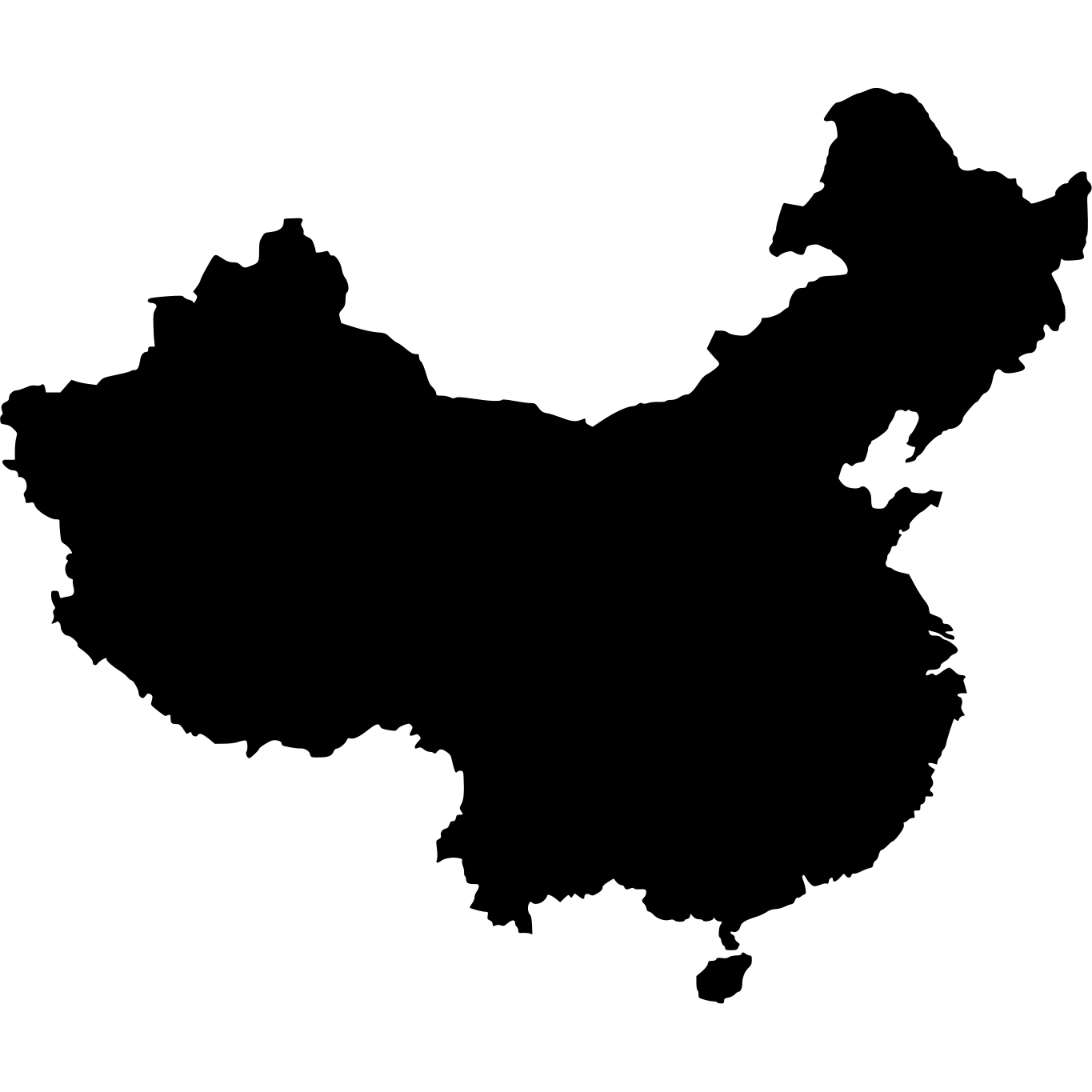
Where it's from
Catkin is a Chinese brand
Often compared with

We're dedicated to providing you with the most up-to-date and science-backed ingredient info out there.
The data we've presented on this page has been verified by a member of the SkinSort Team.
Read more about us· Updated April 29, 2024 • Added by anemone


