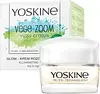
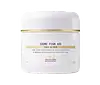
Yoskine Vege Zoom Illuminating Cream Versus Biologique Recherche Crème PIGM 400 Brightening and Pigment Spot-Correcting Face Cream
This barrier-repair moisturizer is formulated around Butyrospermum Parkii Butter and Lecithin to strengthen the skin barrier and hydrate skin.


What's inside
What's inside
 Key Ingredients
Benefits
Concerns
Ingredients Side-by-side




Water
Skin ConditioningCoco-Caprylate
Emollient

Butylene Glycol
Humectant
Sodium Acrylates Copolymer
Pentylene Glycol
Skin Conditioning
Lactobacillus/Wasabia Japonica Root Ferment Extract
Antioxidant
Mica
Cosmetic ColorantHydrolyzed Prunus Domestica
Skin ConditioningSoy Isoflavones
Skin ConditioningLepidium Sativum Sprout Extract
Skin ConditioningHelianthus Annuus Seed Oil
Emollient


Biosaccharide Gum-4
Skin Conditioning
Alteromonas Ferment Filtrate
HumectantVibrio Alginolyticus Ferment Filtrate
Abrasive
Dimethylmethoxy Chromanyl Palmitate
Skin Conditioning
Dimethylmethoxy Chromanol
Antioxidant
Lecithin
Emollient
Glycerin
Humectant
Tocopherol
Antioxidant




Titanium Dioxide
Cosmetic Colorant

Magnesium Aluminum Silicate
Absorbent
Polysorbate 80
Emulsifying
Alcohol Denat.
Antimicrobial



Phenoxyethanol
Preservative
Water, Coco-Caprylate, Butylene Glycol, Sodium Acrylates Copolymer, Pentylene Glycol, Lactobacillus/Wasabia Japonica Root Ferment Extract, Mica, Hydrolyzed Prunus Domestica, Soy Isoflavones, Lepidium Sativum Sprout Extract, Helianthus Annuus Seed Oil, Biosaccharide Gum-4, Alteromonas Ferment Filtrate, Vibrio Alginolyticus Ferment Filtrate, Dimethylmethoxy Chromanyl Palmitate, Dimethylmethoxy Chromanol, Lecithin, Glycerin, Tocopherol, Titanium Dioxide, Magnesium Aluminum Silicate, Polysorbate 80, Alcohol Denat., Phenoxyethanol
Ingredients Explained
These ingredients are found in both products.
Ingredients higher up in an ingredient list are typically present in a larger amount.
Butylene Glycol (or BG) is used within cosmetic products for a few different reasons:
Overall, Butylene Glycol is a safe and well-rounded ingredient that works well with other ingredients.
Though this ingredient works well with most skin types, some people with sensitive skin may experience a reaction such as allergic rashes, closed comedones, or itchiness.
Learn more about Butylene GlycolLecithin is a term for a group of substances found in the cell membranes of plants, animals, and humans. They are made up of phospholipids.
Thanks to its amphiphilic structure (water-loving head and oil-loving tail), it is a true multitasker:
It plays well with most ingredients and is typically used at 0.1-1%. However, concentrations up to 50% have been reported in moisturizers.
Learn more about LecithinMica is a naturally occurring mineral used to add shimmer and color in cosmetics. It can also help improve the texture of a product or give it an opaque, white/silver color.
Serecite is the name for very fine but ragged grains of mica.
This ingredient is often coated with metal oxides like titanium dioxide. Trace amounts of heavy metals may be found in mica, but these metals are not harmful in our personal products.
Mica has been used since prehistoric times throughout the world. Ancient Egyptian, Indian, Greek, Roman, Aztec, and Chinese civilizations have used mica.
Learn more about MicaPhenoxyethanol is one of the most widely used preservatives in skincare (and for good reason!).
It has a large spectrum of antimicrobial activity and especially effective bacteria, yeast, and mold while only having a weak effect on your skin's natural microbiome.
On a cellular level, it disrupts the cell membranes of microbes by poking holes that make the cell leak. This shuts down the chemical reactions the microbe needs to make energy so it can no longer survive.
Another perk of this ingredient is that it stays functional across a wide pH range (3-10).
You'll often see it paired with boosters like Ethylhexylglycerin; one study showed that a 1:9 ratio of Ethylhexylglycerin to Phenoxyethanol damages bacterial membranes as effectively as doubling the Phenoxyethanol concentration on its own.
Typical use concentrations range from 0.3-1% depending on the formula, and this ingredient is capped at 1% int the EU.
Safety-wise, the fear mongering does not hold up to the evidence. The EU's Scientific Committee on Consumer Safety and FDA consider it safe as a preservative at up to 1%, including for children of all ages.
Adverse systemic effects only showed up in animal studies at exposures roughly 200x higher than what people get from cosmetics. And despite its very widespread use, this ingredient is a rare sensitizer and allergic reactions are uncommon.
Learn more about PhenoxyethanolThis ingredient is a synthetic, salt form polymer built from acrylic acid, ethacrylic acid, or their simple esters. It works as a binder, film former, and viscosity increasing agent.
Typical concentrations start at around 0.5% but can go up to 25% for film-forming or binding.
The CIR Expert Panel assessed the safety of 126 acrylates copolymers and concluded they are safe in cosmetics at current use levels when formulated to be non-irritating. They also noted the levels present in finished cosmetic products are not considered a safety risk and Genotoxicity testing (Ames tests, chromosomal aberration assays) has come back negative across the board.
Though the raw building blocks (like acrylic acid) can be irritating on their own, cosmetic-grade versions go through purification to keep levels extremely low.
Sodium Acrylates Copolymer is a large molecule that doesn't penetrate skin barrier in any meaningful way.
Learn more about Sodium Acrylates CopolymerWater. It's the most common cosmetic ingredient of all. You'll usually see it at the top of ingredient lists, meaning that it makes up the largest part of the product.
So why is it so popular? Water most often acts as a solvent - this means that it helps dissolve other ingredients into the formulation.
You'll also recognize water as that liquid we all need to stay alive. If you see this, drink a glass of water. Remember to stay hydrated!
Learn more about Water

