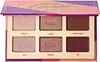
Tarte Tartelette Amazonian Clay Eyeshadow Palette Versus Clinique Quickliner for Eyes Intense Eyeliner

What's inside
What's inside
 Key Ingredients

Benefits
Concerns
Ingredients Side-by-side
Talc
Abrasive
Mica
Cosmetic ColorantSilica
Abrasive

Boron Nitride
Absorbent
Zinc Stearate
Cosmetic ColorantEthylhexyl Palmitate
Emollient




Sodium Dehydroacetate
Preservative
Phenoxyethanol
Preservative
Sorbic Acid
Preservative
Vanillin
Masking

Caprylic/Capric Triglyceride
Masking


Vanilla Planifolia Fruit Extract
Skin Conditioning
Kaolin
Abrasive
Magnesium Aluminum Silicate
Absorbent
Montmorillonite
AbsorbentCI 75470
Cosmetic ColorantCI 77891
Cosmetic ColorantCI 77742
Cosmetic ColorantIron Oxides
CI 77007
Cosmetic ColorantCalcium Sodium Borosilicate
Tin Oxide
Abrasive
CI 77163
Cosmetic Colorant
Talc, Mica, Silica, Boron Nitride, Zinc Stearate, Ethylhexyl Palmitate, Sodium Dehydroacetate, Phenoxyethanol, Sorbic Acid, Vanillin, Caprylic/Capric Triglyceride, Vanilla Planifolia Fruit Extract, Kaolin, Magnesium Aluminum Silicate, Montmorillonite, CI 75470, CI 77891, CI 77742, Iron Oxides, CI 77007, Calcium Sodium Borosilicate, Tin Oxide, CI 77163
Isododecane
EmollientCyclopentasiloxane
Emollient
PEG/PPG-19/19 Dimethicone
Emulsifying
Synthetic Wax
Abrasive
Hydrogenated Polydicyclopentadiene
Nylon-12

C20-40 Alcohols
EmulsifyingPerfluorononyl Dimethicone
Skin Conditioning
Polyglyceryl-4 Diisostearate/Polyhydroxystearate/Sebacate
Emulsifying
Polyethylene
Abrasive
Tocopherol
Antioxidant





Pentaerythrityl Tetra-Di-T-Butyl Hydroxyhydrocinnamate
Antioxidant
CI 77491
Cosmetic ColorantCI 77492
Cosmetic ColorantCI 77499
Cosmetic ColorantMica
Cosmetic ColorantCI 77510
Cosmetic ColorantCI 77742
Cosmetic ColorantCI 19140
Cosmetic ColorantCI 77288
Cosmetic ColorantCI 77289
Cosmetic ColorantCI 75470
Cosmetic ColorantCI 77163
Cosmetic Colorant
CI 77891
Cosmetic ColorantCI 77000
Cosmetic ColorantCI 42090
Cosmetic ColorantCI 77007
Cosmetic ColorantIsododecane, Cyclopentasiloxane, PEG/PPG-19/19 Dimethicone, Synthetic Wax, Hydrogenated Polydicyclopentadiene, Nylon-12, C20-40 Alcohols, Perfluorononyl Dimethicone, Polyglyceryl-4 Diisostearate/Polyhydroxystearate/Sebacate, Polyethylene, Tocopherol, Pentaerythrityl Tetra-Di-T-Butyl Hydroxyhydrocinnamate, CI 77491, CI 77492, CI 77499, Mica, CI 77510, CI 77742, CI 19140, CI 77288, CI 77289, CI 75470, CI 77163, CI 77891, CI 77000, CI 42090, CI 77007
Ingredients Explained
These ingredients are found in both products.
Ingredients higher up in an ingredient list are typically present in a larger amount.
Ci 75470 is a bright-red pigment. It is AKA carmine.
Carmine is derived from insects such as the cochineal beetle. This ingredient has been used as a natural dye for over 2000 years.
This pigment is called Ultramarine blue lazurite. It gives a saturated blue color, but can be used to create other colors as well.
According to the manufacturer, it is usually made from kaolin, sodium sulfate, sodium carbonate, sulfur, and charcoal.
CI 77163 is the color-index name for Bismuth Oxychloride, a lab-made white powder that acts as a pearl pigment.
It's what gives a lot of pressed powders, eyeshadows, highlighteres, and mineral foundations that soft pearly glow.
Due to its structure as flat, plate-like crystals that stack like tiles, it feels silky and sticks to skin well. This also makes it very chemically stable and insoluble under normal skin conditions (this just means it sits on top of skin rather than going into it).
It has an interesting quirk: it slowly goes gray in sunlight and the graying is partly reversible in the dark.
At this time, there's no legal cap on how much a brand can use. Both the FDA and the EU permit it without restriction so real-world concentration levels come down to formulation:
Allergy risk is low as well since it's insoluble and doesn't release free metal ions into skin. True allergic contact dermatitis to it is rare enough that there's very little published cases.
However, mineral makeup users do report itching or stinging. The leading explanation for this is irritation from those stiff platelet crystals rubbing on skin (also more likely with heavy, high-percentage loose mineral powders) rather than an immune reaction.
This ingredient shows up on a lot of "pore-clogging" lists but there's no real evidence behind that. It doesn't even have a comedogenic rating from an actual study; the numbers you'll find online come from blogs citing other blogs.
Some people still find it breaks them out. So if that's you, definitely trust your skin.
Learn more about CI 77163This ingredient is used to add a violet color to cosmetics.
It is created by reacting phosphoric acid, ammonium dihydrogen orthophosphate, and manganese dioxide.
Ci 77891 is a white pigment from Titanium dioxide. It is naturally found in minerals such as rutile and ilmenite.
It's main function is to add a white color to cosmetics. It can also be mixed with other colors to create different shades.
Ci 77891 is commonly found in sunscreens due to its ability to block UV rays.
Learn more about CI 77891Mica is a naturally occurring mineral used to add shimmer and color in cosmetics. It can also help improve the texture of a product or give it an opaque, white/silver color.
Serecite is the name for very fine but ragged grains of mica.
This ingredient is often coated with metal oxides like titanium dioxide. Trace amounts of heavy metals may be found in mica, but these metals are not harmful in our personal products.
Mica has been used since prehistoric times throughout the world. Ancient Egyptian, Indian, Greek, Roman, Aztec, and Chinese civilizations have used mica.
Learn more about Mica

