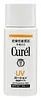
Sekkisei Clear Wellness UV Sunscreen Mild Milk SPF 50+ Versus Curel Day Barrier UV Protection Milk SPF50+ PA+++
This mineral sunscreen covers the full UV range and blocks ~98% of UVB at SPF 50.
This mineral sunscreen covers the full UV range and blocks ~98% of UVB at SPF 50.

What's inside
What's inside
 Key Ingredients
Benefits
Concerns
Ingredients Side-by-side
Cetyl Ethylhexanoate
EmollientZinc Oxide
Cosmetic Colorant


Cyclomethicone
Emollient
Dimethicone
Emollient
Titanium Dioxide
Cosmetic Colorant
Hydrogenated Polydecene
EmollientTripropylene Glycol
Antioxidant
Water
Skin ConditioningHdi/PPG/Polycaprolactone Crosspolymer
PEG-9 Polydimethylsiloxyethyl Dimethicone
Emulsifying
Dipropylene Glycol
HumectantAluminum Hydroxide
EmollientGlycerin
Humectant

Cetyl Dimethicone
Emollient
Ectoin
Skin Conditioning



Glycogen
HumectantAlpinia Uraiensis Leaf Extract
Skin ConditioningOryza Sativa Bran Extract
Skin Conditioning
Paeonia Officinalis Flower Extract
TonicTocopherol
Antioxidant


Coix Lacryma-Jobi Ma-Yuen Seed Extract
Skin ConditioningMorinda Citrifolia Fruit Juice
Skin ConditioningButylene Glycol
Humectant
Acrylates/Ethylhexyl Acrylate/Dimethicone Methacrylate Copolymer
Skin Conditioning
Silica
Abrasive

Squalane
Emollient
Sorbitan Sesquiisostearate
Emulsifying

Triethoxycaprylylsilane
Hydrogen Dimethicone
Sodium Metaphosphate
BufferingPhenoxyethanol
Preservative
Cetyl Ethylhexanoate, Zinc Oxide, Cyclomethicone, Dimethicone, Titanium Dioxide, Hydrogenated Polydecene, Tripropylene Glycol, Water, Hdi/PPG/Polycaprolactone Crosspolymer, PEG-9 Polydimethylsiloxyethyl Dimethicone, Dipropylene Glycol, Aluminum Hydroxide, Glycerin, Cetyl Dimethicone, Ectoin, Glycogen, Alpinia Uraiensis Leaf Extract, Oryza Sativa Bran Extract, Paeonia Officinalis Flower Extract, Tocopherol, Coix Lacryma-Jobi Ma-Yuen Seed Extract, Morinda Citrifolia Fruit Juice, Butylene Glycol, Acrylates/Ethylhexyl Acrylate/Dimethicone Methacrylate Copolymer, Silica, Squalane, Sorbitan Sesquiisostearate, Triethoxycaprylylsilane, Hydrogen Dimethicone, Sodium Metaphosphate, Phenoxyethanol
Stearyl Glycyrrhetinate
Skin ConditioningDimethicone
Emollient
Water
Skin ConditioningCyclopentasiloxane
Emollient
Zinc Oxide
Cosmetic Colorant
Palmitamine Oxide
CleansingThujopsis Dolabrata Branch Extract
Skin ConditioningCyclomethicone
Emollient
Dimethicone/Methicone Copolymer
Butylene Glycol
Humectant
Squalane
Emollient
Neopentyl Glycol Dicaprate
EmollientC13-14 Isoparaffin
Emollient
Hexadesyloxy Pg Hydroxyethyl Hexadecanamide
Methicone
Emollient
Silicon/Titanium/Cerium/Zinc Oxides
Glycerin
Humectant
Bis-Methoxypropylamido Isodocosane
EmollientEucalyptus Globulus Leaf Extract
Perfuming
Aluminum Hydroxide
EmollientPolymethylhydrogensiloxane
Trisiloxane
Skin Conditioning
Hydrolyzed Oxidized Keratin
Skin ConditioningBarium/Calcium/Silicon/Titanium Oxide
SurfactantSilica
Abrasive
Dextrin Palmitate
Emulsifying
Cetyl Dimethicone
Emollient
Stearyl Glycyrrhetinate, Dimethicone, Water, Cyclopentasiloxane, Zinc Oxide, Palmitamine Oxide, Thujopsis Dolabrata Branch Extract, Cyclomethicone, Dimethicone/Methicone Copolymer, Butylene Glycol, Squalane, Neopentyl Glycol Dicaprate, C13-14 Isoparaffin, Hexadesyloxy Pg Hydroxyethyl Hexadecanamide, Methicone, Silicon/Titanium/Cerium/Zinc Oxides, Glycerin, Bis-Methoxypropylamido Isodocosane, Eucalyptus Globulus Leaf Extract, Aluminum Hydroxide, Polymethylhydrogensiloxane, Trisiloxane, Hydrolyzed Oxidized Keratin, Barium/Calcium/Silicon/Titanium Oxide, Silica, Dextrin Palmitate, Cetyl Dimethicone
Reviews
Ingredients Explained
These ingredients are found in both products.
Ingredients higher up in an ingredient list are typically present in a larger amount.
Aluminum Hydroxide is a form of aluminum. It can be naturally found in nature as the mineral gibbsite. In cosmetics, Aluminum Hydroxide is used as a colorant, pH adjuster, and absorbent.
As a colorant, Aluminum Hydroxide may add opacity, or reduce the transparency. Aluminum hydroxide is contains both basic and acidic properties.
According to manufacturers, this ingredient is an emollient and humectant. This means it helps hydrate the skin.
In medicine, this ingredient is used to help relieve heartburn and help heal ulcers.
There is currently no credible scientific evidence linking aluminum hydroxide in cosmetics to increased cancer risk.
Major health organizations allow the use of aluminum hydroxide in personal care products and have not flagged it as a carcinogenic risk at typical usage levels.
Learn more about Aluminum HydroxideButylene Glycol (or BG) is used within cosmetic products for a few different reasons:
Overall, Butylene Glycol is a safe and well-rounded ingredient that works well with other ingredients.
Though this ingredient works well with most skin types, some people with sensitive skin may experience a reaction such as allergic rashes, closed comedones, or itchiness.
Learn more about Butylene GlycolCetyl Dimethicone is a type of silicone.
Cyclomethicone is a class of silicones used to improve the texture of products.
Their cyclic or circular structure decreases stability. This causes quick evaporation when applied to skin. Cyclomethicones are often used as a carrier for other ingredients. Once it evaporates, it leaves a silky barrier on the skin.
The most popular types of cyclomethicones include D5 and D6.
Learn more about CyclomethiconeDimethicone is a type of synthetic silicone created from natural materials such as quartz. It is also known as polydimethylsiloxane.
What it does:
Dimethicone comes in different viscosities:
Depending on the viscosity, dimethicone has different properties.
Ingredients lists don't always show which type is used, so we recommend reaching out to the brand if you have questions about the viscosity.
This ingredient is unlikely to cause irritation because it does not get absorbed into skin. However, people with silicone allergies should be careful about using this ingredient.
Note: Dimethicone may contribute to pilling. This is because it is not oil or water soluble, so pilling may occur when layered with products. When mixed with heavy oils in a formula, the outcome is also quite greasy.
Learn more about DimethiconeGlycerin (or glycerol) is a compound naturally found in your skin. It's a powerhouse humectant that pulls water into the stratum corneum.
Topically, glycerin does several things at once:
Your skin makes glycerin on its own (mostly from sebaceous oil breakdown) and shuttles it to your outermost layer of skin, or your epidermis, via aquaporin-3.
Aquaporin-3 is a transporter that is essential for normal skin hydration, elasticity, and repair. Interestingly, mice lacking in AQP3 have dry and less elastic skin that can be fully corrected with glycerin.
This ingredient is non-irritating, plays well with almost every ingredient, and works across all skin types. Typical use is anywhere between 3-10% but can go up to 79% in some leave-on products.
Just know very high concentrations (>40%) can feel tacky in low humidity.
Glycerin is the name for this ingredient in American English. British English uses Glycerol/Glycerine.
Learn more about GlycerinSilica, also known as silicon dioxide, is a naturally occurring mineral. It is used as a fine, spherical, and porous powder in cosmetics.
Though it has exfoliant properties, the function of silica varies depending on the product.
The unique structure of silica enhances the spreadability and adds smoothness, making it a great texture enhancer.
It is also used as an active carrier, emulsifier, and mattifier due to its ability to absorb excess oil.
In some products, tiny microneedles called spicules are made from silica or hydrolyzed sponge. When you rub them in, they lightly polish away dead skin layers and enhance the penetration of active ingredients.
Learn more about SilicaSqualane is the hydrogenated and shelf-stable form of squalene (a lipid that naturally occurs in human sebum).
It is an emollient and skin conditioning agent that is able to integrate seamlessly into the skin's lipid barrier without clogging pores.
This is due to how structurally similar it is to what your skin already produces.
Though it is mostly an emollient that helps soften and hydrate skin, it also has some humectant and occlusive action. Humectants help the skin retain moisture while occlusives seal it in, making squalane a triple-threat moisturizer.
Research shows it has antioxidant capabilities that help protect against stressors like UV exposure, specifically UVA induced oxidative stress. This study also found that it supports collagen biosynthesis in human dermal fibroblasts.
No clinical study has reported significant adverse effects and irritation reactions are very rare from this ingredient (even at 100% concentration).
Overall, it's a fantastic ingredient for hydration and is suitable for all skin types.
This depends on the source. Squalane can be derived from both plants and animals. Most squalane used in skincare comes from plants.
Please note: the source of squalane is only known if disclosed by the brand. We recommend reaching out to the brand if you have any questions about their squalane.
Read more about squalene with an "e".
Though squalane is often called an oil, it’s technically not one. It is a hydrocarbon, meaning it is only made of carbon and hydrogen. True oils are triglycerides and made of fatty acids and glycerol.
The term “oil-free” isn’t regulated so companies can define it however they want. Some exclude all oils, while others just avoid mineral oil or comedogenic oils.
Squalane has a comedogenic rating of 1 from the original 1972 study that tested raw ingredients under occlusion on rabbit ears. This system is not standardized or peer-reviewed, and using the raw ingredients is very different from how diluted cosmetic formulations are used on human skin.
A comedogenic rating of 1 means it is "unlikely to clog pores" according to the original rating system.
The overall formula of a product matters more than the individual ingredients on whether or not it will cause clogged pores.
Learn more about SqualaneWater. It's the most common cosmetic ingredient of all. You'll usually see it at the top of ingredient lists, meaning that it makes up the largest part of the product.
So why is it so popular? Water most often acts as a solvent - this means that it helps dissolve other ingredients into the formulation.
You'll also recognize water as that liquid we all need to stay alive. If you see this, drink a glass of water. Remember to stay hydrated!
Learn more about WaterZinc Oxide (ZO) is a mineral broad-spectrum UV filter and the broadest-spectrum filter recognized by the FDA. It covers everything from UVB through to long-wave UVA.
On top of sun protection, it has skin protectant and skin-soothing properties too.
Here's a myth worth busting: mineral filters are usually described as working by "reflecting" or "bouncing" UV off your skin.
That's mostly not true: when researchers actually measured it, ZO and Titanium Dioxide reflect only about 4-5% of UV (less than SPF 2 worth of protection).
The vast majority of the work (~95%) is done by absorption, similar to chemical UV filters. ZO is a semiconductor that absorbs UV photos through its energy band gap.
So the old "physical blocker vs. chemical absorber" framing is really an oversimplification.
Zinc Oxide is one of the most effective broad-spectrum UV filters out there. It protects across UVB, UVA2, and UVA1 with a flat, even absorption curve across the whole UVA-UVB range.
That uniform UVA coverage is its standout feature; titanium dioxide skews more toward UVB as its particle size drops so ZO gives more consistent and extended UVA protection.
It's also very photostable. As an inorganic oxide, ZO doesn't break down in sunlight the way some organic filters can, so it holds up over a day of wear.
This ingredient is gentle and soothing, making it go-to for sunscreens aimed at sensitive skin, rosacea, or ecezma-prone skin, babies, and children.
It's also unlikely to cause the "eye sting" that some sunscreen ingredients are known for, and regulatory agencies broadly consider it non-toxic and safe for topical use.
Beyond sun protection, ZO is also a recognized OTC skin protectant. It forms a breathable barrier that shields skin from moisture and irritation while supporting healing. This is why you'll see it as a classic active in diaper rash creams.
The only downside to ZO is that it can leave a visible white cast, especially on deeper skin tones. This is the main reason mineral sunscreens have historically felt less cosmetically elegant than chemical or hybrid formulas.
Zinc Oxide comes in both non-nano and nano forms. The dividing line is 100nm and anything under is classified as a nanomaterial by the EU.
The nano version scatters less visible light which cuts down white case and gives a lighter, more wearable texture.
Another thing worth understanding about formulation:
Uncoated ZO has some inherent photocatalytic activity. This just means it can generate reactive oxygen species under UV. It's exactly why cosmetic-grade ZO is almost always surface-coated; this coating suppresses that reactivity and improves how the powder disperses and feels.
A well-formulated coated ZO largely sidesteps this issue.
Zinc Oxide is commonly used anywhere from 10% up to the regulatory maximum in sunscreens (25%).
Mineral-only broad-spectrum products often land in the 15-25% range to hit higher SPF and UVA values. Keep in mind SPF performance depends heavily on particle size, dispersion, and the rest of the formula, and not just the percentage.
As an OTC skin protectant like diaper creams, ZO typically runs higher at roughly 10-40%.
This ingredient is generally easy to work with and doesn't photodegrade.
The only thing to know is that uncoated ZO can be a bit reactive in a formula.
Under UV, it can break down sensitive ingredients like other actives or UV filters. This is another reason coated versions are standard. ZO can also react with very acidic ingredients or throw off stability of some creams. A good formula will get around this with the right coatings and dispersion.
The EU's Scientific Committee on Consumer Safety has concluded that ZO nanoparticles "can be considered to not pose any risk of adverse effects in humans after application on healthy, intact or sunburnt skin".
You might hear that ZO is "toxic"; this is because an in-vitro (test tube) study suggested micronized ZO had potential phototoxicity. In vivo (human) investigations have disputed this and the results have come back reassuring.
So does ZO penetrate skin? The short answer is no, not in any way that matters.
The most relevant evidence comes from real-world human studies: in one, volunteers applied ZO nanoparticle sunscreen hourly for six hours and daily for five days. The advanced imaging showed the particles stayed on the surface and never reached the living epidermis, and no cellular toxicity was found.
Other in-vivo and ex-vivo work agree; ZO nanoparticles don't cross the stratum corneum, even on flexed, massaged, or barrier-impaired skin.
A small amount of solubilized zinc ions can dissolve off the particles and enter the upper skin. But the quantities are tiny compared to the zinc already naturally present in your body, and studies haven't found this to cause local toxicity.
The sunscreen bans you've heard of (like Hawaii's) are aimed at two chemical filters, Oxybenzone and Octinoxate. ZO itself it not banned and is often recommended instead.
So far, there's no solid evidence that any form of ZO harms reefs. It is an ongoing and active area of study, and worth keeping an eye on.
If you're traveling somewhere with these rules, a non-nano mineral sunscreen is the safe bet.
Learn more about Zinc Oxide

