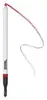
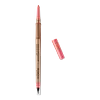
Makeup by Mario Ultra Suede Sculpting Lip Pencil Versus KIKO Milano Everlasting Colour Precision Lip Liner


What's inside
What's inside
 Key Ingredients
Benefits
No benefits
Concerns
Ingredients Side-by-side
Triethylhexanoin
MaskingPolyethylene
Abrasive

Hydrogenated Polyisobutene
EmollientDipentaerythrityl Tetrahydroxystearate/Tetraisostearate
Skin Conditioning

Microcrystalline Wax
Emulsion StabilisingDicalcium Phosphate
Abrasive
Mica
Cosmetic ColorantSynthetic Wax
Abrasive
Pentaerythrityl Tetra-Di-T-Butyl Hydroxyhydrocinnamate
Antioxidant
BHT
Antioxidant
CI 77891
Cosmetic ColorantCI 77491
Cosmetic ColorantCI 77492
Cosmetic ColorantCI 77499
Cosmetic ColorantCI 15850
Cosmetic ColorantCI 42090
Cosmetic ColorantCI 19140
Cosmetic ColorantCI 45380
Cosmetic ColorantCI 45410
Cosmetic ColorantTriethylhexanoin, Polyethylene, Hydrogenated Polyisobutene, Dipentaerythrityl Tetrahydroxystearate/Tetraisostearate, Microcrystalline Wax, Dicalcium Phosphate, Mica, Synthetic Wax, Pentaerythrityl Tetra-Di-T-Butyl Hydroxyhydrocinnamate, BHT, CI 77891, CI 77491, CI 77492, CI 77499, CI 15850, CI 42090, CI 19140, CI 45380, CI 45410
Isododecane
EmollientSynthetic Wax
Abrasive
Polybutene
Trimethylsiloxysilicate
Emollient
Silica
Abrasive

Mica
Cosmetic ColorantSucrose Tetrastearate Triacetate
Emollient
Hydrogenated Jojoba Oil
Abrasive
Cetearyl Behenate
Emollient
Synthetic Fluorphlogopite
Isoamyl Laurate
Emollient
Ethylhexyl Palmitate
Emollient
Tribehenin
Emollient
Pentaerythrityl Tetra-Di-T-Butyl Hydroxyhydrocinnamate
Antioxidant
Sorbitan Isostearate
Emulsifying
Lactic Acid
Buffering






Palmitoyl Tripeptide-1
Skin Conditioning
CI 77891
Cosmetic ColorantCI 77491
Cosmetic ColorantCI 19140
Cosmetic ColorantCI 15850
Cosmetic ColorantCI 45410
Cosmetic ColorantCI 77742
Cosmetic ColorantCI 42090
Cosmetic ColorantCI 15985
Cosmetic ColorantIsododecane, Synthetic Wax, Polybutene, Trimethylsiloxysilicate, Silica, Mica, Sucrose Tetrastearate Triacetate, Hydrogenated Jojoba Oil, Cetearyl Behenate, Synthetic Fluorphlogopite, Isoamyl Laurate, Ethylhexyl Palmitate, Tribehenin, Pentaerythrityl Tetra-Di-T-Butyl Hydroxyhydrocinnamate, Sorbitan Isostearate, Lactic Acid, Palmitoyl Tripeptide-1, CI 77891, CI 77491, CI 19140, CI 15850, CI 45410, CI 77742, CI 42090, CI 15985
Reviews
Ingredients Explained
These ingredients are found in both products.
Ingredients higher up in an ingredient list are typically present in a larger amount.
Ci 15850 is the pigment color red. It is an azo dye and created synthetically.
Azo dyes need to be thoroughly purified before use. This allows them to be more stable and longer-lasting.
This ingredient is common in foundations, lipsticks, and blushes. This color is described as brown/orangey red.
It has many secondary names such as Red 6 and Red 7. According to a manufacturer, Red 6 usually contains aluminum.
Learn more about CI 15850CI 19140 is also known as Tartrazine. Tartrazine is a synthetic dye used in cosmetics, foods, and medicine to add a yellow color.
Tartrazine is created from petroleum and is water-soluble.
Some people may experience allergies from this dye, especially asthmatics and those with an aspirin intolerance.
Learn more about CI 19140Ci 42090 is a synthetic dye created from petroleum. It is used to give a bright blue color to cosmetics, medicine, and food.
CI 45410 is a synthetic red-pigment and dye.
It often goes by both Red 28 or Red 27; manufacturers label both ingredients as CI 45410.
This dye is commonly found in makeup because it imparts a vivid color. Some types of this dye change color based on pH level and interaction with moisture:
Your skin has a natural pH of around 4.5 - 5.5.
According to the FDA, CI 45410 is not permitted for use in eye products.
Red 27 is a flourescein dye and commonly used as a fluorescent tracer in medicine.
Learn more about CI 45410Ci 77491 is also hydrated iron III oxide. It's sole purpose is to give a red/pink hue to products.
Iron III oxides are classified as inorganic chemicals for coloring.
Synthetically created Ci 77491 is considered safer than those naturally found. This is because the synthetically created version may contain less impurities. Iron oxides are generally non-toxic and non-allergenic.
Learn more about CI 77491Ci 77891 is a white pigment from Titanium dioxide. It is naturally found in minerals such as rutile and ilmenite.
It's main function is to add a white color to cosmetics. It can also be mixed with other colors to create different shades.
Ci 77891 is commonly found in sunscreens due to its ability to block UV rays.
Learn more about CI 77891Mica is a naturally occurring mineral used to add shimmer and color in cosmetics. It can also help improve the texture of a product or give it an opaque, white/silver color.
Serecite is the name for very fine but ragged grains of mica.
This ingredient is often coated with metal oxides like titanium dioxide. Trace amounts of heavy metals may be found in mica, but these metals are not harmful in our personal products.
Mica has been used since prehistoric times throughout the world. Ancient Egyptian, Indian, Greek, Roman, Aztec, and Chinese civilizations have used mica.
Learn more about MicaPentaerythrityl Tetra-Di-T-Butyl Hydroxyhydrocinnamate (long name, huh?) is a synthetic antioxidant.
It is used to help stabilize other antioxidants or prevent the color from changing in a product.
As an antioxidant, it helps fight free-radical molecules. Free-radical molecules are capable of damaging our cells and other genetic material. Thus, antioxidants may reduce the signs of aging.
This ingredient is oil-soluble.
Learn more about Pentaerythrityl Tetra-Di-T-Butyl HydroxyhydrocinnamateSynthetic Wax is a manufactured hydrocarbon wax. In formulas, it works as an occlusive emollient that helps reduce water loss and improves the spreadability of products.
Research comparing synthetic wax to traditional mineral-derived products found that formulas containing it perform as well for skin hydration.
It is considered non-comedogenic and vegan-friendly.
This ingredient has a well-established safety record by the CIR Expert Panel for Cosmetic Ingredient Safety.
Synthetic Waxes are straight/branched-chain hydrocarbons with no ester bond or fatty acids. That means there is nothing for the Malassezia yeast to feed on.
Learn more about Synthetic Wax

