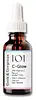
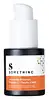
Geek & Gorgeous C-Glow 15% Vitamin C Serum Versus Somethinc Lemonade Waterless Vitamin C + Ferulic + NAG
This brightening serum is formulated around Ascorbic Acid and Ferulic Acid to brighten dull-looking skin and soften the look of wrinkles.
This brightening serum is formulated around 3-O-Ethyl Ascorbic Acid and Acetyl Glucosamine to brighten dull-looking skin and fade the look of dark spots.


What's inside
What's inside
 Key Ingredients
Benefits
Concerns
No concerns
Ingredients Side-by-side

Citrus Limon Fruit Extract
Masking
Glycerin
Humectant


Butylene Glycol
Humectant
3-O-Ethyl Ascorbic Acid
Skin Conditioning




Methylpropanediol
SolventAcetyl Glucosamine
Skin Conditioning

Pentylene Glycol
Skin Conditioning
1,2-Hexanediol
Skin Conditioning
Ferulic Acid
Antimicrobial
Ammonium Acryloyldimethyltaurate/Vp Copolymer
Caprylyl Glycol
Emollient
Sodium Hydroxide
BufferingXanthan Gum
EmulsifyingEthylhexylglycerin
Skin ConditioningSodium Phytate
Tocopherol
Antioxidant
Citrus Limon Fruit Extract, Glycerin, Butylene Glycol, 3-O-Ethyl Ascorbic Acid, Methylpropanediol, Acetyl Glucosamine, Pentylene Glycol, 1,2-Hexanediol, Ferulic Acid, Ammonium Acryloyldimethyltaurate/Vp Copolymer, Caprylyl Glycol, Sodium Hydroxide, Xanthan Gum, Ethylhexylglycerin, Sodium Phytate, Tocopherol
Reviews
Ingredients Explained
These ingredients are found in both products.
Ingredients higher up in an ingredient list are typically present in a larger amount.
Butylene Glycol (or BG) is used within cosmetic products for a few different reasons:
Overall, Butylene Glycol is a safe and well-rounded ingredient that works well with other ingredients.
Though this ingredient works well with most skin types, some people with sensitive skin may experience a reaction such as allergic rashes, closed comedones, or itchiness.
Learn more about Butylene GlycolEthylhexylglycerin is created from glycerin. It is a multitasker ingredient that:
The CIR Expert Panel found minimal skin absorption or sensitization of any kind in a safety assessment. Though this ingredient is considered well-tolerated, a small number of cases of allergic dermatitis have been published since 2002. Just be sure to patch test if you are unsure.
Industry-reported use ranges from 8% in rinse-off products and 2% in leave-on formulations.
Learn more about EthylhexylglycerinFerulic Acid is a plant based antioxidant that can be naturally found in the cell walls of grains like rice, oats, and corn. It has antioxidant and antimicrobial properties, and has the ability to boost the performance of other antioxidants as well.
A well-known study found that adding Ferulic Acid to a solution of Vitamins C and E doubled the photoprotection of skin. This is why you'll often see it paired with Vitamin C or Vitamin E serums rather than sold on its own.
A 2025 review of 18 human studies found that using Ferulic Acid (0.5-1%) daily for one to three months showed improvements in:
As far as allergies go, Ferulic acid is generally well-tolerated but can cause an allergic reaction in very rare cases. It's also worth noting that Ferulic acid is often extracted from plant sources like rice bran or wheat bran, so be sure to path test if you have known grain allergies.
Outside of skincare, researchers are also looking into Ferulic Acid for its potential benefits in areas like diabetes, Alzheimer's, and heart health.
Learn more about Ferulic AcidSodium Hydroxide is also known as lye or caustic soda. It is used to adjust the pH of products; many ingredients require a specific pH to be effective.
In small amounts, sodium hydroxide is considered safe to use. However, large amounts may cause chemical burns due to its high alkaline.
Your skin has a natural pH and acid mantle. This acid mantle helps prevent harmful bacteria from breaking through. The acid mantle also helps keep your skin hydrated.
"Alkaline" refers to a high pH level. A low pH level would be considered acidic.
Learn more about Sodium HydroxideTocopherol is a fat-soluble antioxidant known as Vitamin E.
You'll find this ingredient in the vast majority of skincare (for good reason). It works to neutralize free radicals, or unstable molecules generated by UV exposure, pollution, and other environmental stressors, before they can cause oxidative damage to your skin cells.
Topically applied tocopherol has been shown to protect against UV damage by ramping up the skin's own natural defense enzymes.
It also acts as a skin conditioning agent; some studies show that regular topical use can improve the skin's water-binding capacity over 2-4 weeks.
This ingredient is especially loved for being a team player. When combined with Vitamin C, the photoprotective effect of both ingredients roughly doubles and the combo also helps reduce UV-induced DNA damage.
This ingredient has some brightening potential but it's more of a prevention ingredient than spot-fader. Cell studies show it can slow down melanin production but it's worth noting that it's not the most powerful brightener out there.
In formulations, it also serves as a stabilizer that helps protect other oxidation-prone ingredients from degrading.
Concentrations usually range from 0.1-1% in most leave-on products.
Learn more about Tocopherol

