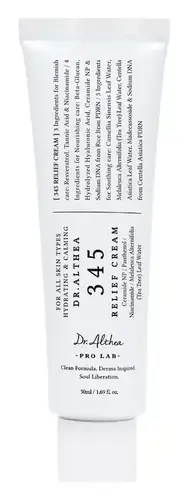
This calming moisturizer is formulated around Aloe Barbadensis Leaf Juice and Borago Officinalis Seed Oil to calm redness and hydrate skin.
This barrier-repair moisturizer is formulated around Simmondsia Chinensis Seed Oil and Aloe Barbadensis Leaf to strengthen the skin barrier and hydrate skin.

What's inside
What's inside
 Key Ingredients
Benefits
Concerns
Ingredients Side-by-side
Aloe Barbadensis Leaf Juice
Skin Conditioning


Water
Skin ConditioningBorago Officinalis Seed Oil
Emollient





Withania Somnifera Root Extract
Skin Conditioning
Equisetum Arvense Extract
AstringentHelichrysum Italicum Extract
AntiseborrhoeicGlycerin
Humectant
Hippophae Rhamnoides Oil
Emollient
Hydrolyzed Adansonia Digitata Seed Extract
Melia Azadirachta Seed Oil
Emollient
Hyaluronic Acid
Humectant

Polyacrylate-13
Polyisobutene
Polysorbate 20
Emulsifying
Lycium Barbarum Fruit Extract
Astringent
Vaccinium Vitis-Idaea Fruit Extract
Antioxidant
Aloe Barbadensis Leaf Juice, Water, Borago Officinalis Seed Oil, Withania Somnifera Root Extract, Equisetum Arvense Extract, Helichrysum Italicum Extract, Glycerin, Hippophae Rhamnoides Oil, Hydrolyzed Adansonia Digitata Seed Extract, Melia Azadirachta Seed Oil, Hyaluronic Acid, Polyacrylate-13, Polyisobutene, Polysorbate 20, Lycium Barbarum Fruit Extract, Vaccinium Vitis-Idaea Fruit Extract










Ingredients Explained
These ingredients are found in both products.
Ingredients higher up in an ingredient list are typically present in a larger amount.
Hyaluronic acid (HA) is a glycosaminoglycan (basically a long sugar chain) that your skin already makes on its own. In your skin, HA lives in the extracellular matrix and acts as the body's moisture reservoir.
Topically, HA is a humectant that binds water and helps skin look more plump, smooth, and hydrated.
The only catch is that HA isn't a single thing; it actually comes in a wide range of molecular weights (~50 - 2,000+ kDA) and size matters.
Some clinical evidence links low molecular weight versions to improved wrinkle depth, elasticity, anti-inflammatory effects, and barrier repair.
This is why the best HA serums blend the two sizes together so you get the best of both worlds.
The majority of cosmetic HA is produced by bacterial fermentation, typically using Streptococcus or Bacillus strains. Typical use levels in skincare sit around 0.1-2%.
A clinical study using a 0.2% low-molecular weight HA gel showed improvement in facial seborrheic dermatitis with excellent tolerance.
These are some other common types of Hyaluronic Acid:
Learn more about Hyaluronic AcidWater. It's the most common cosmetic ingredient of all. You'll usually see it at the top of ingredient lists, meaning that it makes up the largest part of the product.
So why is it so popular? Water most often acts as a solvent - this means that it helps dissolve other ingredients into the formulation.
You'll also recognize water as that liquid we all need to stay alive. If you see this, drink a glass of water. Remember to stay hydrated!
Learn more about Water