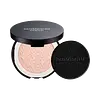
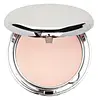
bareMinerals Original Talc-Free Pressed Powder Foundation Mineral SPF 15 Versus 3CE Makeup Fix Powder


What's inside
What's inside
 Key Ingredients
Benefits
Concerns
Ingredients Side-by-side




Talc
Abrasive
Mica
Cosmetic ColorantSynthetic Fluorphlogopite
Silica
Abrasive

Magnesium Myristate


Pentaerythrityl Tetraethylhexanoate
Emollient
Alumina
Abrasive
Boron Nitride
Absorbent
Diphenylsiloxy Phenyl Trimethicone
Skin Conditioning
Octyldodecanol
Emollient
Dimethicone
Emollient
Macadamia Ternifolia Seed Oil
Emollient


Caprylyl Glycol
Emollient
Diisostearyl Malate
EmollientGlyceryl Caprylate
EmollientEthylhexylglycerin
Skin ConditioningTriethoxycaprylylsilane
Tocopherol
Antioxidant






CI 77492
Cosmetic ColorantCI 77491
Cosmetic ColorantCI 77499
Cosmetic ColorantTalc, Mica, Synthetic Fluorphlogopite, Silica, Magnesium Myristate, Pentaerythrityl Tetraethylhexanoate, Alumina, Boron Nitride, Diphenylsiloxy Phenyl Trimethicone, Octyldodecanol, Dimethicone, Macadamia Ternifolia Seed Oil, Caprylyl Glycol, Diisostearyl Malate, Glyceryl Caprylate, Ethylhexylglycerin, Triethoxycaprylylsilane, Tocopherol, CI 77492, CI 77491, CI 77499
Reviews
Ingredients Explained
These ingredients are found in both products.
Ingredients higher up in an ingredient list are typically present in a larger amount.
Ci 77491 is also hydrated iron III oxide. It's sole purpose is to give a red/pink hue to products.
Iron III oxides are classified as inorganic chemicals for coloring.
Synthetically created Ci 77491 is considered safer than those naturally found. This is because the synthetically created version may contain less impurities. Iron oxides are generally non-toxic and non-allergenic.
Learn more about CI 77491CI 77492 is also hydrated iron III oxide. It's sole purpose is to give a yellow hue to products.
Iron III oxides are classified as inorganic chemicals for coloring.
Synthetically created CI 77492 is considered safer than those naturally found. This is because the synthetically created version may contain less impurities. Iron oxides are generally non-toxic and non-allergenic.
Learn more about CI 77492Ci 77499 is also hydrated iron III oxide. It is created from mixing red and black iron oxides. This helps give shades of darkness to a product.
Iron III oxides are classified as inorganic chemicals for coloring.
Magnesium Myristate is the magnesium salt of myristic acid, a saturated fatty acid that is naturally found in coconut and palm kernel oil.
In formulas, it's used as an anticaker, opacifier, and viscosity controller; it improves adhesion and glide in pressed mineral makeup, works as a non-gelling thickener in eyeliners/mascaras/lipsticks, and doubles as a white opacifier.
There's no published concentration use from surveys so the best available numbers are supplier guidance: 5-10% for loose powders and 2-5% for creamy cosmetics + pressed powder binding.
The CIR Expert Panel reviewed Magnesium Myristate as part of its assessment of myristic acid and its salts and esters, and concluded the whole group is safe as used in cosmetics.
In human studies, Myristic Acid was non-irritating up to 50% and 100% Magnesium Stearate was non-irritating and non-corrosive on skin and non-irritating to the eye.
There are no published contact allergy case reports for this ingredient so allergy risk is low, but not zero for any ingredient.
There is no comedogenic data for Magnesum Myristate. The comedogenic ratings that circulate for "myristates" come from Isopropyl Myristate which is a structurally different ester.
The rabbit-ear models those comedogenic ratings come from have been shown to be unreliable for predicting whether a finished product will clog pores.
Human testing has proved that any finished product with a comedogenic ingredient won't automatically make you break out; it really comes down to concentration, formula, and your skin.
Some people still find it breaks them out. So if that's you, definitely trust your skin.
Learn more about Magnesium MyristateSilica, also known as silicon dioxide, is a naturally occurring mineral. It is used as a fine, spherical, and porous powder in cosmetics.
Though it has exfoliant properties, the function of silica varies depending on the product.
The unique structure of silica enhances the spreadability and adds smoothness, making it a great texture enhancer.
It is also used as an active carrier, emulsifier, and mattifier due to its ability to absorb excess oil.
In some products, tiny microneedles called spicules are made from silica or hydrolyzed sponge. When you rub them in, they lightly polish away dead skin layers and enhance the penetration of active ingredients.
Learn more about SilicaSynthetic Fluorphlogopite is the synthethic version of mica. It consists of fluorine, aluminum and silicate.
Synthetic Fluorphlogopite is used to add volume to products.
It is considered non-irritating on the skin.
Learn more about Synthetic Fluorphlogopite

