Marcelle Soothing Exfoliating Toner
A toner with 18 ingredients, including PHA and hyaluronic acid.
This smoothing toner is formulated around Lactobacillus Ferment and Gluconolactone to refine skin texture and calm redness.
We independently verify ingredients, backed by peer-reviewed research. Suggest an update.
What's inside
Ingredients List
Water
Skin ConditioningPropanediol
Solvent

Glycerin
Humectant
Propylheptyl Caprylate
EmollientLactobacillus Ferment
Skin Conditioning
Gluconolactone
Chelating






Arginine
Masking
Sodium Hyaluronate
Humectant
Hydrolyzed Oat Protein
Skin ConditioningSphingomonas Ferment Extract
Skin Conditioning

Lactic Acid
Buffering



Isopropyl Palmitate
Emollient

Hydroxyacetophenone
Antioxidant
Microcrystalline Cellulose
AbsorbentSucrose Stearate
EmollientSodium Gluconate
ChelatingSucrose Laurate
Emollient
Cellulose Gum
Emulsion StabilisingWater, Propanediol, Glycerin, Propylheptyl Caprylate, Lactobacillus Ferment, Gluconolactone, Arginine, Sodium Hyaluronate, Hydrolyzed Oat Protein, Sphingomonas Ferment Extract, Lactic Acid, Isopropyl Palmitate, Hydroxyacetophenone, Microcrystalline Cellulose, Sucrose Stearate, Sodium Gluconate, Sucrose Laurate, Cellulose Gum
Key Ingredients
Benefits
Concerns
Ingredients Explained
Water. It's the most common cosmetic ingredient of all. You'll usually see it at the top of ingredient lists, meaning that it makes up the largest part of the product.
So why is it so popular? Water most often acts as a solvent - this means that it helps dissolve other ingredients into the formulation.
You'll also recognize water as that liquid we all need to stay alive. If you see this, drink a glass of water. Remember to stay hydrated!
Learn more about WaterPropanediol is an all-star ingredient. It softens, hydrates, and smooths the skin.
It’s often used to:
Propanediol is not likely to cause sensitivity and considered safe to use. It is derived from corn or petroleum with a clear color and no scent.
Learn more about PropanediolGlycerin (or glycerol) is a compound naturally found in your skin. It's a powerhouse humectant that pulls water into the stratum corneum.
Topically, glycerin does several things at once:
Your skin makes glycerin on its own (mostly from sebaceous oil breakdown) and shuttles it to your outermost layer of skin, or your epidermis, via aquaporin-3.
Aquaporin-3 is a transporter that is essential for normal skin hydration, elasticity, and repair. Interestingly, mice lacking in AQP3 have dry and less elastic skin that can be fully corrected with glycerin.
This ingredient is non-irritating, plays well with almost every ingredient, and works across all skin types. Typical use is anywhere between 3-10% but can go up to 79% in some leave-on products.
Just know very high concentrations (>40%) can feel tacky in low humidity.
Glycerin is the name for this ingredient in American English. British English uses Glycerol/Glycerine.
Learn more about GlycerinWe don't have a description for Propylheptyl Caprylate yet.
This ingredient is made when the Lactobacillus bacteria (the same kind that makes yogurt and kimchi) are allowed to ferment a nutrient medium.
As it ferments, it collects lactic acid, peptides, enzymes, and other bioactive metabolites to provide:
A 2023 review noted that probiotic fermentation ingredients like this one can enhance antioxidant capacity, reduce UV-induced oxidative damage, and support barrier function.
One clinical study from the same year showed a Lactobacillus ferment lysate significantly reduced transepidermal water loss and improved skin hydration.
Another review highlighted that topical Lactobacillus-based preparations can improve ceramide levels in the stratum corneum, support barrier integrity, and even help reduce S. aureus colonization in atopic dermatitis.
Why is this so cool?
Basically, your skin's outer layer works as a brick wall; skin cells are bricks and ceramides are the mortar holding it together. Moisture escapes, irritants get in, and your skin gets dry and reactive when ceramide levels drop. On top of that, "bad" skin bacteria S. aureus loves to move in when your barrier is weak to make inflammation and irritation worse.
So Lactobacillus ferment is basically patching the wall and evicting the troublemaker when it boosts ceramide production and help keep S. aureus in check.
On top of all this, it also acts as a mild antimicrobial preservative booster.
Just so you know, most studies focus on specific strains or the lysate form rather than this generic "Lactobacillus Ferment", so results can vary.
Though it's a promising ingredient, it doesn't have decades of robust clinical data behind it just yet.
Lactobacillus Ferment is generally considered safe for fungal-acne prone skin. The key thing to understand is that it comes from bacteria, not yeast or fungus.
Yeast-derived ferments (like galactomyces) have been shown to activate a protein that's linked to Malassezia-related skin issues whereas lactobacillus doesn't have that problem.
Its byproducts also don't contain the types of fatty acids (C11-24 chain lengths) that Malassezia feeds on.
Learn more about Lactobacillus FermentGluconolactone is a PHA. PHAs are a great gentle alternative to traditional AHAs.
When applied, Gluconolactone has the same affect on skin as AHAs such as lactic acid. It helps dissolve the dead skin cells in the top layer of your skin. This improves texture and brightens the skin.
PHAs are more gentle than AHAs due to their larger structure. They do not penetrate as deeply as AHAs and take a longer time to dissolve dead cells. Studies show PHAs do not cause as much irritation.
Gluconolactone has some interesting properties:
In a 2004 study, Gluconolactone was found to prevent UV damage in mouse skin cells and has not been found to increase sun sensitivity. However, we still recommend wearing SPF daily.
This ingredient is is an created by reacting gluconic acid with an alcohol.
Learn more about GluconolactoneArginine is a semi-essential amino acid. This just means our bodies can product a bit on its own, but sometimes needs a little boost from food sources.
It is a part of your skin's natural moisturizing factor (NMF), or the water-loving molecules in your outermost layer of skin (stratum corneum) that keeps everything hydrated and happy.
Here's an interesting thing about Arginine: your skin converts it into urea through the Krebs-Henseleit urea cycle. Urea is one of the most effective humectants your skin naturally produces.
A clinical study showed applying 2.5% arginine hydrochloride to atopic dermatitis skin showed significant urea levels in the stratum corneum and improved moisture in just four weeks.
Arginine is also a precursor to nitric oxide; nitric oxide improves microcirculation and supports wound healing and collagen synthesis.
One study found that an amino acid complex containing Arginine reduced skin irritation, improved hydration, and accelerated skin repair in clinical / in-vivo studies.
Arginine itself is an amino acid and not a fatty acid, oil, or ester. On its own, it's not a direct food source for Malassezia, or the yeast that causes fungal acne.
Learn more about ArginineSodium Hyaluronate is the salt form of hyaluronic acid. It is a long sugar chain that is naturally found in your skin, joints, and connective tissue that maintains hydration and elasticity.
In skincare, it works as a humectant. It pulls water from the environment and deeper layers of skin and binds it to the surface.
Interestingly, the size of the molecule affects its behavior:
Some clinical evidence links low molecular weight versions to improved wrinkle depth, elasticity, anti-inflammatory effects, and barrier repair.
Many serums use a blend of both weights so you can get surface hydration plus longer-lasting and deeper effects.
You'll typically see concentrations between 0.1-2% for this ingredient.
Learn more about Sodium HyaluronateWe don't have a description for Hydrolyzed Oat Protein yet.
This ingredient is created by the fermentation of Sphingomonas, an interesting bacteria. Sphingomonas bacteria use ubiquinone-10 to help them breathe and their cell walls contain ceramides.
Early research suggests that certain skin bacteria, especially Sphingomonas, could play a helpful role in skin health.
In small studies, these bacteria seemed to become more common after regular sun exposure, with one strain showing the ability to resist UV light and reduce stress in skin cells. Another study also linked Sphingomonas to smoother and more supple skin.
While these results sound promising, the research is still in its early stages, and more studies are needed to know how reliable or meaningful these effects really are.
Fun fact: Unlike most microbes, Sphingomonas can survive the wine fermentation process, making it a tiny microbial marker of a wine's unique "terroir", or the environment’s “fingerprint” on the wine.
Like other ferments, this ingredient may not be Malassezia folliculitis safe.
Learn more about Sphingomonas Ferment ExtractLactic Acid is another well-loved alpha hydroxy acid (AHA). It is gentler than glycolic acid but still highly effective.
Its main role is to exfoliate the surface of the skin by loosening the “glue” that holds dead skin cells together. Shedding those old cells leads to smoother, softer, and more even-toned skin.
Because lactic acid molecules are larger than glycolic acid, they don’t penetrate as deeply. This means they’re less likely to sting or irritate, making it a great choice for beginners or those with sensitive skin.
Like glycolic acid, it can:
Lactic acid also acts as a humectant (like hyaluronic acid). It can draw water into the skin to improve hydration and also plays a role in the skin's natural moisturizing factor (NMF) in the form of sodium lactate.
Studies show it can boost ceramide production to strengthen the skin barrier and even help balance the skin’s microbiome.
To get results, choose products with a pH between 3-4.
Lower strengths (5-12%) focus on surface exfoliation; higher strengths (12% and up) can reach deeper in the dermis (deeper, supportive layer) to improve skin texture and firmness over time.
Though it was originally derived from milk, most modern lactic acid used in skincare is vegan. It is made through non-dairy fermentation to create a bio-identical and stable form suitable for all formulations.
When lactic acid shows up near the end of an ingredient list, it usually means the brand added just a tiny amount to adjust the product’s pH.
Legend has it that Cleopatra used to bathe in sour milk to help reduce wrinkles.
Lactic acid is truly a gentle multitasker: it exfoliates, hydrates, strengthens, and brightens. It's a great ingredient for giving your skin a smooth, glowing, and healthy look without the harshness of stronger acids.
Read more about some other popular AHA's here:
Learn more about Lactic AcidIsopropyl Palmitate is a lightweight emollient made by combining isopropyl alcohol and palmitic acid.
It is an emollient that leaves skin feeling smooth and silky without leaving a greasy feel.
Typical usage concentrations range from 1-5%.
Human testing shows it's non-irritating and non-sensitizing, and the EU Scientific Committee on Consumer Safety (SCCS) has cleared it at very high levels (79% in leave-on products).
The one thing worth knowing about its comedogenic score of 3-4 is to keep it in perspective: these ratings come from old rabbit-ear tests using 100% of pure ingredient and doesn't reflect how it behaves at low levels in a finished product.
Because it is an ester of palmitic acid (C16), it falls into the range that the Malassezia yeast can feed on and is considered not fungal acne safe.
Learn more about Isopropyl PalmitateHydroxyacetophenone is a small phenolic molecule that earns its place in a formulas as an antioxidant and preservative booster.
As a phenol, it is able to neutralize free radicals to protect both the product and the skin from oxidative stress.
Though it can't kill microbes on its own, it works as a good supporting agent when combined with other preservatives like Phenoxyethanol or 1,2-Hexanediol.
This ingredient naturally occurs as piceol in Norwegian spruce needles (~0.4-1.1% dry weight and in cloudberries). Though the cosmetic-grade material is synthesized for purity and consistency.
You'll usually see it used at low levels and suppliers recommend up to 1% added to a water phase.
Safety testing was done at concentrations like 0.05% in SPF products and 0.5% in a Human Repeated Insult Patch Test. The safety evidence is assuring; this ingredient is safe for cosmetics in current use and also holds safety status as a food flavoring as well.
An honest caveat: the "soothing" and "anti-inflammatory" claims come mostly from supplier marketing rather than published clinical trials. The Cosmetic Ingredient Review's own literature search found no useful efficacy studies on this ingredient.
So the antioxidant and preservative-boosting roles are the well supported ones while the calming benefit is plausible but thinly evidenced.
Overall, this is a well-tolerated, low-irritation multitasker that quietly helps a formula stay fresh and stable.
Learn more about HydroxyacetophenoneMicrocrystalline Cellulose is another name for refined wood pulp. It is used as an emulsifier and mattifying ingredient. As an emulsifier, it helps keep ingredients together.
Sucrose Stearate is derived from stearic acid and sucrose (sugar). It is an emollient and emulsifier.
As an emulsifier, it prevents oils and water from separating in a product. This property also makes it a surfactant and therefore a cleansing agent.
Sodium Gluconate is the sodium salt of gluconic acid. In skincare, its main job is as a chelator.
Chelators grab onto stray metal ions like iron and copper that sneak in through water, raw materials, or manufacturing equipment. This stops them from triggering reactions that cause oils to go rancid, formulas to change color, and actives like vitamin C to fall apart.
This ingredient is often chosen as a biodegradable, gentler-sounding alternative to EDTA. It also pulls double duty as a mild humectant and pH buffer.
Typical use levels sit around 0.1-1% and supplier documents list up to 10% as an acceptable ceiling. Industry data found this ingredient family is mostly used well below 1% in leave on products.
Allergy risk is very low; animal testing has found it to be non-irritating to skin and eyes, mutagenicity assays came back negative, and there are no published reports of allergic contact dermatitis to it.
Learn more about Sodium GluconateSucrose Laurate isn't fungal acne safe.
Cellulose Gum is a water-soluble polymer that comes from cellulose. It is used to change the texture of a product and to help stabilize emulsions.
As an emulsifier, cellulose gum specifically thicken the texture of water-based products.
This ingredient is considered hypoallergenic and non-toxic. Cellulose Gum can be found in cosmetics, food, and other household goods such as paper products.
Learn more about Cellulose GumReviews
No written reviews yet. Be the first to review this product.
Recent searches
Search reviews by skin type, ingredient, or keyword.
Where it's from
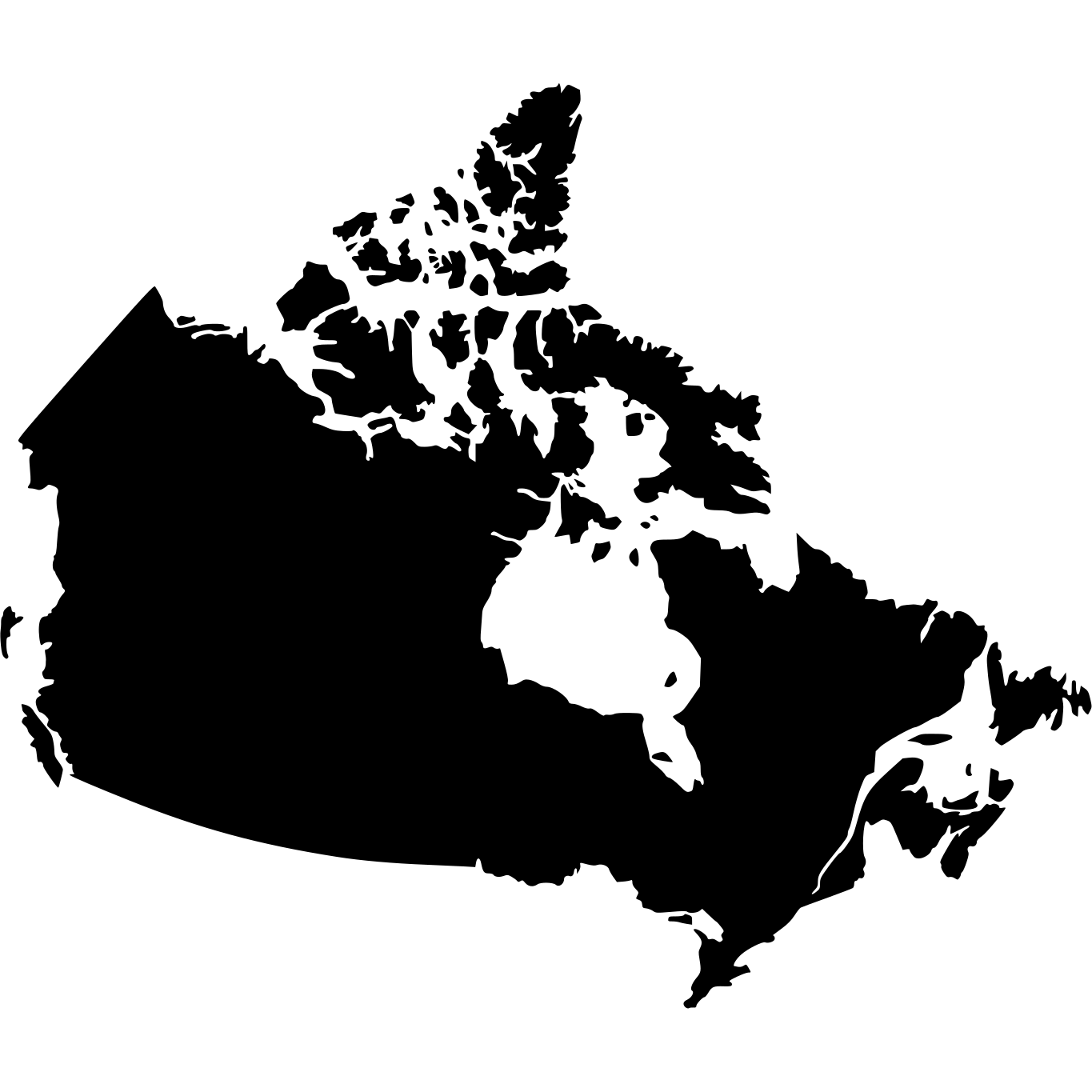
Marcelle is a Canadian brand

We're dedicated to providing you with the most up-to-date and science-backed ingredient info out there.
The data we've presented on this page has been verified by a member of the SkinSort Team.
Read more about us· Updated August 5, 2026 • Added by B_434


