Humdakin Deodorant
A deodorant with 18 ingredients.
Deodorant with 18 ingredients
We independently verify ingredients, backed by peer-reviewed research. Suggest an update.
What's inside
Ingredients List
Water
Skin ConditioningTriethyl Citrate
Masking

Tapioca Starch
Propylene Glycol
Humectant


C14-22 Alcohols
Emulsion Stabilising
Steareth-100/PEG-136/Hdi Copolymer
Ethylhexyl Polyhydroxystearate
EmollientPhenoxyethanol
Preservative
Laureth-2
CleansingPEG-8
HumectantC12-20 Alkyl Glucoside
EmulsifyingCaprylyl Glycol
Emollient
Equisetum Arvense Extract
AstringentAllantoin
Skin Conditioning



Salvia Officinalis Oil
Masking
Parfum
Masking
Dimethyl Phenylethyl Carbinyl Acetate
Perfuming
Tetramethyl Acetyloctahydronaphthalenes
Masking
Water, Triethyl Citrate, Tapioca Starch, Propylene Glycol, C14-22 Alcohols, Steareth-100/PEG-136/Hdi Copolymer, Ethylhexyl Polyhydroxystearate, Phenoxyethanol, Laureth-2, PEG-8, C12-20 Alkyl Glucoside, Caprylyl Glycol, Equisetum Arvense Extract, Allantoin, Salvia Officinalis Oil, Parfum, Dimethyl Phenylethyl Carbinyl Acetate, Tetramethyl Acetyloctahydronaphthalenes
Benefits
Concerns
Ingredients Explained
Water. It's the most common cosmetic ingredient of all. You'll usually see it at the top of ingredient lists, meaning that it makes up the largest part of the product.
So why is it so popular? Water most often acts as a solvent - this means that it helps dissolve other ingredients into the formulation.
You'll also recognize water as that liquid we all need to stay alive. If you see this, drink a glass of water. Remember to stay hydrated!
Learn more about WaterTriethyl Citrate comes from citric acid. It has masking, perfuming, and solvent properties. As a solvent, this ingredient helps disperse ingredients evenly in skincare.
One manufacturer claims this ingredient can:
According to perfume manufacturers, this ingredient is almost odorless but has a mild fruity, wine and plum scent. It can be used to mask the scent of other ingredients.
This ingredient can be plant-sourced or synthetic; it can naturally be found in cabbage and white wine.
Learn more about Triethyl CitrateTapioca starch is a thickening agent and is made from the cassava root, also known as yucca.
According to a manufacturer, it is an excellent talc replacement.
It is gluten-free.
Learn more about Tapioca StarchPropylene Glycol is a synthetic, colorless, odorless liquid that has been a staple in cosmetics for decades. It is a skin conditioning agent, humectant, and solvent.
As a humectant, it draw water to the skin to reduce flaking and restore suppleness. It's also a solvent that helps dissolve other actives and keeps formulas stable across temperature changes.
The CIR Expert Panel has confirmed this ingredient to be nontoxic and clinical studies show no sensitization at cosmetic use concentrations.
True allergic reactions are quite rare: a 15-year retrospective study of 6,751 patients found only 0.31% had a positive reaction (and less than half were considered clinically relevant).
It seemed that when sensitization does occur, it's most commonly linked to topical medication (like corticosteroids) and not cosmetics. Allergic contact dermatitis also appears largely limited to individuals with underlying skin conditions.
Overall, propylene glycol is a well-studied ingredient that most people can tolerate without issue.
Learn more about Propylene GlycolThis ingredient is a blend of long-chain fatty alcohols (myristyl, cetyl, stearyl, arachidyl, and behenyl). It is an emulsion stabilizer with emollient properties.
Don't let the word "alcohol" scare you: fatty alcohols are nothing like the drying solvents. This ingredient actually helps soften and smooth the skin.
By the way, the FDA allows products to be labeled "alcohol-free" even when they contain fatty alcohols like this one.
In a formula, it prevents the water and oil phases from separating over time while also contributing to a pleasant, non-greasy slip.
Interestingly, this ingredient can organize into the structures that mimic the skin's own lipid architecture to help support barrier function and reduce transepidermal water loss (TEWL).
The CIR Expert Panel has thoroughly assess the individual fatty alcohols that make up this blend and found no significant toxicity or dermal irritation.
Learn more about C14-22 AlcoholsWe don't have a description for Steareth-100/PEG-136/Hdi Copolymer yet.
We don't have a description for Ethylhexyl Polyhydroxystearate yet.
Phenoxyethanol is one of the most widely used preservatives in skincare (and for good reason!).
It has a large spectrum of antimicrobial activity and especially effective bacteria, yeast, and mold while only having a weak effect on your skin's natural microbiome.
On a cellular level, it disrupts the cell membranes of microbes by poking holes that make the cell leak. This shuts down the chemical reactions the microbe needs to make energy so it can no longer survive.
Another perk of this ingredient is that it stays functional across a wide pH range (3-10).
You'll often see it paired with boosters like Ethylhexylglycerin; one study showed that a 1:9 ratio of Ethylhexylglycerin to Phenoxyethanol damages bacterial membranes as effectively as doubling the Phenoxyethanol concentration on its own.
Typical use concentrations range from 0.3-1% depending on the formula, and this ingredient is capped at 1% int the EU.
Safety-wise, the fear mongering does not hold up to the evidence. The EU's Scientific Committee on Consumer Safety and FDA consider it safe as a preservative at up to 1%, including for children of all ages.
Adverse systemic effects only showed up in animal studies at exposures roughly 200x higher than what people get from cosmetics. And despite its very widespread use, this ingredient is a rare sensitizer and allergic reactions are uncommon.
Learn more about PhenoxyethanolLaureth-2 is a synthetic surfactant that has cleansing and emulsifying properties. It is commonly used to blend oil and water, help improve cleansing, and add foam.
Like other surfactants, laureth-2 works by reducing surface tension to help dirt, sebum, and other impurities be washed away easily.
This ingredient has low risk of irritation when properly formulated. However, some individuals with sensitive skin may still experience mild irritation.
Learn more about Laureth-2PEG-8 is a synthetic polymer used as a humectant and solvent.
This ingredient is able to help dissolve active ingredients, including water. This gives it humectant properties.
It is soluble in water. The number '8' stands for the molecular weight of the ingredient.
Learn more about PEG-8We don't have a description for C12-20 Alkyl Glucoside yet.
Caprylyl Glycol is a humectant, skin conditioner, emollient, and preservative booster derived from either caprylic acid or synthetically created.
Typical use levels vary from 0.3-1% as a preservative booster and go up to 2% to condition skin.
Because it is not a free-fatty acid, this ingredient is fungal acne safe (there's nothing for Malassezia to feed on).
Learn more about Caprylyl GlycolThis botanical extract is also known as horsetail extract. It mainly acts as an emollient, skin soother, and astringent.
A study from 2023 found compounds in Equisetum Arvense showed significant anti-inflammatory effects in irritated keratinocytes (the main cell in your outermost layer of skin).
Another study using a cream with horsetail and soybean extract found 80% of participants showed at least a 26% improvement in forehead wrinkles after 8 weeks.
Animal research has shown topical Equisetum Arvense stimulated skin and tissue growth in mice.
The research so far is encouraging, but still in its early days. But it's a lovely supporting ingredient and can be a welcome addition to any routine.
Learn more about Equisetum Arvense ExtractAllantoin is a soothing ingredient known for its protective and moisturizing properties; it's basically a quiet workhorse ingredient you can find in a huge range of cosmetics.
Though it can be derived from the comfrey plant, allantoin is produced synthetically for cosmetic products to ensure purity.
Research shows it can encourage your skin cells to turn over and renew by stimulating keratinocyte and fibroblast proliferation.
It also has mild keratolytic properties to help loosen and shed dead skin cells without being harsh.
Studies also suggest allantoin can help calm inflammation by dialing down some of the chemical signals your skin sends out when it is irritated.
This ingredient is typically used in the 0.1-0.5% range, and the FDA recognizes it as a skin protectant in OTC products up to 2%.
Overall, allantoin is a wonderful addition to most routines; it is stable across a wide pH range (~4-8), works well with other ingredients, and is considered non-sensitizing/non-irritating.
Fun fact: Allantoin is naturally occurring in comfrey root, beets, chamomile, and wheat sprouts. Our bodies even produce it as a byproduct of uric acid metabolism.
Learn more about AllantoinSalvia Officinalis Oil is an oil.
Parfum is a catch-all term for an ingredient or more that is used to give a scent to products.
Also called "fragrance", this ingredient can be a blend of hundreds of chemicals or plant oils. This means every product with "fragrance" or "parfum" in the ingredients list is a different mixture.
For instance, Habanolide is a proprietary trade name for a specific aroma chemical. When used as a fragrance ingredient in cosmetics, most aroma chemicals fall under the broad labeling category of “FRAGRANCE” or “PARFUM” according to EU and US regulations.
The term 'parfum' or 'fragrance' is not regulated in many countries. In many cases, it is up to the brand to define this term.
For instance, many brands choose to label themselves as "fragrance-free" because they are not using synthetic fragrances. However, their products may still contain ingredients such as essential oils that are considered a fragrance by INCI standards.
One example is Calendula flower extract. Calendula is an essential oil that still imparts a scent or 'fragrance'.
Depending on the blend, the ingredients in the mixture can cause allergies and sensitivities on the skin. Some ingredients that are known EU allergens include linalool and citronellol.
Parfum can also be used to mask or cover an unpleasant scent.
The bottom line is: not all fragrances/parfum/ingredients are created equally. If you are worried about fragrances, we recommend taking a closer look at an ingredient. And of course, we always recommend speaking with a professional.
Learn more about ParfumDimethyl Phenylethyl Carbinyl Acetate is a fragrance.
This ingredient is also known as ISO E Super. It is a synthetic perfuming and masking ingredient.
The manufacturer describes this scnet as amber and woody.
According to the EU, this ingredient is a known allergen and some people may develop skin sensitivity from repeated exposure.
Learn more about Tetramethyl AcetyloctahydronaphthalenesReviews
No written reviews yet. Be the first to review this product.
Recent searches
Search reviews by skin type, ingredient, or keyword.
Where it's from
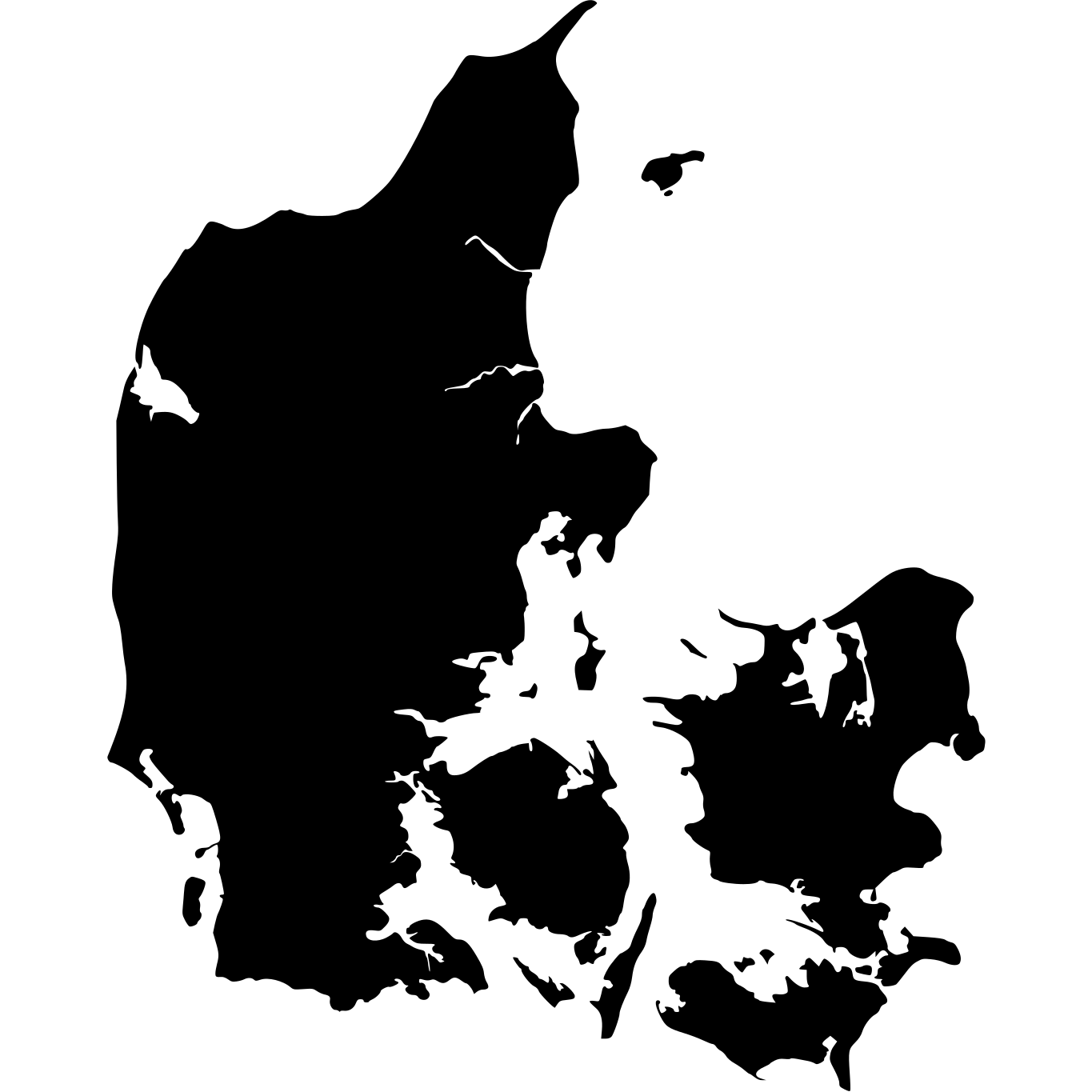
Humdakin is a Danish brand

We're dedicated to providing you with the most up-to-date and science-backed ingredient info out there.
The data we've presented on this page has been verified by a member of the SkinSort Team.
Read more about us· Updated January 14, 2025 • Added by FridaSonderdahl_04


