
What's inside
What's inside
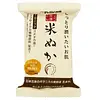 Key Ingredients
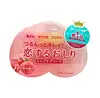
No key ingredients
Benefits
Concerns
Ingredients Side-by-side


Soap
Water
Skin ConditioningPrunus Persica Seed Powder
Abrasive
Mannan
Gluconobacter/Honey Ferment Filtrate
Skin ConditioningMalic Acid
Buffering





Lactic Acid
Buffering




Citric Acid
Buffering
Prunus Persica Leaf Extract
Emollient
Prunus Persica Kernel Extract
MoisturisingEriobotrya Japonica Leaf Extract
Skin ConditioningActinidia Chinensis Fruit Extract
EmollientCynara Scolymus Leaf Extract
Skin ConditioningAloe Barbadensis Leaf Juice
Skin Conditioning

Glucose
Humectant
Camellia Sinensis Leaf Extract
Antimicrobial
Triclocarban
Preservative
Glycerin
Humectant
Sodium Chloride
MaskingButylene Glycol
Humectant
Tetrasodium EDTA
Etidronic Acid
Tetrasodium Etidronate
Emulsion StabilisingIron Oxides
Parfum
Masking

Soap, Water, Prunus Persica Seed Powder, Mannan, Gluconobacter/Honey Ferment Filtrate, Malic Acid, Lactic Acid, Citric Acid, Prunus Persica Leaf Extract, Prunus Persica Kernel Extract, Eriobotrya Japonica Leaf Extract, Actinidia Chinensis Fruit Extract, Cynara Scolymus Leaf Extract, Aloe Barbadensis Leaf Juice, Glucose, Camellia Sinensis Leaf Extract, Triclocarban, Glycerin, Sodium Chloride, Butylene Glycol, Tetrasodium EDTA, Etidronic Acid, Tetrasodium Etidronate, Iron Oxides, Parfum
Alternatives
Ingredients Explained
These ingredients are found in both products.
Ingredients higher up in an ingredient list are typically present in a larger amount.
We don't have a description for Etidronic Acid yet.
Parfum is a catch-all term for an ingredient or more that is used to give a scent to products.
Also called "fragrance", this ingredient can be a blend of hundreds of chemicals or plant oils. This means every product with "fragrance" or "parfum" in the ingredients list is a different mixture.
For instance, Habanolide is a proprietary trade name for a specific aroma chemical. When used as a fragrance ingredient in cosmetics, most aroma chemicals fall under the broad labeling category of “FRAGRANCE” or “PARFUM” according to EU and US regulations.
The term 'parfum' or 'fragrance' is not regulated in many countries. In many cases, it is up to the brand to define this term.
For instance, many brands choose to label themselves as "fragrance-free" because they are not using synthetic fragrances. However, their products may still contain ingredients such as essential oils that are considered a fragrance by INCI standards.
One example is Calendula flower extract. Calendula is an essential oil that still imparts a scent or 'fragrance'.
Depending on the blend, the ingredients in the mixture can cause allergies and sensitivities on the skin. Some ingredients that are known EU allergens include linalool and citronellol.
Parfum can also be used to mask or cover an unpleasant scent.
The bottom line is: not all fragrances/parfum/ingredients are created equally. If you are worried about fragrances, we recommend taking a closer look at an ingredient. And of course, we always recommend speaking with a professional.
Learn more about ParfumTetrasodium EDTA is the salt formed from neutralizing ethylenediamine tetraacetic acid with sodium hydroxide. It is a chelating agent and used to prevent metal ions from binding to other ingredients. This helps keep the product and ingredients stable.
Tetrasodium EDTA comes as a white solid and is soluble in water.
Water. It's the most common cosmetic ingredient of all. You'll usually see it at the top of ingredient lists, meaning that it makes up the largest part of the product.
So why is it so popular? Water most often acts as a solvent - this means that it helps dissolve other ingredients into the formulation.
You'll also recognize water as that liquid we all need to stay alive. If you see this, drink a glass of water. Remember to stay hydrated!
Learn more about WaterThis ingredient is a combination of red, black, and yellow iron oxide pigments. This combination of colors is usually found in foundation, because it results in a "skin" color.
The EU typically uses CI numbers for colorants when applicable, such as CI 77489. In the US, iron oxides are regulated as color additives and "iron oxides" is the most commonly used name in US cosmetic practice.
A 2021 paper looked at skincare formulations containing iron oxides and found that they reduced transmission of blue light when measured optically. In simple terms, the pigment particles helped block or scatter part of the visible light spectrum in lab testing and the authors suggest this could translate into better protection against blue-light-related skin effects.
There is also clinical and experimental research showing that tinted products containing iron oxides can reduce visible light-induced pigmentation:
Please note, whether a product reduces visible or blue light depends on things like:
In the EU's CosIng database, iron oxides are only listed as a colorant. CosIng groups ingredients by their main cosmetic role, such as colorant, preservative, or UV filter.
Though studies say iron oxides can "attenuate blue light", they're describing an optical property and not an officially recognized cosmetic function.
So CosIng isn’t contradicting the research. It’s just classifying iron oxides by what they officially are: pigments that add color.
Learn more about Iron Oxides

