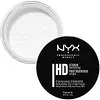
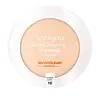
Setting Spray & Powder
American United States

What's inside

What's inside

Key Ingredients

Benefits

Concerns

No concerns

Ingredients Side-by-side

Show highlights for:

Reviews

3.00
Overall rating
5
4
3
2
1
What people say
Matte 67% Light Coverage 33% Long Lasting 33%
No reviews yet

Be the first to review

Write the first review

Ingredients Explained

These ingredients are found in both products.

Ingredients higher up in an ingredient list are typically present in a larger amount.

Emollient, Humectant, Skin Conditioning

Caprylyl Glycol is a humectant, skin conditioner, emollient, and preservative booster derived from either caprylic acid or synthetically created.

Typical use levels vary from 0.3-1% as a preservative booster and go up to 2% to condition skin.

Because it is not a free-fatty acid or alcohol, this ingredient is fungal acne safe (there's nothing for Malassezia to feed on).

Learn more about Caprylyl Glycol
Emollient, Skin Conditioning, Skin Protecting

Dimethicone is a type of synthetic silicone created from natural materials such as quartz. It is also known as polydimethylsiloxane.

What it does:

Dimethicone comes in different viscosities:

Depending on the viscosity, dimethicone has different properties.

Ingredients lists don't always show which type is used, so we recommend reaching out to the brand if you have questions about the viscosity.

This ingredient is unlikely to cause irritation because it does not get absorbed into skin. However, people with silicone allergies should be careful about using this ingredient.

Note: Dimethicone may contribute to pilling. This is because it is not oil or water soluble, so pilling may occur when layered with products. When mixed with heavy oils in a formula, the outcome is also quite greasy.

Learn more about Dimethicone
Cosmetic Colorant

Mica is a naturally occurring mineral used to add shimmer and color in cosmetics. It can also help improve the texture of a product or give it an opaque, white/silver color.

Serecite is the name for very fine but ragged grains of mica.

This ingredient is often coated with metal oxides like titanium dioxide. Trace amounts of heavy metals may be found in mica, but these metals are not harmful in our personal products.

Mica has been used since prehistoric times throughout the world. Ancient Egyptian, Indian, Greek, Roman, Aztec, and Chinese civilizations have used mica.

Learn more about Mica

Octyldodecyl Stearoyl Stearate is created from stearic acid.

It is an emollient and thickens the lipid (oil) portion of a product. Due to its emollient properties, it may not be fungal-acne safe.

Preservative

Phenoxyethanol is a preservative that has germicide, antimicrobial, and aromatic properties. Studies show that phenoxyethanol can prevent microbial growth. By itself, it has a scent that is similar to that of a rose.

It's often used in formulations along with Caprylyl Glycol to preserve the shelf life of products.

Antioxidant, Skin Conditioning

Tocopheryl Acetate is AKA Vitamin E. It is an antioxidant and protects your skin from free radicals. Free radicals damage the skin by breaking down collagen.

One study found using Tocopheryl Acetate with Vitamin C decreased the number of sunburned cells.

Tocopheryl Acetate is commonly found in both skincare and dietary supplements.

Learn more about Tocopheryl Acetate

This ingredient is a combination of red, black, and yellow iron oxide pigments. This combination of colors is usually found in foundation, because it results in a "skin" color.

The EU typically uses CI numbers for colorants when applicable, such as CI 77489. In the US, iron oxides are regulated as color additives and "iron oxides" is the most commonly used name in US cosmetic practice.

A 2021 paper looked at skincare formulations containing iron oxides and found that they reduced transmission of blue light when measured optically. In simple terms, the pigment particles helped block or scatter part of the visible light spectrum in lab testing and the authors suggest this could translate into better protection against blue-light-related skin effects.

There is also clinical and experimental research showing that tinted products containing iron oxides can reduce visible light-induced pigmentation:

Please note, whether a product reduces visible or blue light depends on things like:

In the EU's CosIng database, iron oxides are only listed as a colorant. CosIng groups ingredients by their main cosmetic role, such as colorant, preservative, or UV filter.

Though studies say iron oxides can "attenuate blue light", they're describing an optical property and not an officially recognized cosmetic function.

So CosIng isn’t contradicting the research. It’s just classifying iron oxides by what they officially are: pigments that add color.

Learn more about Iron Oxides

Similar Comparisons