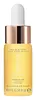
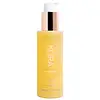
This hydrating oil is formulated around Rosa Canina Fruit Oil and Simmondsia Chinensis Seed Oil to hydrate skin and strengthen the skin barrier.

What's inside
What's inside
 Key Ingredients
Benefits
Concerns
Ingredients Side-by-side
Rosa Canina Fruit Oil
Emollient





Simmondsia Chinensis Seed Oil
Emollient
Helianthus Annuus Seed Oil
Emollient
Tocopherol
Antioxidant





Caprylic/Capric Triglyceride
Masking
Morinda Citrifolia Fruit Extract
Skin Conditioning
Vitis Vinifera Fruit Extract
Skin ConditioningLavandula Angustifolia Flower/Leaf/Stem Extract
Masking

Jasminum Officinale Flower/Leaf Extract
Masking
Eugenia Caryophyllus Flower Extract
AstringentRosa Damascena Flower Oil
Masking

Punica Granatum Seed Oil
Emollient
Hippophae Rhamnoides Seed Oil
Skin Protecting
Geraniol
Perfuming
Citronellol
Perfuming
Farnesol
Perfuming
Citral
Perfuming
Rosa Canina Fruit Oil, Simmondsia Chinensis Seed Oil, Helianthus Annuus Seed Oil, Tocopherol, Caprylic/Capric Triglyceride, Morinda Citrifolia Fruit Extract, Vitis Vinifera Fruit Extract, Lavandula Angustifolia Flower/Leaf/Stem Extract, Jasminum Officinale Flower/Leaf Extract, Eugenia Caryophyllus Flower Extract, Rosa Damascena Flower Oil, Punica Granatum Seed Oil, Hippophae Rhamnoides Seed Oil, Geraniol, Citronellol, Farnesol, Citral
Rosa Canina Seed Oil
Emollient
Dicaprylyl Carbonate
EmollientHelianthus Annuus Seed Oil
Emollient
Tocopherol
Antioxidant
Hippophae Rhamnoides Seed Oil
Skin Protecting


Rosa Canina Seed Oil, Dicaprylyl Carbonate, Helianthus Annuus Seed Oil, Tocopherol, Hippophae Rhamnoides Seed Oil, Pelargonium Graveolens Flower Oil, Morinda Citrifolia Fruit Extract, Glycine Soja Oil, Rosa Damascena Flower Oil, Punica Granatum Seed Oil, Citronellol, Geraniol, Linalool, Citral, Limonene
Reviews
Ingredients Explained
These ingredients are found in both products.
Ingredients higher up in an ingredient list are typically present in a larger amount.
Citral is the molecule responsible for the fresh lemon scent in lemon, lime, and lemongrass. It is a fragrance ingredient that can be created from plant essential oils or synthetically.
Though Citral has documented antimicrobial activity against acne bacteria (which is where the marketing claims about it being good for acne-prone skin originate), real formulas use it at fragrance-level concentrations under 1% so there's likely no skin benefit.
You should know this ingredient is a known EU fragrance allergen.
Animal studies classifies this ingredient as a weak-to-moderate skin sensitizer and clinical patch testing on eczema patients confirmed it to be both a contact allergen and irritant.
The term 'citral' is a collective term for two geometric isomers: geranial/Citral A and neral/Citral B.
The term 'fragrance' is not regulated in many countries. In many cases, it is up to the brand to define this term. For instance, many brands choose to label themselves as "fragrance-free" because they are not using synthetic fragrances. However, their products may still contain ingredients such as essential oils that are considered a fragrance.
Learn more about CitralCitronellol is used to add fragrance/parfum to a product. It is often derived from plants such as roses. In fact, it can be found in many essential oils including geranium, lavender, neroli, and more. The scent of Citronellol is often described as "fresh, grassy, and citrus-like".
Since the Citronellol molecule is already unstable, Citronellol becomes irritating on the skin when exposed to air.
Citronellol is a modified terpene. Terpenes are unsaturated hydrocarbons found in plants. They make up the primary part of essential oils.
Citronellol is not able to be absorbed into deeper layers of the skin. It has low permeability,
Citronellol is also a natural insect repellent.
Learn more about CitronellolGeraniol is used to add fragrance/parfum to a product. It is the main component of citronellol. It is a monoterpenoid and an alcohol.
Monoterpenes are naturally found in many parts of different plants.
Geraniol can be found in many essential oils including Rose Oil and Citronella Oil. The scent of Geraniol is often described as "rose-like". Many foods also contain Geraniol for fruit flavoring.
Geraniol can irritate the skin when exposed to air. However, irritation depends on the ability of geraniol to penetrate into the skin. In general, geraniol is not able to penetrate skin easily.
Geraniol is colorless and has low water-solubility. However, it is soluble in common organic solvents.
Like citronellol, it is a natural insect repellent.
2,6-Octadien-1-ol, 3,7-dimethyl-, (2E)-
Learn more about GeraniolHelianthus Annuus Seed Oil is a plant oil derived from the seeds of a sunflower.
It is rich in fatty acids, primarily linoleic acid and oleic acid. This gives it emollient and skin conditioning properties.
The reason this ingredient is so effective is because it forms a thin film on the skin that reduces transepidermal water loss (TEWL) while supplying linoleic acid to the stratum corneum to improve barrier strength.
The high linoleic acid content is particularly noteworthy for acne-prone skin.
Research suggests that acne-prone skin tends to be deficient in linoleic acid in sebum. Topical application may help replenish this to support a healthier follicular environment and less comedone-promoting sebum.
One randomized study found sunflower seed oil preserved skin barrier integrity in adult volunteers with and without atopic dermatitis (outperforming olive oil).
This ingredient is well-studied, gentle, and an effective emollient suitable for most skin types.
On fungal acne: This ingredient may not be Fungal acne (Malassezia folliculitis) safe. This is because it contains fatty acids with carbon chain lengths in the C11-C24 range.
Learn more about Helianthus Annuus Seed OilHippophae Rhamnoides Seed Oil comes from the seeds of the seabuckthorn plant.
Seabuckthorn is rich in phytosterols, carotenoids, Vitamins A, C, and E. This gives it strong antioxidant properties that can help soothe and protect your skin from oxidative damage.
The seeds of seabuckthorn are rich in fatty acids. These include linoleic acid (~30-34%), oleic acid (17%), and palmiteic acid (35%).
Palmitoleic acid has been shown to help soothe inflammation and promote wound healing. It is also naturally found in the fat of our skin.
Learn more about Hippophae Rhamnoides Seed OilMorinda Citrifolia Fruit Extract is also known as yaeyama aoki, noni, or the great morinda. This fruit is packed with bioactive compounds that give it skin conditioning and antioxidant properties.
Research on this ingredient has shown some interesting results: a clinical trial on 49 women (ages 38-55) found the daily use of noni-based skincare improved skin firmness and elasticity by up to ~42.4% over six weeks.
Lab studies have also demonstrated that some of the compounds can inhibit tyrosinase ans elastase, enzymes involved in pigmentation and the breaking down of skin's elastic fibers.
Fun fact: This ingredient has been used in Polynesian folk medicine for over 2,000 years.
Learn more about Morinda Citrifolia Fruit ExtractPunica Granatum Seed Oil is created from the seeds of the pomegranate. Pomegranate seed oil helps hydrate the skin, is anti-inflammatory, and contains antioxidants.
Pomegranates are rich in fatty acids, including an unsaturated fatty acid by the name of Punicic acid. Other components of pomegranates include Vitamin E, Vitamin C, and bioactive lipids such as phytosterols, phospholipids, and triterpenes. Punicic acid helps soothe inflammation.
As an emollient, pomegranate oil creates a thin film on the skin. This film helps prevent moisture loss, keeping your skin hydrated.
Learn more about Punica Granatum Seed OilRosa Damascena Flower Oil is an essential oil made from the Damask Rose. It is often used as a fragrance in cosmetics.
Rose Oil has antibacterial and antioxidant properties due to its terpene, glycoside, flavonoid, anthocyanin, and Vitamin C content.
Other major parts of Rose Oil include citronellol and geraniol. Both of these are known EU allergens and cause contact-allergies.
The downsides of this ingredient outweight the positives.
Learn more about Rosa Damascena Flower OilTocopherol is a fat-soluble antioxidant known as Vitamin E.
You'll find this ingredient in the vast majority of skincare (for good reason). It works to neutralize free radicals, or unstable molecules generated by UV exposure, pollution, and other environmental stressors, before they can cause oxidative damage to your skin cells.
Topically applied tocopherol has been shown to protect against UV damage by ramping up the skin's own natural defense enzymes.
It also acts as a skin conditioning agent; some studies show that regular topical use can improve the skin's water-binding capacity over 2-4 weeks.
This ingredient is especially loved for being a team player. When combined with Vitamin C, the photoprotective effect of both ingredients roughly doubles and the combo also helps reduce UV-induced DNA damage.
This ingredient has some brightening potential but it's more of a prevention ingredient than spot-fader. Cell studies show it can slow down melanin production but it's worth noting that it's not the most powerful brightener out there.
In formulations, it also serves as a stabilizer that helps protect other oxidation-prone ingredients from degrading.
Concentrations usually range from 0.1-1% in most leave-on products.
Learn more about Tocopherol

