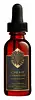
This calming oil is formulated around Vitis Vinifera Seed Oil and Anthemis Nobilis Flower Oil to calm redness and hydrate skin.


What's inside
What's inside
 Benefits
No benefits
Concerns
Ingredients Side-by-side
Vitis Vinifera Seed Oil
Emollient




Rosa Moschata Seed Oil
Emollient
Cananga Odorata Flower Oil
Masking




Rosa Damascena Flower Oil
Masking
Anthemis Nobilis Flower Oil
Masking
Helianthus Annuus Seed Oil
Emollient
Rosmarinus Officinalis Leaf Extract
AntimicrobialChamomilla Recutita Flower Extract
Masking
Limonene
Perfuming
Linalool
Perfuming
Geraniol
Perfuming
Eugenol
Perfuming
Citral
Perfuming
Benzyl Benzoate
Antimicrobial
Citronellol
Perfuming
Farnesol
Perfuming
Benzyl Alcohol
Perfuming

Benzyl Salicylate
Perfuming
Isoeugenol
Perfuming
Vitis Vinifera Seed Oil, Rosa Moschata Seed Oil, Cananga Odorata Flower Oil, Rosa Damascena Flower Oil, Anthemis Nobilis Flower Oil, Helianthus Annuus Seed Oil, Rosmarinus Officinalis Leaf Extract, Chamomilla Recutita Flower Extract, Limonene, Linalool, Geraniol, Eugenol, Citral, Benzyl Benzoate, Citronellol, Farnesol, Benzyl Alcohol, Benzyl Salicylate, Isoeugenol
Astrocaryum Murumuru Seed Butter
Emollient
Maranta Arundinacea Root Powder
Skin ConditioningCymbopogon Citratus Leaf
MaskingSynthetic Japan Wax
Emollient
Copernicia Cerifera Wax
Theobroma Grandiflorum Seed Butter
Skin Conditioning
Aniba Rosaeodora Wood Oil
Astringent
Carapa Guaianensis Oil PEG-8 Esters
Emollient
Dipteryx Odorata Seed Extract
MaskingCitrus Aurantium Sinensis Fiber
Emulsion StabilisingWater
Skin ConditioningGardenia Jasminoides Meristem Cell Culture Extract
Skin ConditioningBenzyl Benzoate
Antimicrobial
Citral
Perfuming
Coumarin
Perfuming
Geraniol
Perfuming
Limonene
Perfuming
Linalool
Perfuming
Parfum
Masking
Copper Chlorophyll
Cosmetic ColorantAstrocaryum Murumuru Seed Butter, Maranta Arundinacea Root Powder, Cymbopogon Citratus Leaf, Synthetic Japan Wax, Copernicia Cerifera Wax, Theobroma Grandiflorum Seed Butter, Aniba Rosaeodora Wood Oil, Carapa Guaianensis Oil PEG-8 Esters, Dipteryx Odorata Seed Extract, Citrus Aurantium Sinensis Fiber, Water, Gardenia Jasminoides Meristem Cell Culture Extract, Benzyl Benzoate, Citral, Coumarin, Geraniol, Limonene, Linalool, Parfum, Copper Chlorophyll
Ingredients Explained
These ingredients are found in both products.
Ingredients higher up in an ingredient list are typically present in a larger amount.
Benzyl Benzoate is usually created from the condensation of benzoic acid and benzyl alcohol. It is used as a preservative, solvent, and has a floral/balsamic scent in large amounts.
As a preservative, Benzyl Benzoate works against bacteria and fungus. It is often used to treat scabies and lice in medicine.
Solvents are used to keep ingredients together in a product. They can help dissolve ingredients to stable bases or help evenly distribute ingredients throughout the product.
Due to its fragrance, Benzyl Benzoate can be sensitizing and may cause contact dermatitis. It is a known EU allergen. We recommend speaking with a professional if you have any concerns.
Benzyl Benzoate can be naturally found in cranberries and peaches.
Learn more about Benzyl BenzoateCitral is the molecule responsible for the fresh lemon scent in lemon, lime, and lemongrass. It is a fragrance ingredient that can be created from plant essential oils or synthetically.
Though Citral has documented antimicrobial activity against acne bacteria (which is where the marketing claims about it being good for acne-prone skin originate), real formulas use it at fragrance-level concentrations under 1% so there's likely no skin benefit.
You should know this ingredient is a known EU fragrance allergen.
Animal studies classifies this ingredient as a weak-to-moderate skin sensitizer and clinical patch testing on eczema patients confirmed it to be both a contact allergen and irritant.
The term 'citral' is a collective term for two geometric isomers: geranial/Citral A and neral/Citral B.
The term 'fragrance' is not regulated in many countries. In many cases, it is up to the brand to define this term. For instance, many brands choose to label themselves as "fragrance-free" because they are not using synthetic fragrances. However, their products may still contain ingredients such as essential oils that are considered a fragrance.
Learn more about CitralGeraniol is used to add fragrance/parfum to a product. It is the main component of citronellol. It is a monoterpenoid and an alcohol.
Monoterpenes are naturally found in many parts of different plants.
Geraniol can be found in many essential oils including Rose Oil and Citronella Oil. The scent of Geraniol is often described as "rose-like". Many foods also contain Geraniol for fruit flavoring.
Geraniol can irritate the skin when exposed to air. However, irritation depends on the ability of geraniol to penetrate into the skin. In general, geraniol is not able to penetrate skin easily.
Geraniol is colorless and has low water-solubility. However, it is soluble in common organic solvents.
Like citronellol, it is a natural insect repellent.
2,6-Octadien-1-ol, 3,7-dimethyl-, (2E)-
Learn more about GeraniolLimonene is the compound that gives citrus peel its smell.
In skincare, it shows up as a standalone fragrance ingredient or as a natural compound of citrus and other essential oils.
You'll typically see this ingredient used in very small amounts; anything above 0.001% in a leave-on product or 0.01% in a rinse-off has to be named on the label in the EU. The citrus oils that carry it sit around 0.5-1% in a finished formula.
Fresh limonene is a weak allergen; the real issue is that it slowly reacts with air and then breaks down from oxidation to create hydroperoxides (which are strong sensitizers). This is why suppliers are required to keep the peroxide value below 20 mmol.
Positive reactions in people being investigated for eczema vary:
It's worth skipping if you have a known fragrance allergy or a compromised barrier, but the risk is low for most people.
Older or long-opened products are also more likely to bother you than fresh ones due to oxidation.
Learn more about LimoneneLinalool is a small, naturally occurring scent molecule found in plants like lavender, coriander, bergamot, and more.
It is one of the two most-used fragrance ingredients in cosmetics and added purely for smell. Since it's not used for a skin benefit, there's no "effective dose". Concentration depends on the fragrance load of the product.
The EU requires it to be named on the label above 0.001% in leave-on and 0.01% in rinse-off products.
Fresh linalool is a weak sensitizer but air exposure turns some of it into hydroperoxides, which are strong sensitizers. Those oxidation products are the actual allergy concern.
Patch-test clinics see positive reactions to linalool hydroperoxides in about 4% to 12% of dermatitis patients depending on country and test concentration.
Resassuringly, one analytical study found hydroperoxide levels in real fragranced products to be orders of magnitude below what induced sensitization in animal studies with no evidence of oxidation building up during normal storage.
The practical takeaway is that linalool is fine for most people but worth avoiding if you have a confirmed fragrance contact allergy or a badly compromised barrier.
Products stored a long time after opening are also the high-risk scenario since that is when oxidation happens.
The scent of linalool is described as floral, spicy tropical, and citrus-like.
Learn more about Linalool

