This brightening treatment is formulated around Hydrocolloid to fade the look of dark spots.
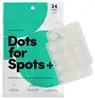
This blemish patch uses Hydrocolloid to cover open blemishes and absorb the fluid they release.


What's inside
What's inside
 Key Ingredients

Benefits
Concerns
No concerns
Ingredients Side-by-side
Hydrogenated Poly(C6-20 Olefin)
Abrasive
Cellulose Gum
Emulsion StabilisingHydrogenated Styrene/Butadiene Copolymer
Paraffinum Liquidum
Emollient


Water
Skin ConditioningCeramide NP
Skin Conditioning





Ceramide AP
Skin Conditioning
Ceramide EOP
Skin Conditioning
Carbomer
Emulsion StabilisingNiacinamide
Smoothing







Sodium Lauroyl Lactylate
EmulsifyingCholesterol
Emollient
Phenoxyethanol
Preservative
Pentaerythrityl Tetra-Di-T-Butyl Hydroxyhydrocinnamate
Antioxidant
Phytosphingosine
Skin Conditioning
Xanthan Gum
EmulsifyingEthylhexylglycerin
Skin ConditioningHydrogenated Poly(C6-20 Olefin), Cellulose Gum, Hydrogenated Styrene/Butadiene Copolymer, Paraffinum Liquidum, Water, Ceramide NP, Ceramide AP, Ceramide EOP, Carbomer, Niacinamide, Sodium Lauroyl Lactylate, Cholesterol, Phenoxyethanol, Pentaerythrityl Tetra-Di-T-Butyl Hydroxyhydrocinnamate, Phytosphingosine, Xanthan Gum, Ethylhexylglycerin
Reviews
Ingredients Explained
These ingredients are found in both products.
Ingredients higher up in an ingredient list are typically present in a larger amount.
Cellulose Gum is a water-soluble polymer that comes from cellulose. It is used to change the texture of a product and to help stabilize emulsions.
As an emulsifier, cellulose gum specifically thicken the texture of water-based products.
This ingredient is considered hypoallergenic and non-toxic. Cellulose Gum can be found in cosmetics, food, and other household goods such as paper products.
Learn more about Cellulose GumHydrogenated Poly(C6-20 Olefin) is an exfoliant.


