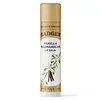
This calming lip moisturizer is formulated around Olea Europaea Fruit Oil and Ricinus Communis Seed Oil to calm redness and hydrate lips.
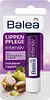
This barrier-repair lip moisturizer is formulated around Butyrospermum Parkii Butter and Argania Spinosa Kernel Oil to strengthen the lip barrier and hydrate lips.


What's inside
What's inside
 Benefits
Concerns
Ingredients Side-by-side

Ethylhexyl Stearate
Emollient




Ricinus Communis Seed Oil
Masking


Synthetic Beeswax
Emulsion Stabilising
Hydrogenated Palm Oil
Emollient
Cera Alba
Emollient
Candelilla Cera
Emollient
Butyrospermum Parkii Butter
Skin Conditioning
Argania Spinosa Kernel Oil
Emollient


Hippophae Rhamnoides Fruit Extract
Skin Conditioning
Aroma

Helianthus Annuus Seed Oil
Emollient
Caprylic/Capric Triglyceride
Masking
Linalool
Perfuming

Limonene
Perfuming
Rosmarinus Officinalis Leaf Extract
AntimicrobialCI 40800
Cosmetic ColorantEthylhexyl Stearate, Ricinus Communis Seed Oil, Synthetic Beeswax, Hydrogenated Palm Oil, Cera Alba, Candelilla Cera, Butyrospermum Parkii Butter, Argania Spinosa Kernel Oil, Hippophae Rhamnoides Fruit Extract, Aroma, Helianthus Annuus Seed Oil, Caprylic/Capric Triglyceride, Linalool, Limonene, Rosmarinus Officinalis Leaf Extract, CI 40800
Ingredients Explained
These ingredients are found in both products.
Ingredients higher up in an ingredient list are typically present in a larger amount.
Hippophae Rhamnoides Fruit Extract comes from the seabuckthorn berry. This berry is native to Asia and has been used in traditional medicine for centuries.
The seabuckthorn fruit contains carotenoids, palmitic acid, palmitoleic acid, Vitamin C, linoleic acid, and vitamin E.
The nutritious content of seabuckthorn fruit helps hydrate and nourish the skin. A study from 2018 found seabuckthorn may help with alleviating UV damage due to its anti-inflammatory property. However, it should not replace your sunscreen.
Due to its antioxidant properties, seabuckthorn fruit may help reduce the signs of aging. Antioxidants help fight unstable free-radical molecules, or molecules that may damage your skin cells.
Learn more about Hippophae Rhamnoides Fruit ExtractThis ingredient is also known as castor oil. It is a skin conditioning ingredient.
The star component of castor oil is ricinoleic acid, an unusual fatty acid that makes up ~80-92% of its composition.
In skincare, it is an emollient that dries down to a solid film with water-binding properties. This helps keep skin hydrated and helps reduce transepidermal water loss (TEWL).
A 2026 dermatology review pulls together its broader uses:
Human clinical testing found this ingredient to be non-irritating and non-sensitizing.
Because castor oil contains fatty acids in the C11-24 range, this ingredient may not be fungal acne safe.
At this time, the literature does not support castor oil in regrowing hair. A 2022 systematic review found no strong evidence that it supports hair growth and only weak evidence that it improves hair shine.
Castor oil itself carries "perfuming" and "masking" function tags according to the official CosIng database. This is because of its mild odor and odor-dampening properties.
Learn more about Ricinus Communis Seed OilThis is a botanical extract from the rosemary plant (the same one you cook with). In skincare, it mostly works as a skin conditioning agent.
Its activity comes from a handful of polyphenols, carnosic acid, carnosol, and rosmarinic acid. Almost 90% of the antioxidant activity of this ingredient can be attributed to canosol and carnosic acid.
These compounds protect your skin two ways:
1) They fight off free radicals, or the unstable molecules from things like sun and pollution that age and damage skin.
2) They help calm inflammation by switching off the chemical signals that tell skin to get red and irritated.
Lab studies also suggest that rosmarinic acid may help protect collagen and slow sugar-related damage to it.
The Cosmetic Ingredient Review has concluded rosemary-derived ingredients to be safe when formulated to be non-sensitizing.
Rosemary can occasionally cause allergic contact dermatitis (due to carnosol), so be sure to patch test if you have reactive or fragrance-sensitive skin.
Learn more about Rosmarinus Officinalis Leaf Extract

