Tvåla & Tvaga Underbar
A body wash with 13 ingredients.
Body wash with 13 ingredients
We independently verify ingredients, backed by peer-reviewed research. Suggest an update.
What's inside














Benefits
Concerns
Ingredients Explained
Sodium Cocoa Butterate isn't fungal acne safe.
Sodium cocoate is a salt created by saponifying coconut oil. It has cleansing and emulsifying properties.
As a cleansing agent, this ingredient helps reduce the surface tension of dirt, sebum, and other residue in skin and hair. This makes them easier to be rinsed away with water.
Water. It's the most common cosmetic ingredient of all. You'll usually see it at the top of ingredient lists, meaning that it makes up the largest part of the product.
So why is it so popular? Water most often acts as a solvent - this means that it helps dissolve other ingredients into the formulation.
You'll also recognize water as that liquid we all need to stay alive. If you see this, drink a glass of water. Remember to stay hydrated!
Learn more about WaterButyrospermum Parkii Butter Unsaponifiables comes from shea butter.
Unsaponifiables means the butter is not saponified, or it has not been turned into soap using an alkali reaction.
This ingredient contains Vitamin E, sterols, and many antioxidants. These compounds help hydate your skin.
Learn more about Butyrospermum Parkii Butter UnsaponifiablesBrassica Napus Seed Oil is a non-fragrant oil from the same plant that gives us canola oil. It is an emollient that helps slow water loss in skin.
Cosmetic-grade rapeseed oil is mostly oleic acid (~60%), with some palmitic, stearic, and linoleic acid.
Linoleic acid is an essential fatty acid that supports the skin barrier and cells while oleic acid helps soften the skin.
Other parts of this oil include tocopherols, phytosterols, carotenoids, and ferulic acid, giving it antioxidant properties.
Overall, this is a well-regarded cosmetic ingredient and allergic reactions to it are rare (most protein allergens are removed in the refining process). It's still worth patch testing as the source of this ingredient vary by brand.
Because this ingredient is rich in oleic acid, it may not be fungal acne safe.
Learn more about Brassica Napus Seed OilSodium Castorate s created when castor oil is saponified.
Persea Gratissima Oil Unsaponifiables comes from avocado oil.
Unsaponifiables refers to the unsaponifiable fraction of a fatty substance. These are extracted using a process called alkaline hydrolysis (saponification).
Avocado Oil is mostly made up of the glycerides of fatty acids. About 67% of these fatty acids is made up of oleic acid.
Learn more about Persea Gratissima Oil UnsaponifiablesGlycerin (or glycerol) is a compound naturally found in your skin. It's a powerhouse humectant that pulls water into the stratum corneum.
Topically, glycerin does several things at once:
Your skin makes glycerin on its own (mostly from sebaceous oil breakdown) and shuttles it to your outermost layer of skin, or your epidermis, via aquaporin-3.
Aquaporin-3 is a transporter that is essential for normal skin hydration, elasticity, and repair. Interestingly, mice lacking in AQP3 have dry and less elastic skin that can be fully corrected with glycerin.
This ingredient is non-irritating, plays well with almost every ingredient, and works across all skin types. Typical use is anywhere between 3-10% but can go up to 79% in some leave-on products.
Just know very high concentrations (>40%) can feel tacky in low humidity.
Glycerin is the name for this ingredient in American English. British English uses Glycerol/Glycerine.
Learn more about GlycerinThis ingredient is also known as sweet almond oil. It is a lightweight, cold-pressed oil from the ripe seeds of the sweet almond tree.
Sweet almond oil is rich in skin-nourishing fatty acids such as oleic acid (55-86%) and linolenic acid (7-35%).
As an emollient, it softens and hydrates skin by forming a thin barrier that locks in moisture.
Clinical studies have found it to be non-irritating and non-sensitizing. The CIR Expert Panel has evaluated the available safety data and concluded it is safe for topical use.
Because of the oleic acid content, this ingredient may not be fungal acne safe.
This ingredient does have a comedogenic rating of 3, but this doesn't mean a formula with this ingredient will clog pores.
Human testing has proved that any finished product with a comedogenic ingredient won't automatically make you break out; it really comes down to concentration, formula, and your skin.
Learn more about Prunus Amygdalus Dulcis OilParfum is a catch-all term for an ingredient or more that is used to give a scent to products.
Also called "fragrance", this ingredient can be a blend of hundreds of chemicals or plant oils. This means every product with "fragrance" or "parfum" in the ingredients list is a different mixture.
For instance, Habanolide is a proprietary trade name for a specific aroma chemical. When used as a fragrance ingredient in cosmetics, most aroma chemicals fall under the broad labeling category of “FRAGRANCE” or “PARFUM” according to EU and US regulations.
The term 'parfum' or 'fragrance' is not regulated in many countries. In many cases, it is up to the brand to define this term.
For instance, many brands choose to label themselves as "fragrance-free" because they are not using synthetic fragrances. However, their products may still contain ingredients such as essential oils that are considered a fragrance by INCI standards.
One example is Calendula flower extract. Calendula is an essential oil that still imparts a scent or 'fragrance'.
Depending on the blend, the ingredients in the mixture can cause allergies and sensitivities on the skin. Some ingredients that are known EU allergens include linalool and citronellol.
Parfum can also be used to mask or cover an unpleasant scent.
The bottom line is: not all fragrances/parfum/ingredients are created equally. If you are worried about fragrances, we recommend taking a closer look at an ingredient. And of course, we always recommend speaking with a professional.
Learn more about ParfumBenzyl Benzoate is usually created from the condensation of benzoic acid and benzyl alcohol. It is used as a preservative, solvent, and has a floral/balsamic scent in large amounts.
As a preservative, Benzyl Benzoate works against bacteria and fungus. It is often used to treat scabies and lice in medicine.
Solvents are used to keep ingredients together in a product. They can help dissolve ingredients to stable bases or help evenly distribute ingredients throughout the product.
Due to its fragrance, Benzyl Benzoate can be sensitizing and may cause contact dermatitis. It is a known EU allergen. We recommend speaking with a professional if you have any concerns.
Benzyl Benzoate can be naturally found in cranberries and peaches.
Learn more about Benzyl BenzoateCoumarins are a group of substances found naturally in plants. There are over 1300 types of coumarins identified. It has a natural vanilla scent.
Coumarin is an identified EU known allergy, meaning it may cause an allergic reaction when applied to the skin.
In many countries, coumarin is banned as a food additive. However, it can be found in soaps, tobacco products, and some alcohol drinks.
Plants use coumarins as a chemical defense. Some plants that have coumarins include lavender, tonka beans, and yellow clovers.
Learn more about CoumarinCinnamyl Cinnamate is a fragrance.
Reviews
No written reviews yet. Be the first to review this product.
Recent searches
Search reviews by skin type, ingredient, or keyword.
Where it's from
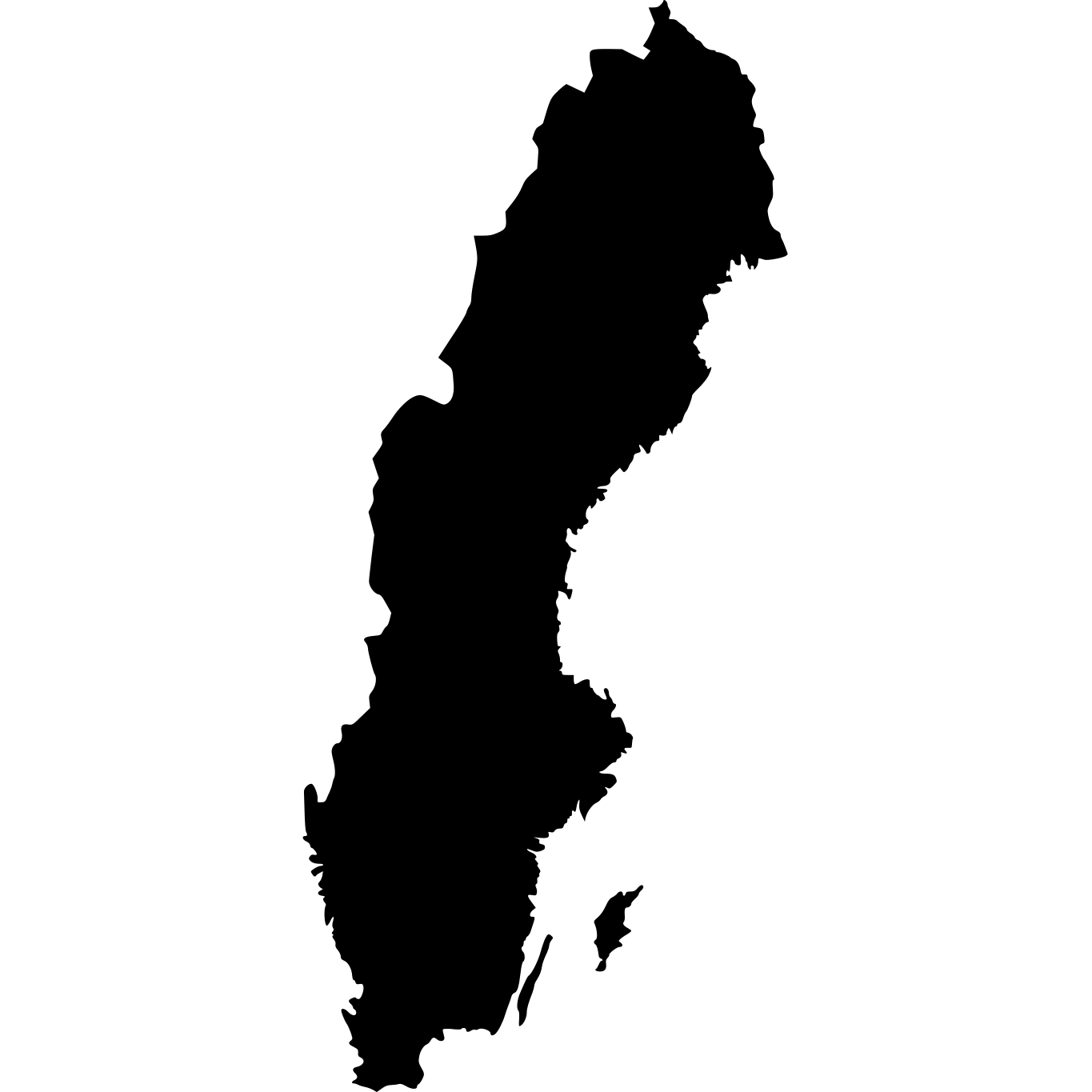
Tvåla & Tvaga is a Swedish brand

We're dedicated to providing you with the most up-to-date and science-backed ingredient info out there.
The data we've presented on this page has been verified by a member of the SkinSort Team.
Read more about us· Updated January 25, 2024 • Added by starstellastar_407


