Hylamide Pore Flush
A facial treatment with 14 ingredients.
This pore-care treatment is formulated around Pseudoalteromonas Ferment Extract and Sodium Salicylate to refine the look of pores and calm redness.
We independently verify ingredients, backed by peer-reviewed research. Suggest an update.
What's inside












Benefits
Concerns
Ingredients Explained
Water. It's the most common cosmetic ingredient of all. You'll usually see it at the top of ingredient lists, meaning that it makes up the largest part of the product.
So why is it so popular? Water most often acts as a solvent - this means that it helps dissolve other ingredients into the formulation.
You'll also recognize water as that liquid we all need to stay alive. If you see this, drink a glass of water. Remember to stay hydrated!
Learn more about WaterHamamelis Virginiana Leaf Water comes from the witch hazel plant. The witch hazel plant is native to eastern North America.
Witch Hazel is an astringent, anti-inflammatory, antioxidant, and antibacterial ingredient. The tannin in witch hazel has a drying effect when used on skin and constricts proteins. This helps minimize the look of large pores temporarily.
The tannins and the fragrance components may be skin sensitizing.
Learn more about Hamamelis Virginiana Leaf WaterPseudoalteromonas Ferment Extract is derived from marine bacteria found in Antarctic ocean. It has humectant and skin soothing properties.
You’ll most often find this ingredient listed under the trade names Antarcticine or Arctalis.
According to a manufacturer, these ingredients encourage skin regeneration and smoothness by stimulating collagen and elastin production. A manufacturer study found creams containing 1–5% Antarcticine increased skin hydration and reduced wrinkle depth around the eyes.
The manufacturer also claims this extract can help regulate oily skin by reducing sebum production, shine, and minimizing pore size.
Some people have reported that ferments may trigger Malassezia folliculitis. For this reason, we list it as not fungal-acne safe, though individual reactions can vary.
Learn more about Pseudoalteromonas Ferment ExtractButylene Glycol (or BG) is used within cosmetic products for a few different reasons:
Overall, Butylene Glycol is a safe and well-rounded ingredient that works well with other ingredients.
Though this ingredient works well with most skin types, some people with sensitive skin may experience a reaction such as allergic rashes, closed comedones, or itchiness.
Learn more about Butylene GlycolThis ingredient is also known as meadowsweet extract.
Barosma Betulina Leaf Extract is a fragrance.
Citric Acid is an alpha hydroxy acid (AHA) naturally found in citrus fruits like oranges, lemons, and limes.
Like other AHAs, citric acid can exfoliate skin by breaking down the bonds that hold dead skin cells together. This helps reveal smoother and brighter skin underneath.
However, this exfoliating effect only happens at high concentrations (20%) which can be hard to find in cosmetic products.
Due to this, citric acid is usually included in small amounts as a pH adjuster. This helps keep products slightly more acidic and compatible with skin's natural pH.
In skincare formulas, citric acid can:
While it can provide some skin benefits, research shows lactic acid and glycolic acid are generally more effective and less irritating exfoliants.
Most citric acid used in skincare today is made by fermenting sugars (usually from molasses). This synthetic version is identical to the natural citrus form but easier to stabilize and use in formulations.
Rosacea skin has a lower threshold for acids generally, with 62.5% of rosacea subjects in one study reacting to lactic acid in a sting test. This is why we mark citric acid as a potential rosacea trigger.
However, this ingredient shows up as a pH adjuster or chelator at roughly 0.1-1% in many products. These low levels are unlikely to be an issue for rosacea skin and becomes a potential trigger at exfoliating concentrations (20%). Because everybody's skin is unique, we recommend a patch test if you are unsure.
Learn more about Citric AcidThis ingredient is the sodium salt of salicylic acid, the famous anti-acne ingredient.
Officially, this ingredient is used as a preservative. However, some studies found Sodium Salicylate to have exfoliating properties. Further studies are needed.
This ingredient is made when the Lactobacillus bacteria (the same kind that makes yogurt and kimchi) are allowed to ferment a nutrient medium.
As it ferments, it collects lactic acid, peptides, enzymes, and other bioactive metabolites to provide:
A 2023 review noted that probiotic fermentation ingredients like this one can enhance antioxidant capacity, reduce UV-induced oxidative damage, and support barrier function.
One clinical study from the same year showed a Lactobacillus ferment lysate significantly reduced transepidermal water loss and improved skin hydration.
Another review highlighted that topical Lactobacillus-based preparations can improve ceramide levels in the stratum corneum, support barrier integrity, and even help reduce S. aureus colonization in atopic dermatitis.
Why is this so cool?
Basically, your skin's outer layer works as a brick wall; skin cells are bricks and ceramides are the mortar holding it together. Moisture escapes, irritants get in, and your skin gets dry and reactive when ceramide levels drop. On top of that, "bad" skin bacteria S. aureus loves to move in when your barrier is weak to make inflammation and irritation worse.
So Lactobacillus ferment is basically patching the wall and evicting the troublemaker when it boosts ceramide production and help keep S. aureus in check.
On top of all this, it also acts as a mild antimicrobial preservative booster.
Just so you know, most studies focus on specific strains or the lysate form rather than this generic "Lactobacillus Ferment", so results can vary.
Though it's a promising ingredient, it doesn't have decades of robust clinical data behind it just yet.
Lactobacillus Ferment is generally considered safe for fungal-acne prone skin. The key thing to understand is that it comes from bacteria, not yeast or fungus.
Yeast-derived ferments (like galactomyces) have been shown to activate a protein that's linked to Malassezia-related skin issues whereas lactobacillus doesn't have that problem.
Its byproducts also don't contain the types of fatty acids (C11-24 chain lengths) that Malassezia feeds on.
Learn more about Lactobacillus FermentPolysorbate 20 is a gentle, water-soluble emulsifier and mild surfactant. It stops oil and water from separating to keep your formulas blended and stable.
It also acts as a mild penetration enhancer by helping active ingredients absorb slightly better.
The common safety discussion around this ingredient involves a manufacturing byproduct called 1,4-dioxane.
Trace amounts can form during production but the EU's Scientific Committee on Consumer Safety has concluded that levels at/below 10 ppm in finished products are safe (commercial products consistently fall within acceptable margins).
True allergic reactions are uncommon and the CIR Expert Panel has confirmed this ingredient to be safe as used in cosmetics.
Because it is derived from lauric acid, it may not be fungal acne safe.
Learn more about Polysorbate 20Potassium Sorbate is a preservative used to prevent yeast and mold in products. It is commonly found in both cosmetic and food products.
This ingredient comes from potassium salt derived from sorbic acid. Sorbic acid is a natural antibiotic and effective against fungus.
Both potassium sorbate and sorbic acid can be found in baked goods, cheeses, dried meats, dried fruit, ice cream, pickles, wine, yogurt, and more.
You'll often find this ingredient used with other preservatives.
Learn more about Potassium SorbateSodium Benzoate is a preservative. It's used in both cosmetic and food products to inhibit the growth of mold and bacteria. It is typically produced synthetically.
Both the US FDA and EU Health Committee have approved the use of sodium benzoate. In the US, levels of 0.1% (of the total product) are allowed.
Sodium benzoate works as a preservative by inhibiting the growth of bacteria inside of cells. It prevents the cell from fermenting a type of sugar using an enzyme called phosphofructokinase.
It is the salt of benzoic acid. Foods containing sodium benzoate include soda, salad dressings, condiments, fruit juices, wines, and snack foods.
Studies for using ascorbic acid and sodium benzoate in cosmetics are lacking, especially in skincare routines with multiple steps.
We always recommend speaking with a professional, such as a dermatologist, if you have any concerns.
Learn more about Sodium Benzoate1,2-Hexanediol is a synthetic liquid and another multi-functional powerhouse.
It is a:
- Humectant, drawing moisture into the skin
- Emollient, helping to soften skin
- Solvent, dispersing and stabilizing formulas
- Preservative booster, enhancing the antimicrobial activity of other preservatives
Caprylyl Glycol is a humectant, skin conditioner, emollient, and preservative booster derived from either caprylic acid or synthetically created.
Typical use levels vary from 0.3-1% as a preservative booster and go up to 2% to condition skin.
Because it is not a free-fatty acid, this ingredient is fungal acne safe (there's nothing for Malassezia to feed on).
Learn more about Caprylyl GlycolReviews
No written reviews yet. Be the first to review this product.
Recent searches
Search reviews by skin type, ingredient, or keyword.
Where it's from
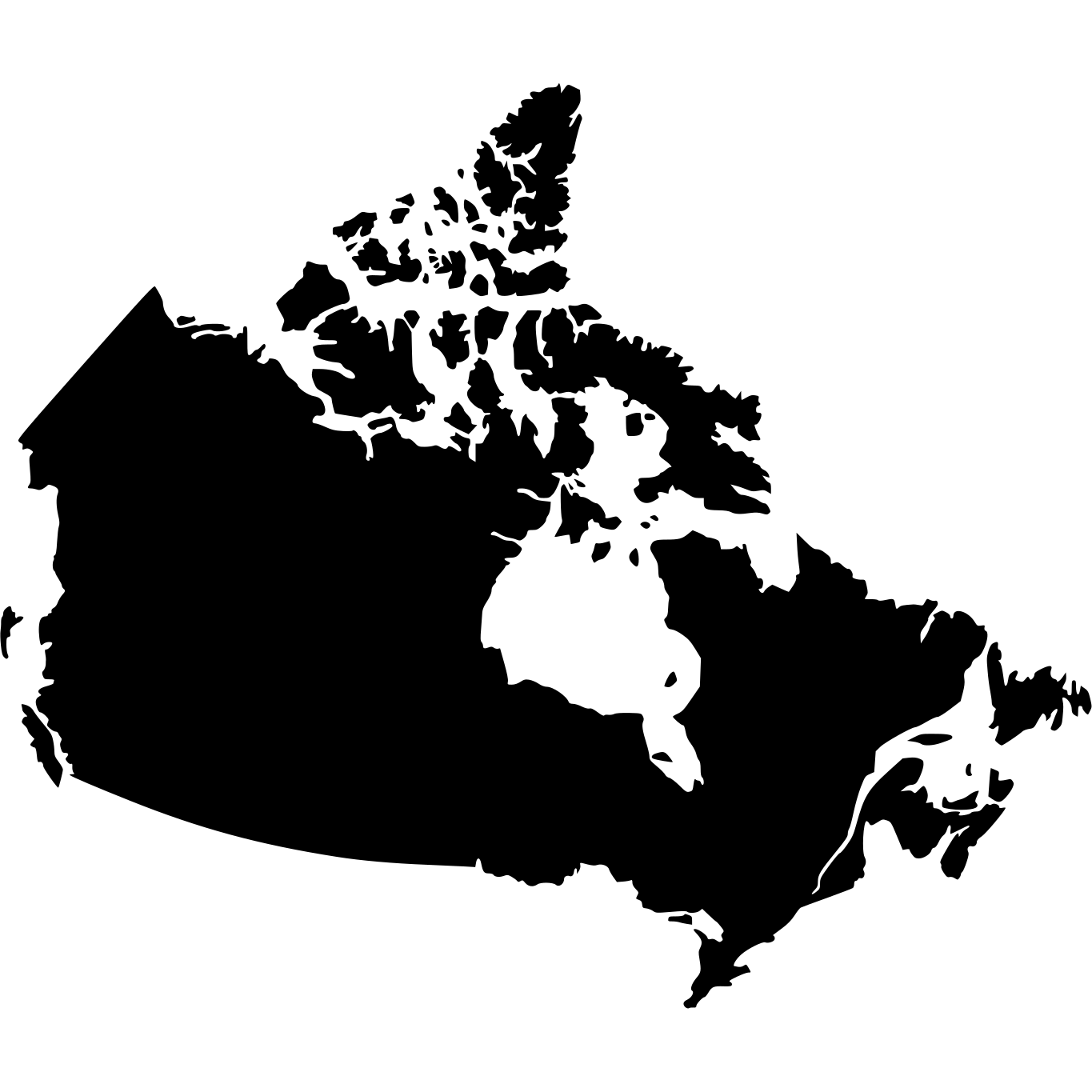
Hylamide is a Canadian brand
Often compared with

We're dedicated to providing you with the most up-to-date and science-backed ingredient info out there.
The data we've presented on this page has been verified by a member of the SkinSort Team.
Read more about us· Updated October 28, 2025 • Added by KaitlinMS


