
What's inside
What's inside
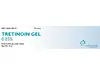 Key Ingredients
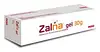
Benefits
Concerns
Ingredients Side-by-side
Tretinoin 0.05%
Skin Conditioning









Benzyl Alcohol
Perfuming





Butylparaben
Masking

BHT
Antioxidant
Carbomer
Emulsion StabilisingEthylparaben
Preservative
Hydrolyzed Collagen
Emollient
Glycerin
Humectant
Isobutylparaben
Antimicrobial
Methylparaben
Preservative
Octoxynol-9
EmulsifyingPhenoxyethanol
Preservative
Propylparaben
Preservative
Water
Skin ConditioningSodium Hyaluronate
Humectant

Triethanolamine
Buffering



Ingredients Explained
These ingredients are found in both products.
Ingredients higher up in an ingredient list are typically present in a larger amount.
BHT is a synthetic antioxidant and preservative.
As an antioxidant, it helps your body fight off free-radicals. Free-radicals are molecules that may damage your skin cells.
As a preservative, it is used to stabilize products and prevent them from degrading. Specifically, BHT prevents degradation from oxidation.
The concerns related to BHT come from oral studies; this ingredient is currently allowed for use by both the FDA and EU.
However, it was recently restricted for use in the UK as of April 2024.
Learn more about BHTCarbomer is a synthetic thickening and gelling agent. It's basically the ingredient that gives a lot of serums, gels, creams, and sunscreens their smooth, non-sticky texture.
Although legally permitted at very high levels, carbomers are normally used at concentrations below 1%.
It also needs to be neutralized to actually thicken, and because it is a large molecule, it doesn't really penetrate the skin barrier.
Allergy-wise, the risk is very low. Clinical studies show carbomers have low potential for skin irritation/sensitization even at concentrations up to 100%.
A 2024 UK study patch-tested 1,302 patients and found true allergy to the parent group of carbomer to be rare with no confirmed relevant reactions.
Learn more about CarbomerGlycerin (or glycerol) is a compound naturally found in your skin. It's a powerhouse humectant that pulls water into the stratum corneum.
Topically, glycerin does several things at once:
Your skin makes glycerin on its own (mostly from sebaceous oil breakdown) and shuttles it to your outermost layer of skin, or your epidermis, via aquaporin-3.
Aquaporin-3 is a transporter that is essential for normal skin hydration, elasticity, and repair. Interestingly, mice lacking in AQP3 have dry and less elastic skin that can be fully corrected with glycerin.
This ingredient is non-irritating, plays well with almost every ingredient, and works across all skin types. Typical use is anywhere between 3-10% but can go up to 79% in some leave-on products.
Just know very high concentrations (>40%) can feel tacky in low humidity.
Glycerin is the name for this ingredient in American English. British English uses Glycerol/Glycerine.
Learn more about GlycerinMethylparaben is a synthetic preservative and one of the most widely used in the world. It has a simple, but important job: prevent your products from going bad by stopping bacteria, yeast, and mold from growing.
Typical use levels are low, often 0.1-0.3%.
This is also one of the most heavily studied preservatives out there and major regulatory bodies have repeatedly given it the green light.
In 2023, the EU's Scientific Committee on Consumer Safety (SCCS) confirmed that this ingredient is safe up to 0.4% on its own, of up to 0.8% when mixed with other paraben esters.
Here's the science behind the noise behind parabens/hormones as well:
Methylparaben shows very weak estrogen-like activity in vitro tests (more than 1,000x weaker than your body's own estradiol). In vivo (live-organism) studies don't support a meaningful endocrine-disrupting effect either.
You get a stronger estrogenic effect from eating tofu, actually.
It's also a low sensitizer and allergic reactions are uncommon; they usually happen on damage or broken skin.
There is a caveat: France has proposed to formally re-examine its endocrine classification in 2025 so the regulatory conversation isn't fully closed as of yet.
But as it stands today, this ingredient is considered safe at permitted levels.
Learn more about MethylparabenPropylparaben is a preservative and one of the most widely used members of the paraben family (it's been used in cosmetics for over a century now).
It works by disrupting microbial cell membranes and enzymes, and is a broad-spectrum protector that works exceptionally well against molds, yeasts, and gram-positive bacteria.
You'll likely see it paired with methylparaben to cover the full range (including gram-negative bacteria).
This ingredient is effective at low concentrations (~0.2-0.5%) and stable across a wide pH range (4.5-7.5 pH). It's effectiveness drops off above pH 8 and it can lose potency when combined with non-ionic surfactants like polysorbate 80 due to micellization.
The regulatory bodies have concluded this ingredient to be safe as used in cosmetics. The EU has capped it at 0.14% and combined parabens are not to exceed 0.8%.
While parabens do cross the stratum corneum, only about 1% remains for absorption into the body. This is because most of it is metabolized within living skin.
Learn more about PropylparabenWater. It's the most common cosmetic ingredient of all. You'll usually see it at the top of ingredient lists, meaning that it makes up the largest part of the product.
So why is it so popular? Water most often acts as a solvent - this means that it helps dissolve other ingredients into the formulation.
You'll also recognize water as that liquid we all need to stay alive. If you see this, drink a glass of water. Remember to stay hydrated!
Learn more about WaterTretinoin (aka retinoic acid) is the gold standard retinoid in dermatology because it's the form of vitamin A that your skin can use right away. It's a prescription drug and regulated as medication in most countries.
Unlike retinol, it skips the conversion steps and goes straight to work.
Inside your skin cells, it binds to receptors called retinoic acid receptors and switches on the genes that control how skin cells behave.
For acne, it helps your skin shed dead cells properly instead of letting them build up and clog your pores (this is what turns into blackheads and pimples). It also calms redness/swelling, which is why it's a FDA-approved acne treatment.
Tretinoin also tells your skin to make more collagen and slows down the stuff that breaks collagen apart too. Over time, your skin looks smoother, softer, and more even, with fewer lines lines and sun spots.
The evidence for this ingredient is strong:
A systematic review of randomized controlled trials found that topical tretinoin consistently improved wrinkles, pigmentation, sallowness, and dark spots. Results typically showed up as early as one month and lasted out to 24 months.
All studies also found this ingredient to be safe and well-tolerated.
Typical concentrations run from about 0.01-0.1%, with 0.025%-0.1% being the usual range studied for photoaging and a 0.05% cream producing measurable wrinkle/roughness improvements in large six-month trials.
The main trade-off is irritation; dryness, peeling, redness, and sun sensitivity are common in the first few weeks so be sure to pair it well with a good moisturizer and daily sunscreen.
Learn about a form of retinoid you can purchase at the store, retinol.
Learn more about Tretinoin

