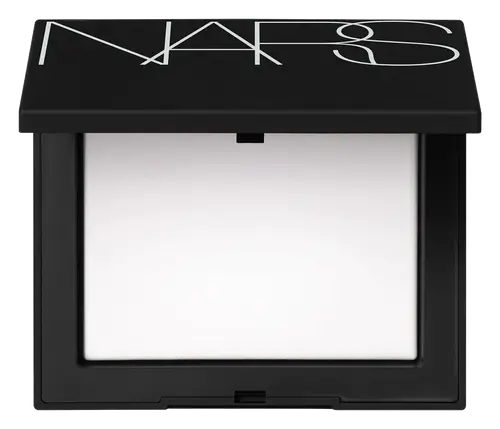
NARS Cosmetics Light Reflecting Prismatic Setting Powder Versus Addiction Tokyo Skin Reflect Setting Powder


What's inside
What's inside
 Key Ingredients
Benefits
Concerns
Ingredients Side-by-side
Synthetic Fluorphlogopite
Silica
Abrasive


Phenylpropyldimethylsiloxysilicate
EmollientSorbitan Isostearate
Emulsifying

Glycerin
Humectant


PEG-12 Dimethicone
Skin Conditioning
Mica
Cosmetic ColorantPolysorbate 60
Emulsifying
Caprylyl Glycol
Emollient
Ethylhexylglycerin
Skin Conditioning1,2-Hexanediol
Skin Conditioning
Gellan Gum
Calcium Chloride
AstringentCI 77288
Cosmetic ColorantCI 77510
Cosmetic ColorantCI 77491
Cosmetic ColorantCI 77492
Cosmetic ColorantCI 77499
Cosmetic ColorantCI 77891
Cosmetic ColorantCI 77007
Cosmetic ColorantSynthetic Fluorphlogopite
Silica
Abrasive
Phenylpropyldimethylsiloxysilicate
EmollientSorbitan Isostearate
Emulsifying
Glycerin
Humectant
PEG-12 Dimethicone
Skin Conditioning
Polysorbate 60
Emulsifying
Carthamus Tinctorius Seed Oil
Masking
Olea Europaea Fruit Oil
Masking


Rosa Canina Fruit Oil
Emollient
Sesamum Indicum Seed Oil
Emollient
Simmondsia Chinensis Seed Oil
Emollient
1,2-Hexanediol
Skin Conditioning
Calcium Chloride
AstringentCaprylyl Glycol
Emollient
Gellan Gum
Water
Skin ConditioningIron Oxides
CI 77492
Cosmetic ColorantCI 77499
Cosmetic ColorantMica
Cosmetic ColorantCI 77891
Cosmetic ColorantCI 73360
Cosmetic ColorantSynthetic Fluorphlogopite, Silica, Phenylpropyldimethylsiloxysilicate, Sorbitan Isostearate, Glycerin, PEG-12 Dimethicone, Polysorbate 60, Carthamus Tinctorius Seed Oil, Olea Europaea Fruit Oil, Rosa Canina Fruit Oil, Sesamum Indicum Seed Oil, Simmondsia Chinensis Seed Oil, 1,2-Hexanediol, Calcium Chloride, Caprylyl Glycol, Gellan Gum, Water, Iron Oxides, CI 77492, CI 77499, Mica, CI 77891, CI 73360
Reviews
Ingredients Explained
These ingredients are found in both products.
Ingredients higher up in an ingredient list are typically present in a larger amount.
1,2-Hexanediol is a synthetic liquid and another multi-functional powerhouse.
It is a:
- Humectant, drawing moisture into the skin
- Emollient, helping to soften skin
- Solvent, dispersing and stabilizing formulas
- Preservative booster, enhancing the antimicrobial activity of other preservatives
Calcium chloride is a white, odorless, crystalline solid. It is an astringent and can be used to change the viscosity of products.
This ingredient is highly soluble in water, acetic acid, and ethanol.
There are many forms of this ingredient, including monohydrate, dihydrate, tetrahydrate, and hexahydrate.
Learn more about Calcium ChlorideCaprylyl Glycol is a humectant, skin conditioner, emollient, and preservative booster derived from either caprylic acid or synthetically created.
Typical use levels vary from 0.3-1% as a preservative booster and go up to 2% to condition skin.
Because it is not a free-fatty acid, this ingredient is fungal acne safe (there's nothing for Malassezia to feed on).
Learn more about Caprylyl GlycolCI 77492 is also hydrated iron III oxide. It's sole purpose is to give a yellow hue to products.
Iron III oxides are classified as inorganic chemicals for coloring.
Synthetically created CI 77492 is considered safer than those naturally found. This is because the synthetically created version may contain less impurities. Iron oxides are generally non-toxic and non-allergenic.
Learn more about CI 77492Ci 77499 is also hydrated iron III oxide. It is created from mixing red and black iron oxides. This helps give shades of darkness to a product.
Iron III oxides are classified as inorganic chemicals for coloring.
Ci 77891 is a white pigment from Titanium dioxide. It is naturally found in minerals such as rutile and ilmenite.
It's main function is to add a white color to cosmetics. It can also be mixed with other colors to create different shades.
Ci 77891 is commonly found in sunscreens due to its ability to block UV rays.
Learn more about CI 77891Gellan Gum is a high-molecular weight heteropolysaccharide gum. It is created by the process of pure-culture fermentation with the bacterium Pseudomonas elodea.
Gellan Gum is used to stabilize products. This helps improve the texture, consistency, and shelf life.
Glycerin (or glycerol) is a compound naturally found in your skin. It's a powerhouse humectant that pulls water into the stratum corneum.
Topically, glycerin does several things at once:
Your skin makes glycerin on its own (mostly from sebaceous oil breakdown) and shuttles it to your outermost layer of skin, or your epidermis, via aquaporin-3.
Aquaporin-3 is a transporter that is essential for normal skin hydration, elasticity, and repair. Interestingly, mice lacking in AQP3 have dry and less elastic skin that can be fully corrected with glycerin.
This ingredient is non-irritating, plays well with almost every ingredient, and works across all skin types. Typical use is anywhere between 3-10% but can go up to 79% in some leave-on products.
Just know very high concentrations (>40%) can feel tacky in low humidity.
Glycerin is the name for this ingredient in American English. British English uses Glycerol/Glycerine.
Learn more about GlycerinMica is a naturally occurring mineral used to add shimmer and color in cosmetics. It can also help improve the texture of a product or give it an opaque, white/silver color.
Serecite is the name for very fine but ragged grains of mica.
This ingredient is often coated with metal oxides like titanium dioxide. Trace amounts of heavy metals may be found in mica, but these metals are not harmful in our personal products.
Mica has been used since prehistoric times throughout the world. Ancient Egyptian, Indian, Greek, Roman, Aztec, and Chinese civilizations have used mica.
Learn more about MicaPEG-12 Dimethicone is a type of water-soluble silicone. It has skin conditioning and hydrating properties.
According to a manufacturer, this ingredient's stability is decreased by strong acid or alkali.
We don't have a description for Phenylpropyldimethylsiloxysilicate yet.
Polysorbate 60 is used to help stabilize products. It is a surfactant and emulsifier. These properties help keep ingredients together in a product. Surfactants help reduce surface tension between ingredients with different states, such as liquids and solids. Emulsifiers help prevent oils and waters from separating.
Polysorbate 60 is sorbitol-based and created from the ethoxylation of sorbitan. Ethoxylation is a chemical reaction used to add ethylene oxide. Sorbitan is a the dehydrated version of sorbitol, a sugar found in fruits.
In this case, the 60 comes from reacting 60 units of ethylene oxide with sorbitan.
Polysorbates are commonly used in medicine and foods.
Learn more about Polysorbate 60Silica, also known as silicon dioxide, is a naturally occurring mineral. It is used as a fine, spherical, and porous powder in cosmetics.
Though it has exfoliant properties, the function of silica varies depending on the product.
The unique structure of silica enhances the spreadability and adds smoothness, making it a great texture enhancer.
It is also used as an active carrier, emulsifier, and mattifier due to its ability to absorb excess oil.
In some products, tiny microneedles called spicules are made from silica or hydrolyzed sponge. When you rub them in, they lightly polish away dead skin layers and enhance the penetration of active ingredients.
Learn more about SilicaSorbitan Isostearate is an emulsifer. It is created from isostearic acid and sorbitol.
As an emulsifier, it keeps the water and oil ingredients from separating. This keeps formulas stable and smooth.
In a 24 hour occlusive patch test on 56 subjects, 10% sorbitan isostearate was completely non-irritating. Most formulas use less than 10%.
Because it's a fatty acid ester, it may not be fungal acne safe since the Malassezia yeast can utilize it as a nutrient source.
Learn more about Sorbitan IsostearateSynthetic Fluorphlogopite is the synthethic version of mica. It consists of fluorine, aluminum and silicate.
Synthetic Fluorphlogopite is used to add volume to products.
It is considered non-irritating on the skin.
Learn more about Synthetic Fluorphlogopite