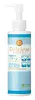
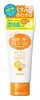
Meishoku Brilliant Colors Detclear Fruits Peeling Jelly - Fragrance Free Versus Rosette Gommage Bright Peel Face Peeling Gel
This brightening exfoliator is formulated around Tartaric Acid and Malic Acid to brighten dull-looking skin.
This smoothing exfoliator is formulated around Kaolin and Lactic Acid to refine skin texture and brighten dull-looking skin.

What's inside
What's inside
 Key Ingredients
No key ingredients
Benefits
Concerns
No concerns
Ingredients Side-by-side
Water
Skin ConditioningSteartrimonium Chloride
Preservative
Carbomer
Emulsion StabilisingAlcohol
Antimicrobial




Disodium Ascorbyl Sulfate
Antioxidant

Kaolin
Abrasive



Lactic Acid
Buffering





Citric Acid
Buffering
Malic Acid
Buffering
Caesalpinia Spinosa Fruit Extract
Skin ProtectingAllantoin
Skin Conditioning



Camellia Sinensis Leaf Extract
Antimicrobial
Glucose
Humectant
Butylene Glycol
Humectant
Dipropylene Glycol
HumectantIron Oxides
Parfum
Masking

Ingredients Explained
These ingredients are found in both products.
Ingredients higher up in an ingredient list are typically present in a larger amount.
Carbomer is a synthetic thickening and gelling agent. It's basically the ingredient that gives a lot of serums, gels, creams, and sunscreens their smooth, non-sticky texture.
Although legally permitted at very high levels, carbomers are normally used at concentrations below 1%.
It also needs to be neutralized to actually thicken, and because it is a large molecule, it doesn't really penetrate the skin barrier.
Allergy-wise, the risk is very low. Clinical studies show carbomers have low potential for skin irritation/sensitization even at concentrations up to 100%.
A 2024 UK study patch-tested 1,302 patients and found true allergy to the parent group of carbomer to be rare with no confirmed relevant reactions.
Learn more about CarbomerMalic Acid is an acid with both AHA and BHA properties, but is considered an AHA because its AHA properties are stronger.
It can be naturally found in unripe fruit and especially apples (its name from the latin word "malum", meaning apple!).
Like other AHAs, malic acid gently removes the top layer of dead skin cells to reveal smoother, brighter skin underneath.
Though it’s considered milder and less potent than glycolic or lactic acid, it can help improve:
Due to its larger molecular structure, it penetrates the skin more slowly and is often used in combination with other AHAs to enhance their overall effectiveness.
Malic acid often plays a role in balancing a product’s pH and is usually included in small amounts (around 1-2%) as a supporting exfoliant.
As with all exfoliating acids, you should wear sunscreen daily when using malic acid to protect your newly resurfaced skin.
Fun fact: Malic acid is the compound responsible for the tart flavor of apples and other sour fruits.
While research on malic acid is limited compared to glycolic or lactic acid, it’s still a safe and mild exfoliant.
Read more about some other popular AHA's here:
Learn more about Malic AcidSteartrimonium Chloride is a preservative.
Water. It's the most common cosmetic ingredient of all. You'll usually see it at the top of ingredient lists, meaning that it makes up the largest part of the product.
So why is it so popular? Water most often acts as a solvent - this means that it helps dissolve other ingredients into the formulation.
You'll also recognize water as that liquid we all need to stay alive. If you see this, drink a glass of water. Remember to stay hydrated!
Learn more about Water

