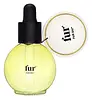
This hydrating oil is formulated around Vitis Vinifera Seed Oil and Simmondsia Chinensis Seed Oil to hydrate skin and clear breakouts.

What's inside
What's inside
 Key Ingredients
Benefits
Concerns
Ingredients Side-by-side




Carthamus Tinctorius Seed Oil
Masking



Ricinus Communis Seed Oil
Masking
Caprylic/Capric Triglyceride
Masking

Squalane
Emollient
Hydrogenated Ethylhexyl Olivate
EmollientCocos Nucifera Oil
Masking


Cocos Nucifera Fruit Extract
Emollient
Simmondsia Chinensis Seed Oil
Emollient
Tetrahexyldecyl Ascorbate
Antioxidant





Hippophae Rhamnoides Fruit/Seed Oil
Antimicrobial
Linoleic Acid
Cleansing

Phospholipids
Skin Conditioning
Phytosterols
Skin Conditioning
Rosa Canina Fruit Oil
Emollient
Vanilla Planifolia Fruit Extract
Skin Conditioning
Hydrogenated Olive Oil Unsaponifiables
Emollient
Gamma-Decalactone
Perfuming
Benzotriazolyl Dodecyl P-Cresol
UV AbsorberGamma-Nonalactone
Masking
Delta-Decalactone
Masking
Delta-Dodecalactone
Perfuming
Gamma-Dodecalactone
Perfuming
Gamma-Undecalactone
Perfuming
Limonene
Perfuming

Carthamus Tinctorius Seed Oil, Ricinus Communis Seed Oil, Caprylic/Capric Triglyceride, Squalane, Hydrogenated Ethylhexyl Olivate, Cocos Nucifera Oil, Cocos Nucifera Fruit Extract, Simmondsia Chinensis Seed Oil, Tetrahexyldecyl Ascorbate, Hippophae Rhamnoides Fruit/Seed Oil, Linoleic Acid, Phospholipids, Phytosterols, Rosa Canina Fruit Oil, Vanilla Planifolia Fruit Extract, Hydrogenated Olive Oil Unsaponifiables, Gamma-Decalactone, Benzotriazolyl Dodecyl P-Cresol, Gamma-Nonalactone, Delta-Decalactone, Delta-Dodecalactone, Gamma-Dodecalactone, Gamma-Undecalactone, Limonene
Reviews
Ingredients Explained
These ingredients are found in both products.
Ingredients higher up in an ingredient list are typically present in a larger amount.
Limonene is the compound that gives citrus peel its smell.
In skincare, it shows up as a standalone fragrance ingredient or as a natural compound of citrus and other essential oils.
You'll typically see this ingredient used in very small amounts; anything above 0.001% in a leave-on product or 0.01% in a rinse-off has to be named on the label in the EU. The citrus oils that carry it sit around 0.5-1% in a finished formula.
Fresh limonene is a weak allergen; the real issue is that it slowly reacts with air and then breaks down from oxidation to create hydroperoxides (which are strong sensitizers). This is why suppliers are required to keep the peroxide value below 20 mmol.
Positive reactions in people being investigated for eczema vary:
It's worth skipping if you have a known fragrance allergy or a compromised barrier, but the risk is low for most people.
Older or long-opened products are also more likely to bother you than fresh ones due to oxidation.
Learn more about LimoneneJojoba oil is one of the most well-studied plant-derived ingredients in cosmetics. It is an emollient with a special structure.
Because it is made up of 97-98% wax esters, it closely mirrors the linear monoesters found in human sebum. This makes it skin compatible, non-greasy, and lightweight.
Unlike other plant oils, jojoba wax doesn't easily penetrate skin. It mostly works in the uppermost layers as an emollient. This just means it forms a light barrier on the skin to help retain moisture.
Formulations with jojoba esters up to 90% reduced transepidermal water loss (TEWL) and increased barrier recovery by 81% (outperforming bisabolol at 47%).
Besides barrier support, the science also suggests jojoba to have anti-inflammatory effects and potential applications for skin infections, aging, and wound healing.
Fun fact: Indigenous cultures have used jojoba as a moisturizer and to help treat burns for centuries.
Fungal acne: The Malassezia yeast is known to metabolize fatty acids in the C11-24 range and jojoba's dominant fatty acid components fall into this range. This ingredient may not be fungal acne safe.
Learn more about Simmondsia Chinensis Seed Oil

