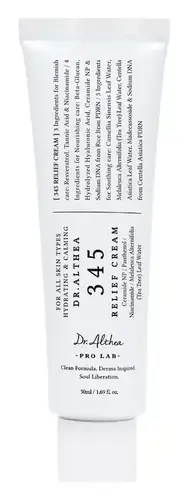
This calming moisturizer is formulated around Panthenol and Allantoin to calm redness and hydrate skin.
This moisturizer is formulated around Zinc Sulfate to control oil.


What's inside
What's inside
 Key Ingredients
No key ingredients
Benefits
Concerns
Ingredients Side-by-side


Water
Skin ConditioningCaprylic/Capric Triglyceride
Masking


Glycerin
Humectant
Hydrogenated Vegetable Oil
Emollient




Polyglyceryl-2 Dipolyhydroxystearate
Skin Conditioning
Zinc Oxide
Cosmetic Colorant


Magnesium Sulfate
Polyglyceryl-3 Diisostearate
Emulsifying
Avena Sativa Leaf/Stem Extract
Skin ConditioningCopper Sulfate
Skin ConditioningZinc Sulfate
Antimicrobial
Helianthus Annuus Seed Oil
Emollient
Simmondsia Chinensis Seed Oil
Emollient
Tocopherol
Antioxidant





Water, Caprylic/Capric Triglyceride, Glycerin, Hydrogenated Vegetable Oil, Polyglyceryl-2 Dipolyhydroxystearate, Zinc Oxide, Magnesium Sulfate, Polyglyceryl-3 Diisostearate, Avena Sativa Leaf/Stem Extract, Copper Sulfate, Zinc Sulfate, Helianthus Annuus Seed Oil, Simmondsia Chinensis Seed Oil, Tocopherol
Reviews
Ingredients Explained
These ingredients are found in both products.
Ingredients higher up in an ingredient list are typically present in a larger amount.
Glycerin (or glycerol) is a compound naturally found in your skin. It's a powerhouse humectant that pulls water into the stratum corneum.
Topically, glycerin does several things at once:
Your skin makes glycerin on its own (mostly from sebaceous oil breakdown) and shuttles it to your outermost layer of skin, or your epidermis, via aquaporin-3.
Aquaporin-3 is a transporter that is essential for normal skin hydration, elasticity, and repair. Interestingly, mice lacking in AQP3 have dry and less elastic skin that can be fully corrected with glycerin.
This ingredient is non-irritating, plays well with almost every ingredient, and works across all skin types. Typical use is anywhere between 3-10% but can go up to 79% in some leave-on products.
Just know very high concentrations (>40%) can feel tacky in low humidity.
Glycerin is the name for this ingredient in American English. British English uses Glycerol/Glycerine.
Learn more about GlycerinMagnesium Sulfate is a salt. More specifically, it is an epsom salt, or the bath salt used to help relieve muscle aches.
Despite having ‘sulfate’ in the name, it isn’t a surfactant or cleansing agent like sodium lauryl sulfate. Unlike those sulfates, magnesium sulfate doesn’t have the same cleansing or foaming properties (it's simply a type of salt).
In cosmetics, Magnesium Sulfate is used to thicken a product or help dilute other solids. It is a non-reactive and non-irritating ingredient.
One study shows magnesium deficiency may lead to inflammation of the skin. Applying magnesium topically may help reduce inflammation.
You can find this ingredient in sea water or mineral deposits.
Learn more about Magnesium SulfatePolyglyceryl-2 Dipolyhydroxystearate isn't fungal acne safe.
Polyglyceryl-3 Diisostearate is a plant-derived, oil-soluble emulsifier. It keeps water-in-oil emulsions stable to prevent the ingredients from separating.
On the safety front, it's considered non-irritating and well-tolerated (it can even be found in formulations for baby skin).
This ingredient may not be fungal acne safe because research has shown that the Malassezia species can grow in the presence of fatty acid esters with chain lengths above C12 (and this one is C18).
While it does have a comedogenic rating of 4, the comedogenic rating scale was developed from rabbit ear models which has limited clinical relevance to human skin. Studies also show that comedogenic ingredients cannot predict how the overall formula will behave on human skin.
Learn more about Polyglyceryl-3 DiisostearateWater. It's the most common cosmetic ingredient of all. You'll usually see it at the top of ingredient lists, meaning that it makes up the largest part of the product.
So why is it so popular? Water most often acts as a solvent - this means that it helps dissolve other ingredients into the formulation.
You'll also recognize water as that liquid we all need to stay alive. If you see this, drink a glass of water. Remember to stay hydrated!
Learn more about Water