Face Atelier Ultra Loose Powder
Setting spray & powder with 16 ingredients that contains exfoliants
We independently verify ingredients, backed by peer-reviewed research. Suggest an update.
What's inside
Ingredients List
Talc
Abrasive
Mica
Cosmetic ColorantZea Mays Starch
Absorbent
Aluminum Starch Octenylsuccinate
Absorbent
Zinc Stearate
Cosmetic ColorantNylon-12

Lauroyl Lysine
Skin Conditioning
Methylparaben
Preservative


Propylparaben
Preservative
Ethylparaben
Preservative
Trimethylsiloxysilicate
Emollient
CI 77891
Cosmetic ColorantCI 77491
Cosmetic ColorantCI 77492
Cosmetic ColorantCI 77499
Cosmetic ColorantCI 77007
Cosmetic ColorantKey Ingredients
Benefits
Concerns
Ingredients Explained
Talc is a clay mineral. It helps absorb moisture and improve the texture of products. Like other types of clay, Talc can have a slight exfoliating effect on skin. Talc can be added to increase the volume of products.
Some Baby powders are made by combining talc with corn starch. The word "talc" comes from Latin and originates from Arabic. Talc is a mineral commonly found throughout the world.
If you have any concerns about using talc, we recommend checking out the FDA's official page.
Learn more about TalcMica is a naturally occurring mineral used to add shimmer and color in cosmetics. It can also help improve the texture of a product or give it an opaque, white/silver color.
Serecite is the name for very fine but ragged grains of mica.
This ingredient is often coated with metal oxides like titanium dioxide. Trace amounts of heavy metals may be found in mica, but these metals are not harmful in our personal products.
Mica has been used since prehistoric times throughout the world. Ancient Egyptian, Indian, Greek, Roman, Aztec, and Chinese civilizations have used mica.
Learn more about MicaZea Mays Starch is starch made from corn. You might know this as cornstarch . It is used to thicken a product. It can replace talc as an absorbent.
The pH of cornstarch is 5.92.
Cornstarch is a common food ingredient used to thicken soups or to make corn syrup.
Learn more about Zea Mays StarchAluminum Starch Octenylsuccinate is a synthetic powder used as an absorbent, thickener, and anti-caking agent.
As an absorbent, it is great at mattifying skin by soaking up the oil. This is why you'll find it in a range of products from makeup to moisturizers.
This ingredient is considered a modified starch. Starch can also be found naturally in plants.
One study from 1991 found that 5% of this ingredient enhanced titanium dioxide SPF by as much as 40%. The study found 1% titanium dioxide had a 5.6 SPF and adding 5% of aluminum starch octenylsuccinate boosted it to an SPF of 8.1
Although “aluminum” in an ingredient name can raise red flags for some consumers, the form and usage context matter significantly. For typical topical applications, there is no substantial evidence of health risks - such as cancer, neurotoxicity, or systemic “aluminum overload.”
Learn more about Aluminum Starch OctenylsuccinateZinc Stearate is the metal salt of stearic acid. It is a white solid used to bind, thicken, and lubricate products.
This ingredient is common in powder makeup, where it helps keep the powder together.
Zinc Stearate is hydrophobic and repels water.
This ingredient can be sourced from non-animal or animal sources. It is best to reach out to the brand to see where they source this ingredient from.
Learn more about Zinc StearateNylon-12 is a polymer. It is derived from 12-aminododecanoic acid, an omega-amino fatty acid
According to a manufacturer, it is a talc substitute. Like talc, nylon-12 gives products a satin feel. The manufacturer also claims this ingredients does not block pores and has moderate oil absorption.
This ingredient may not be reef-safe.
Learn more about Nylon-12This ingredient comes from a fatty acid (lauric acid) and amino acid (lysine). It is used to add a silky feel to cosmetics.
According to a manufacturer, its fatty acid base leaves a silky feeling on the skin. It also has emollient properties because of this. Emollients help soften skin by preventing water from evaporating.
Lauroyl lysine is barely soluble in water.
Learn more about Lauroyl LysineMethylparaben is a synthetic preservative and one of the most widely used in the world. It has a simple, but important job: prevent your products from going bad by stopping bacteria, yeast, and mold from growing.
Typical use levels are low, often 0.1-0.3%.
This is also one of the most heavily studied preservatives out there and major regulatory bodies have repeatedly given it the green light.
In 2023, the EU's Scientific Committee on Consumer Safety (SCCS) confirmed that this ingredient is safe up to 0.4% on its own, of up to 0.8% when mixed with other paraben esters.
Here's the science behind the noise behind parabens/hormones as well:
Methylparaben shows very weak estrogen-like activity in vitro tests (more than 1,000x weaker than your body's own estradiol). In vivo (live-organism) studies don't support a meaningful endocrine-disrupting effect either.
You get a stronger estrogenic effect from eating tofu, actually.
It's also a low sensitizer and allergic reactions are uncommon; they usually happen on damage or broken skin.
There is a caveat: France has proposed to formally re-examine its endocrine classification in 2025 so the regulatory conversation isn't fully closed as of yet.
But as it stands today, this ingredient is considered safe at permitted levels.
Learn more about MethylparabenPropylparaben is a preservative and one of the most widely used members of the paraben family (it's been used in cosmetics for over a century now).
It works by disrupting microbial cell membranes and enzymes, and is a broad-spectrum protector that works exceptionally well against molds, yeasts, and gram-positive bacteria.
You'll likely see it paired with methylparaben to cover the full range (including gram-negative bacteria).
This ingredient is effective at low concentrations (~0.2-0.5%) and stable across a wide pH range (4.5-7.5 pH). It's effectiveness drops off above pH 8 and it can lose potency when combined with non-ionic surfactants like polysorbate 80 due to micellization.
The regulatory bodies have concluded this ingredient to be safe as used in cosmetics. The EU has capped it at 0.14% and combined parabens are not to exceed 0.8%.
While parabens do cross the stratum corneum, only about 1% remains for absorption into the body. This is because most of it is metabolized within living skin.
Learn more about PropylparabenEthylparaben is a preservative, is a paraben, and is not reef safe.
This silicone is an emollient. Emollients create a thin film on the skin to prevent moisture from escaping.
It is not soluble in water and helps increase water-resistance in products.
According to a manufacturer, it can blend seamlessly with silicone oils, such as Cyclopentasiloxane.
Learn more about TrimethylsiloxysilicateCi 77891 is a white pigment from Titanium dioxide. It is naturally found in minerals such as rutile and ilmenite.
It's main function is to add a white color to cosmetics. It can also be mixed with other colors to create different shades.
Ci 77891 is commonly found in sunscreens due to its ability to block UV rays.
Learn more about CI 77891Ci 77491 is also hydrated iron III oxide. It's sole purpose is to give a red/pink hue to products.
Iron III oxides are classified as inorganic chemicals for coloring.
Synthetically created Ci 77491 is considered safer than those naturally found. This is because the synthetically created version may contain less impurities. Iron oxides are generally non-toxic and non-allergenic.
Learn more about CI 77491CI 77492 is also hydrated iron III oxide. It's sole purpose is to give a yellow hue to products.
Iron III oxides are classified as inorganic chemicals for coloring.
Synthetically created CI 77492 is considered safer than those naturally found. This is because the synthetically created version may contain less impurities. Iron oxides are generally non-toxic and non-allergenic.
Learn more about CI 77492Ci 77499 is also hydrated iron III oxide. It is created from mixing red and black iron oxides. This helps give shades of darkness to a product.
Iron III oxides are classified as inorganic chemicals for coloring.
This pigment is called Ultramarine blue lazurite. It gives a saturated blue color, but can be used to create other colors as well.
According to the manufacturer, it is usually made from kaolin, sodium sulfate, sodium carbonate, sulfur, and charcoal.
Reviews
No written reviews yet. Be the first to review this product.
Recent searches
Search reviews by skin type, ingredient, or keyword.
Where it's from
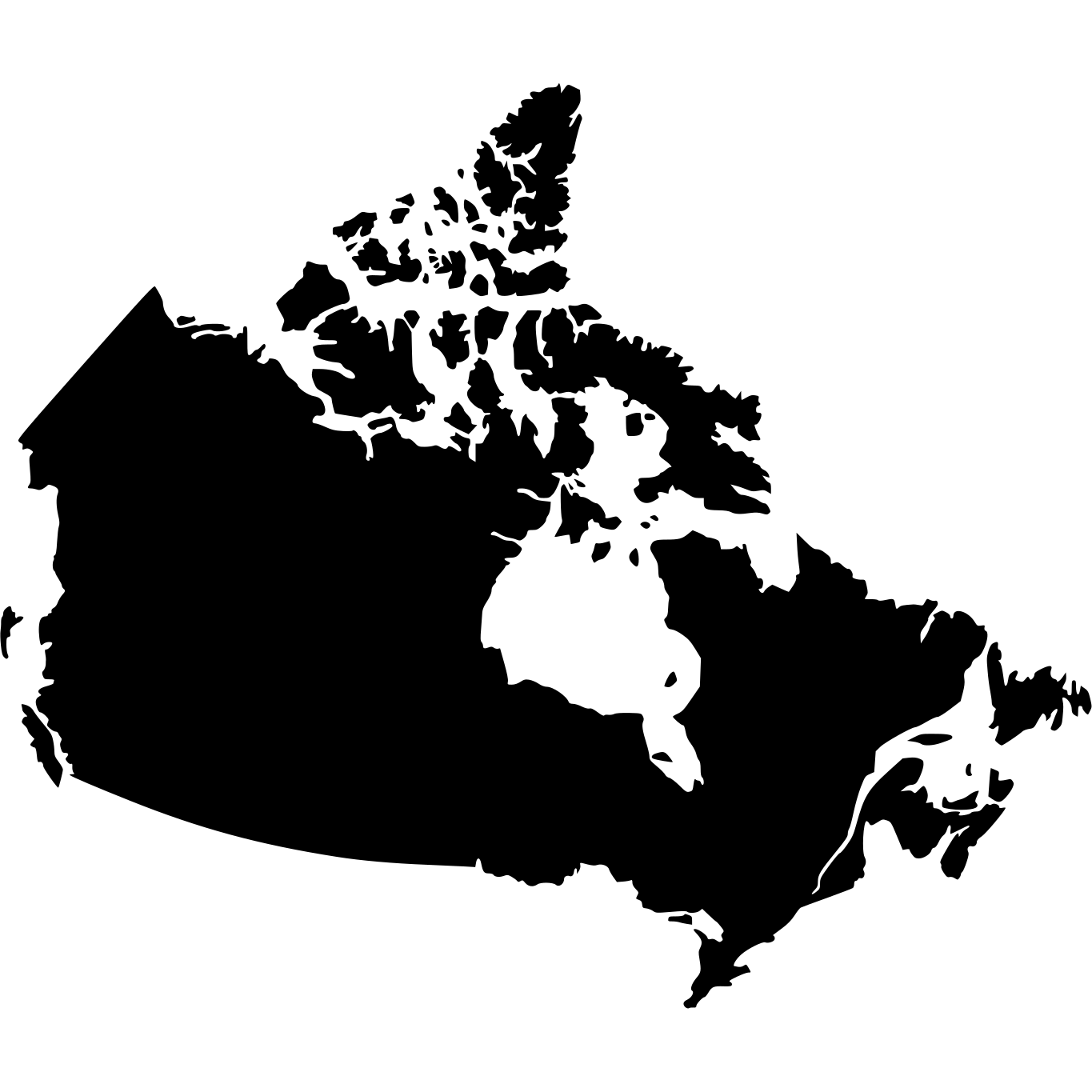
Face Atelier is a Canadian brand

We're dedicated to providing you with the most up-to-date and science-backed ingredient info out there.
The data we've presented on this page has been verified by a member of the SkinSort Team.
Read more about us· Updated July 23, 2026 • Added by Abcd12


