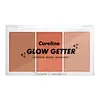
Sunnies Face Airblush Versus Careline Glow Getter

What's inside
What's inside
 Key Ingredients
Benefits
Concerns
Ingredients Side-by-side
Dimethicone
Emollient

Isononyl Isononanoate
EmollientCetearyl Isononanoate
Emollient
Trimethylsiloxyphenyl Dimethicone
Mica
Cosmetic ColorantPolyethylene
Abrasive

Dicalcium Phosphate
Abrasive
Myristyl Trisiloxane
Emollient
Nylon-12


Silica
Abrasive
Polymethyl Methacrylate
Dimethicone/Divinyldimethicone/Silsesquioxane Crosspolymer
Humectant
Titanium Dioxide
Cosmetic Colorant
CI 77891
Cosmetic ColorantIron Oxides
CI 77492
Cosmetic ColorantCI 77491
Cosmetic ColorantCI 15850
Cosmetic ColorantPentaerythrityl Tetra-Di-T-Butyl Hydroxyhydrocinnamate
Antioxidant
Caprylic/Capric Triglyceride
Masking


Camellia Sinensis Leaf Extract
Antimicrobial



BHT
Antioxidant
Dimethicone, Isononyl Isononanoate, Cetearyl Isononanoate, Trimethylsiloxyphenyl Dimethicone, Mica, Polyethylene, Dicalcium Phosphate, Myristyl Trisiloxane, Nylon-12, Silica, Polymethyl Methacrylate, Dimethicone/Divinyldimethicone/Silsesquioxane Crosspolymer, Titanium Dioxide, CI 77891, Iron Oxides, CI 77492, CI 77491, CI 15850, Pentaerythrityl Tetra-Di-T-Butyl Hydroxyhydrocinnamate, Caprylic/Capric Triglyceride, Camellia Sinensis Leaf Extract, BHT






Reviews
Ingredients Explained
These ingredients are found in both products.
Ingredients higher up in an ingredient list are typically present in a larger amount.
Ci 77491 is also hydrated iron III oxide. It's sole purpose is to give a red/pink hue to products.
Iron III oxides are classified as inorganic chemicals for coloring.
Synthetically created Ci 77491 is considered safer than those naturally found. This is because the synthetically created version may contain less impurities. Iron oxides are generally non-toxic and non-allergenic.
Learn more about CI 77491CI 77492 is also hydrated iron III oxide. It's sole purpose is to give a yellow hue to products.
Iron III oxides are classified as inorganic chemicals for coloring.
Synthetically created CI 77492 is considered safer than those naturally found. This is because the synthetically created version may contain less impurities. Iron oxides are generally non-toxic and non-allergenic.
Learn more about CI 77492Ci 77891 is a white pigment from Titanium dioxide. It is naturally found in minerals such as rutile and ilmenite.
It's main function is to add a white color to cosmetics. It can also be mixed with other colors to create different shades.
Ci 77891 is commonly found in sunscreens due to its ability to block UV rays.
Learn more about CI 77891Dimethicone is a type of synthetic silicone created from natural materials such as quartz. It is also known as polydimethylsiloxane.
What it does:
Dimethicone comes in different viscosities:
Depending on the viscosity, dimethicone has different properties.
Ingredients lists don't always show which type is used, so we recommend reaching out to the brand if you have questions about the viscosity.
This ingredient is unlikely to cause irritation because it does not get absorbed into skin. However, people with silicone allergies should be careful about using this ingredient.
Note: Dimethicone may contribute to pilling. This is because it is not oil or water soluble, so pilling may occur when layered with products. When mixed with heavy oils in a formula, the outcome is also quite greasy.
Learn more about DimethiconeMica is a naturally occurring mineral used to add shimmer and color in cosmetics. It can also help improve the texture of a product or give it an opaque, white/silver color.
Serecite is the name for very fine but ragged grains of mica.
This ingredient is often coated with metal oxides like titanium dioxide. Trace amounts of heavy metals may be found in mica, but these metals are not harmful in our personal products.
Mica has been used since prehistoric times throughout the world. Ancient Egyptian, Indian, Greek, Roman, Aztec, and Chinese civilizations have used mica.
Learn more about MicaPolyethylene is a synthetic ingredient that helps the skin retain moisture. It is a polymer.
It is also typically used within product formulations to help bind solid ingredients together and thicken oil-based ingredients. When added to balms and emulsions, it helps increase the melting point temperature.


